care@kuremara.com.au
 1300 000 799

You’ve spent weeks, maybe months; gathering reports, attending meetings, and finally getting your NDIS plan approved. Then you open the document and realise the supports you urgently need aren’t included. The therapy your child’s specialist recommended? Not funded. The assistive technology you depend on? Partially covered at best.
If this sounds familiar, you are not alone. Thousands of Australians with disability experience gaps in their NDIS funding coverage every year. But here’s what many participants don’t know: a plan that falls short is not the end of the road. You have rights, and you have options.
This guide walks you through exactly what to do when your NDIS plan doesn’t cover everything from understanding what NDIS funds in the first place, to challenging decisions, to finding alternative pathways that can bridge the gap.
What Does NDIS Fund? A Plain-Language Breakdown
Before navigating a gap in your plan, it helps to understand the framework behind NDIS funding decisions. The NDIS funds supports that are considered “reasonable and necessary”, meaning they must be directly related to your disability, represent value for money, and help you pursue your goals and increase independence.
NDIS funding is divided into three core categories:
- Core Supports — This is the most flexible funding category, covering everyday activities like personal care, household tasks, transport, and social participation. It also includes consumables such as continence aids and low-cost assistive technology.
- Capacity Building Supports — Designed to build your long-term skills and independence, this category funds things like therapy services, employment support, improved relationships, and health and wellbeing programs.
- Capital Supports — This category covers higher-cost, longer-term items, including assistive technology (like wheelchairs or communication devices) and home or vehicle modifications.
Understanding these NDIS funding categories is essential because knowing which category a support should fall under can directly influence how you request it and how it gets assessed.
What the NDIS does not fund is equally important to understand. The scheme does not cover day-to-day living costs that everyone faces regardless of disability (like rent, food, or utility bills), medical treatments already covered by Medicare, or supports that are the responsibility of other government systems like education or health.
Why Plans Sometimes Leave Gaps
Even with a clear framework in place, many participants find their NDIS funding coverage doesn’t fully reflect their real-world needs. This happens more often than it should, and it’s rarely the participant’s fault.
Some of the most common reasons include:
- Supports are assessed as not directly disability-related — Planners sometimes apply a narrow interpretation of what qualifies, leaving out supports that genuinely impact your daily functioning
- Insufficient evidence at the planning meeting — If your supporting reports didn’t clearly articulate how a support connects to your disability and goals, the planner may have lacked the information needed to include it
- Planner or LAC misunderstanding your functional needs — Not every planner has specialist knowledge of every disability, which can result in misjudged decisions
- Changed or evolving needs — Your circumstances may have changed significantly since your last review, but the plan hasn’t caught up
- Miscategorisation of supports — Sometimes a support is technically available but placed in the wrong budget category, making it practically inaccessible
The critical thing to remember is this: a funding gap in your current plan is not a permanent decision. It can be reviewed, challenged, and changed.
Your Rights as an NDIS Participant
Many participants don’t realise how robust their legal rights actually are under the NDIS Act 2013. The scheme was built on principles of choice and control, and those aren’t just aspirational words; they carry legal weight.
As an NDIS participant, you are entitled to:
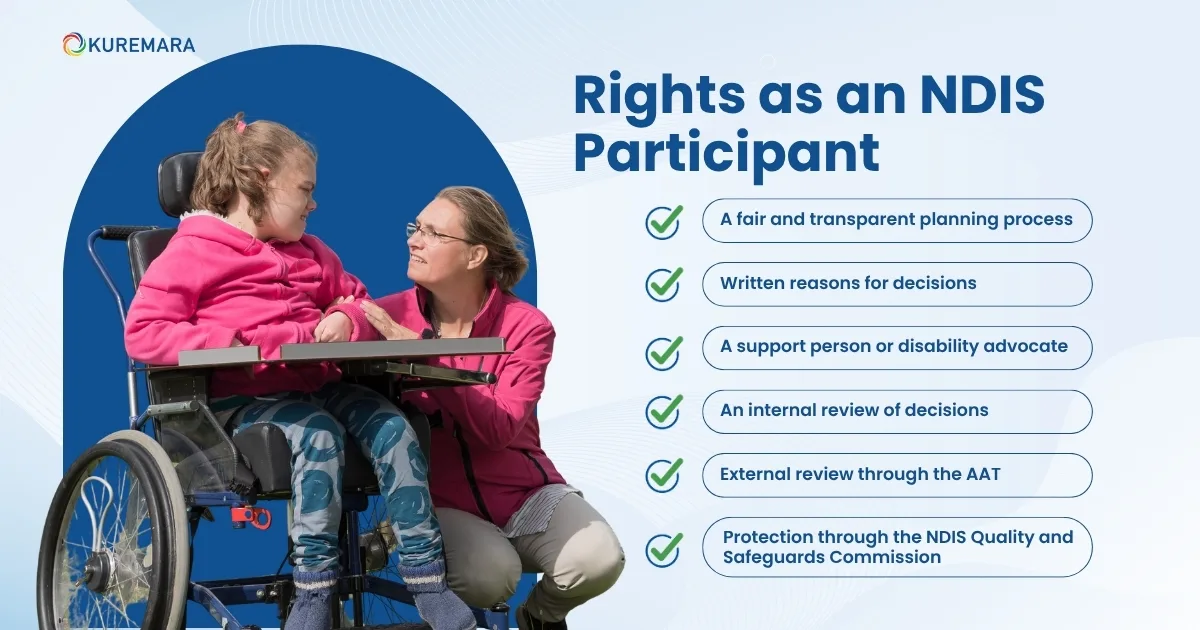
- A fair and transparent planning process — Decisions about your funding must be made based on evidence and consistent application of the reasonable and necessary criteria
- Written reasons for decisions — You can request a written explanation for why a specific support was excluded from your plan
- A support person or disability advocate — You have the right to bring someone with you to any planning meeting, review, or appeal, whether that’s a family member, carer, or professional advocate
- An internal review of decisions — If you disagree with a funding decision, you can formally request that the NDIA review it internally within three months of the decision
- External review through the AAT — If the internal review still doesn’t go in your favour, you can escalate the matter to the Administrative Appeals Tribunal (AAT), which provides independent oversight
- Protection through the NDIS Quality and Safeguards Commission — The Commission handles complaints about NDIS providers and the conduct of the planning process
The NDIS Participant Service Guarantee also sets out timeframes within which the NDIA must respond to your requests and reviews. Knowing these timeframes helps you hold the system accountable.
Step-by-Step: What To Do When Your Plan Falls Short
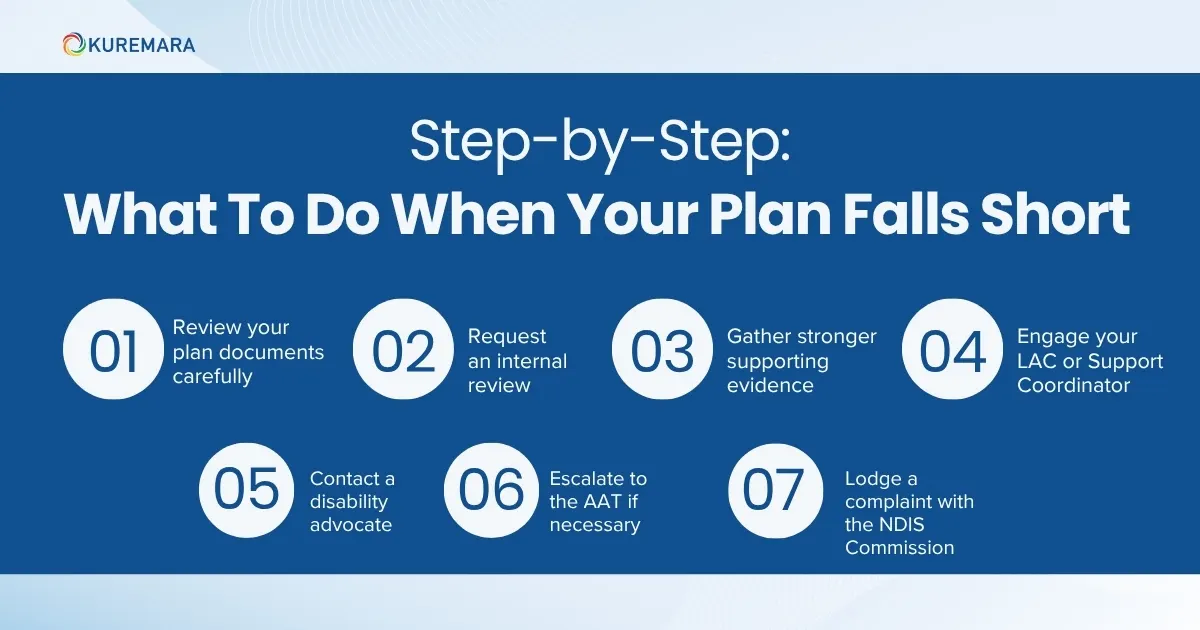
If you’ve identified a gap in your NDIS funding, here’s a clear, practical path forward.
1. Review your plan documents carefully
Start by going through your plan in detail. Identify exactly which supports were excluded or underfunded, and check whether a written reason was provided. Understanding the specific basis for the decision helps you build a more targeted response.
2. Request an internal review
You have three months from the date of the decision to request an internal review from the NDIA. This is a formal process where a different NDIA delegate reviews the original decision. Submit your request in writing and include any new or additional evidence that strengthens your case.
3. Gather stronger supporting evidence
This is often where outcomes are won or lost. Reach out to your occupational therapist, specialist, or GP and ask them to write a report that explicitly links the support you need to your disability and your functional goals. Clinical notes alone are rarely enough; the report needs to speak the NDIS language of “reasonable and necessary.”
4. Engage your LAC or Support Coordinator
Your Local Area Coordinator or Support Coordinator can be a powerful ally in navigating the review process. They understand the system, can help you communicate your needs effectively, and may know of specific evidence types or wording that resonates with NDIA planners.
5. Contact a disability advocate
Free, independent advocacy services are available across Australia. Organisations like the Disability Advocacy Network Australia (DANA) and state-based advocacy bodies can represent your interests, help you prepare submissions, and speak on your behalf if needed. This is especially valuable if you feel the process has been unfair or confusing.
6. Escalate to the AAT if necessary
If the internal review decision doesn’t resolve the issue, you can apply to the Administrative Appeals Tribunal for an independent review. The AAT has the power to change NDIA decisions. Many participants find that the mere act of lodging an AAT application prompts the NDIA to reconsider.
7. Lodge a complaint with the NDIS Commission
If you believe the planning process itself was mishandled, for example, if you weren’t given the opportunity to present evidence, or felt pressured into accepting a plan; you can lodge a formal complaint with the NDIS Quality and Safeguards Commission.
Alternative Funding Options to Bridge the Gap

While you pursue a review or appeal, it’s worth exploring other funding streams that can help fill immediate gaps. Australia has a range of supports available outside the NDIS that many participants aren’t aware of.
- Medicare and the Medicare Benefits Schedule (MBS): A GP can refer you to allied health professionals, including occupational therapists, physiotherapists, and psychologists, under a Chronic Disease Management Plan. This currently provides access to up to five subsidised sessions per calendar year and can be a meaningful stop-gap while NDIS matters are resolved.
- State and Territory Government Programs: Each Australian state and territory runs its own disability-related services and community programs that operate independently of the NDIS. These vary by location, but may include transport subsidies, respite care, community access programs, and housing support. Contact your local government disability services office to find out what’s available in your area.
- Carer Gateway: If a family member or carer is absorbing the support load due to gaps in the plan, Carer Gateway offers free services including counselling, peer support, and practical assistance for carers, helping reduce the burden while longer-term solutions are pursued.
- Community Organisations and NGOs: Many not-for-profit organisations across Australia provide low-cost or subsidised supports for people with disabilities. Local disability service providers, charities, and community health centres often run programs that can complement or substitute for NDIS-funded supports on a short-term basis.
- Private Health Insurance: Depending on your level of cover, your private health insurer may subsidise therapies such as occupational therapy, speech pathology, physiotherapy, or psychology. It’s worth reviewing your policy or calling your insurer to confirm what’s claimable.
At Kuremara, we work closely with NDIS participants to help them understand their full funding picture, identify gaps, and connect with the right supports, whether through their NDIS plan or through complementary pathways. Our team knows how to navigate the system so you don’t have to do it alone.
How to Get More from Your Next Plan Review
The best time to start preparing for your plan review is well before the review date arrives. Here are the habits and strategies that make a real difference:
- Keep a support diary — Document your day-to-day challenges and how they connect to your disability. This real-world evidence is compelling during planning meetings and reviews
- Ask providers for goal-aligned reports — Therapists and specialists should write reports that clearly tie their recommendations to your NDIS goals, not just provide clinical observations
- Request a pre-planning meeting — Before your formal plan review, ask your LAC for a pre-planning conversation to outline your goals, discuss what’s changed, and flag any concerns about your current plan
- Know the difference between plan types — A plan reassessment looks at your overall funding, while an internal review challenges a specific decision. Using the right pathway for your situation saves time and increases your chances of a good outcome
- Consider engaging a Support Coordinator — Having a professional in your corner during the planning process can significantly improve the quality of the plan you receive
The Emotional Reality of Navigating NDIS Gaps
Let’s be honest about something: navigating NDIS funding gaps is exhausting. The system that was designed to empower people with disabilities can sometimes feel like an obstacle course full of jargon, paperwork, and decisions that don’t seem to reflect your actual life.
If you’ve felt frustrated, dismissed, or simply tired of advocating for basic needs, those feelings are completely valid. Many families and participants across Australia share that experience. The important thing to hold onto is that asking for help is not a sign of weakness; it’s a strategic move. Advocates, Support Coordinators, and organisations like Kuremara exist precisely because the system is complex, and no one should have to navigate it alone.
A gap in your plan doesn’t mean you aren’t eligible. It means the conversation isn’t over yet.
You Deserve a Plan That Actually Works
NDIS funding coverage isn’t always perfect the first time around, but that doesn’t mean you have to accept a plan that leaves your needs unmet. Understanding what the NDIS fund is, knowing your rights, and having a clear action plan puts you back in the driver’s seat.
Whether you’re preparing for a review, exploring alternative funding options, or simply trying to make sense of a plan that doesn’t add up, the path forward exists. It may take persistence, but you don’t have to walk it alone.
At Kuremara, we help NDIS participants across Australia make sense of their plans, advocate for the supports they need, and access the right services within the NDIS and beyond. Reach out to our team today for a free consultation and let us help you take the next step with confidence.