care@kuremara.com.au
 1300 000 799

Last Update: 09 Oct 2026
For many people living with psychosocial disability, community participation funding is the part of the plan that gets them out the door. It pays for the worker who comes along to a first art class, the support to rejoin a local sports team, or the weekly outing that keeps someone connected when their mental health is at its lowest.
That funding is now changing. The NDIA has started reducing two budget areas as plans are reassessed and renewed, and many participants and families are understandably worried about what their next plan will look like.
At Kuremara, we support people with medical and mental health needs across Queensland, New South Wales and Victoria. This guide explains what has changed, what is protected, why the changes weigh heavily on people with psychosocial disability, and what you can do now to prepare.
What Has Changed and When
On 19 August 2026, Parliament passed the National Disability Insurance Scheme Amendment (Securing the NDIS for Future Generations) Bill 2026, and it was signed into law the following day.
The first change most participants will notice in their funding began on 1 October 2026. From that date, the NDIA is reducing budgets in two areas:
- Social, economic and community participation
- Improved daily living skills
The reductions apply as plans are created or reassessed from 1 October 2026, and as plans are renewed from 1 February 2027. Existing plans are not cut part-way through. The change happens when your next plan is put together.
For many people with psychosocial disability, NDIS social and community participation funding is where much of their community-based support sits, so this is the change to plan around. The NDIA has said the budget change itself is not a reviewable decision, although participants can still ask for a plan variation or reassessment if their circumstances change significantly, such as a change in living arrangements, informal support or daily activities.
What Is Protected
The reductions are targeted rather than across the board. According to the NDIA, the following supports are not part of them:
- Employment supports
- Disability-related health supports
- High-intensity supports, and intensive or complex behaviour support
- Customised and wearable technology, and hearing services
- Essential day-to-day help with eating, drinking, dressing, toileting, laundry, cleaning, nursing care and medication
- Home and vehicle modifications, personal mobility equipment and specialist disability accommodation
There is also an exception for participants with very high support needs. Those whose total budget across specified categories is $215,030 or more, and who receive 24-hour funded supports for needs arising directly from their disability, can request a plan variation.
Treatment through the health system is unaffected as well. GP care, psychiatry, community mental health teams and Medicare-funded psychology all sit outside the NDIS, and the NDIA has always been clear that the Scheme does not replace them.
Why the Changes Weigh Heavily on Psychosocial Participants
Psychosocial disability often looks different from other disabilities because needs rise and fall, particularly with episodic conditions such as bipolar disorder. A participant may manage well for months and then need much more support during a difficult period. Community participation supports often do quiet but important work in between, keeping routines and relationships in place so that a hard patch doesn’t become a crisis.
Mental health organisations have been vocal about this. After the bill passed, the Mental Illness Fellowship of Australia said cuts to social and community participation supports remained a major unresolved concern, and pointed out that psychosocial support outside the Scheme is already thin, particularly in regional and remote communities.
Recovery coaching adds another layer of uncertainty. Depending on how a plan has been set up, it may be funded from a different budget to your community supports. Rather than guessing, ask your support coordinator or plan manager exactly which budget each of your supports is drawn from. That one conversation tells you which supports may be exposed and which are not.
It also helps to keep perspective. These NDIS changes won’t affect every participant by the same amount. The NDIA itself has said the impact will differ for each person, because every plan is built on individual goals, circumstances and support needs.
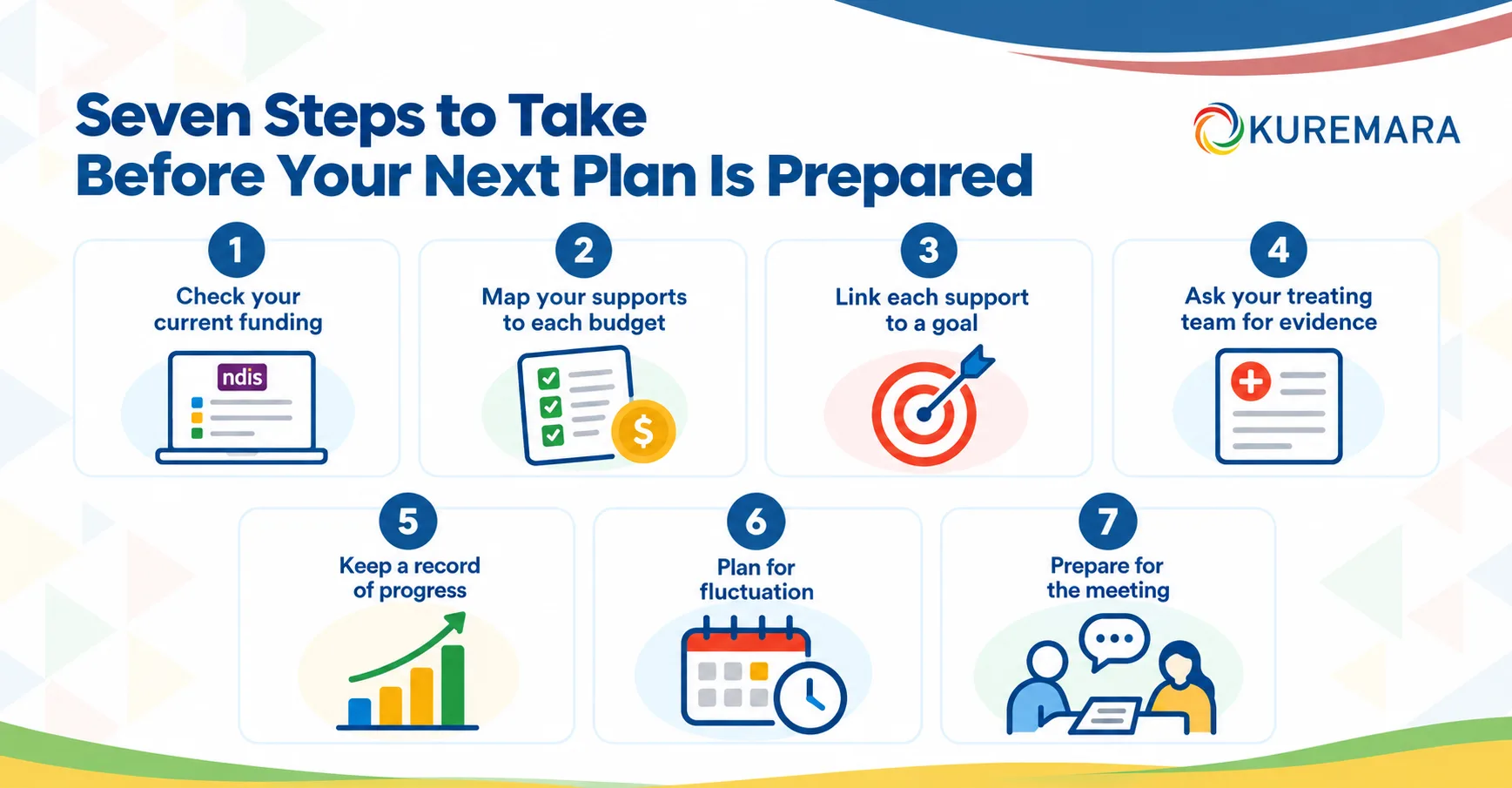
Seven Steps to Take Before Your Next Plan Is Prepared
Preparation makes the biggest difference to how a new plan turns out. These steps help you go in with clear priorities and the evidence to support them.
1. Check where your funding currently sits
Log in to your NDIS portal or app and look at each budget: how much you have used and what is left. Note your spending on community participation and daily living skills separately, because these are the two areas being reduced.
2. Map every support to its budget
List each support you use, who provides it, and which budget pays for it. Your plan manager or support coordinator can help with this. It shows you exactly which supports could be affected at your next plan.
3. Link each support to a goal and an outcome
For every community or skill-building support, write one or two sentences on what it helps you achieve. “Attends a weekly group with a worker, which has helped me leave the house on my own twice a week” is far stronger than “community access”.
4. Ask your treating team for evidence about function
Reports from your GP, psychiatrist, psychologist or occupational therapist carry more weight when they describe how your condition affects daily life, rather than only naming a diagnosis. Ask them to describe what you can and can’t do on good days and on harder days, and how often harder days happen.
5. Keep a simple record of what your supports achieve
Attendance, new skills, steadier routines and fewer crisis presentations are all worth noting. A short log kept over a few months becomes useful evidence when your NDIS plan reassessment comes around, and it helps you and your workers see progress too.
6. Plan for fluctuation
Write down what extra help looks like when things get harder, who to contact, and what has helped in the past. This shows a planner that your support needs change over time, and why some flexibility in your plan matters.
7. Prepare for the meeting itself
Bring a support person, write down your top three priorities, and ask the planner to explain anything that isn’t clear. You are entitled to understand how decisions about your plan are reached.
Six Ways to Stretch a Smaller Participation Budget
If your next plan does include less participation funding, these approaches can help you hold onto the supports that matter most.
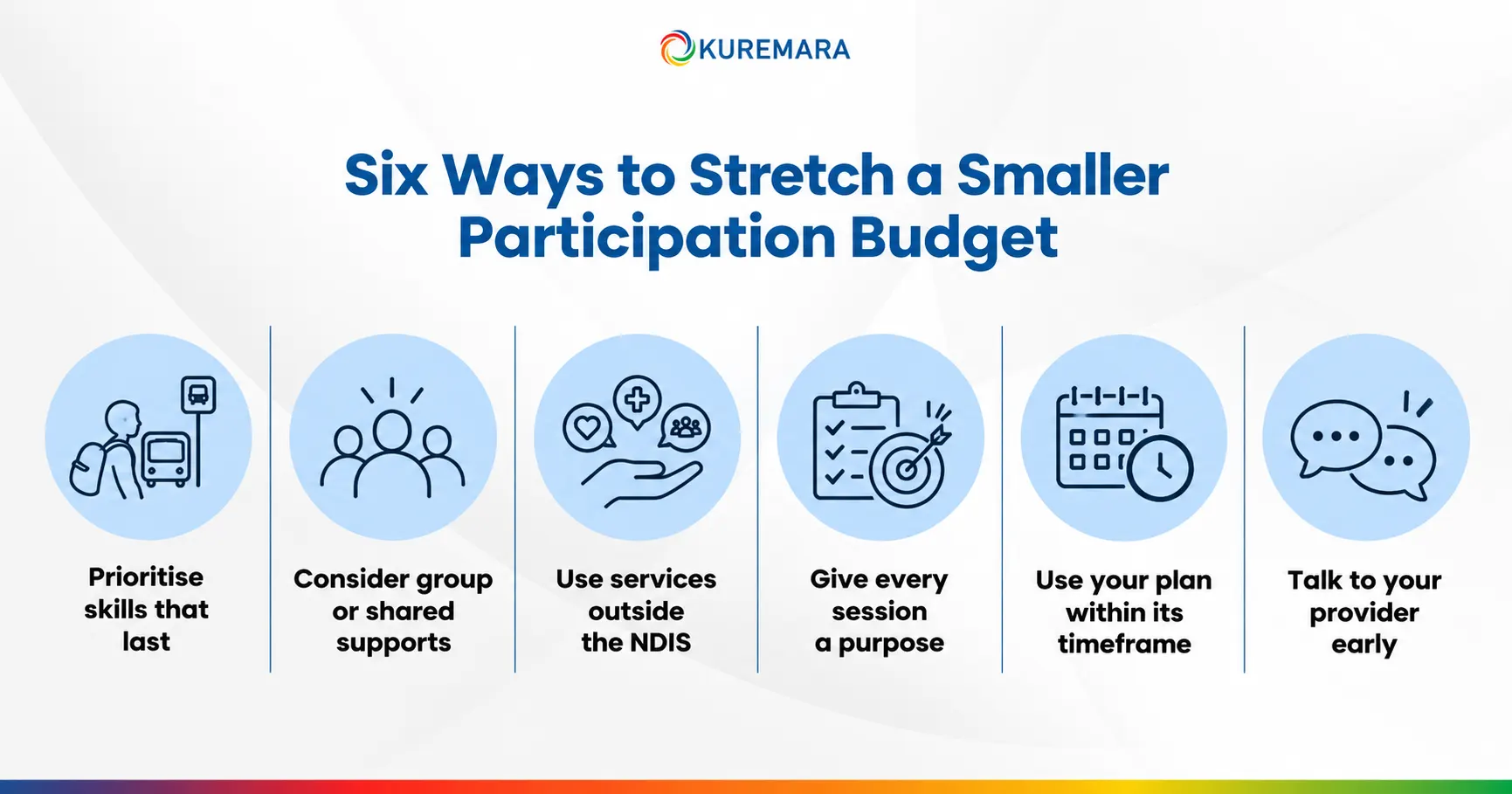
1. Prioritise skills that last
Supports that build independence, such as learning a public transport route or managing a shopping trip alone, keep paying off long after the funded hours end.
2. Consider group or shared supports
Group community activities with a worker present can cost less per hour than one-on-one support and add social connection at the same time. They won’t suit everyone, but they are worth discussing with your provider.
3. Use services outside the NDIS
Community mental health teams, Medicare-funded psychology, peer support groups and free local council programs can sit alongside NDIS supports. They don’t replace your plan, but they can extend what it covers.
4. Give every session a purpose
Agree with your worker what each session is for and how you will both know it is working. Purposeful sessions get more done, and they produce better evidence for your next plan.
5. Use your plan within its timeframe
From 1 February 2027, plan renewals replace plan continuations, and unspent funding does not carry over into a new plan. If you are well under or over budget, talk to your coordinator early rather than at the end of the plan.
6. Talk to your provider as soon as you know your budget
A good provider will work with you to reshape your roster around a new budget, rather than simply cutting hours. The earlier the conversation, the more options there are.
Looking Further Ahead
The participation budget changes are the first stage of a longer reform program. Under the new law, changes to how people access the Scheme are scheduled to begin for new applicants in January 2028. They will use standardised, evidence-based assessments of functional capacity, and existing participants will be reassessed over three years. The NDIA has also said permanence and treatability will be assessed more consistently.
There is nothing you need to lodge now. But keeping your evidence current, especially evidence about how your condition affects daily life, is the best preparation for whatever comes next. Our NDIS reform timeline sets out each key date in order.
Where to Get Help
Your support coordinator or local area coordinator is the best first contact for questions about your own plan. You can also call the NDIA on 1800 800 110. Free, independent disability advocacy services can support you through planning and reassessment, and your local area coordinator can point you towards one near you.
If you or someone you support is in crisis, call Lifeline on 13 11 14 at any time, or Triple Zero (000) in an emergency.
How Kuremara Can Help
Kuremara is a registered NDIS provider (registration number 4-GIGSGY1, ABN 82 653 599 761) supporting participants aged up to 65 with medical and mental health needs. Our roots are in primary healthcare in rural Queensland, and our mental health programs draw on in-house mental health nursing and psychology. We also provide community access, in-home support, supported independent living, short-term accommodation and support coordination.

This article is general information for NDIS participants, families and carers, current at the time of publication. It is not legal, financial, clinical or medical advice. NDIS rules and processes are changing, so always check current guidance with the NDIA, the NDIS Quality and Safeguards Commission or your support coordinator before making decisions about your plan.