care@kuremara.com.au
 1300 000 799
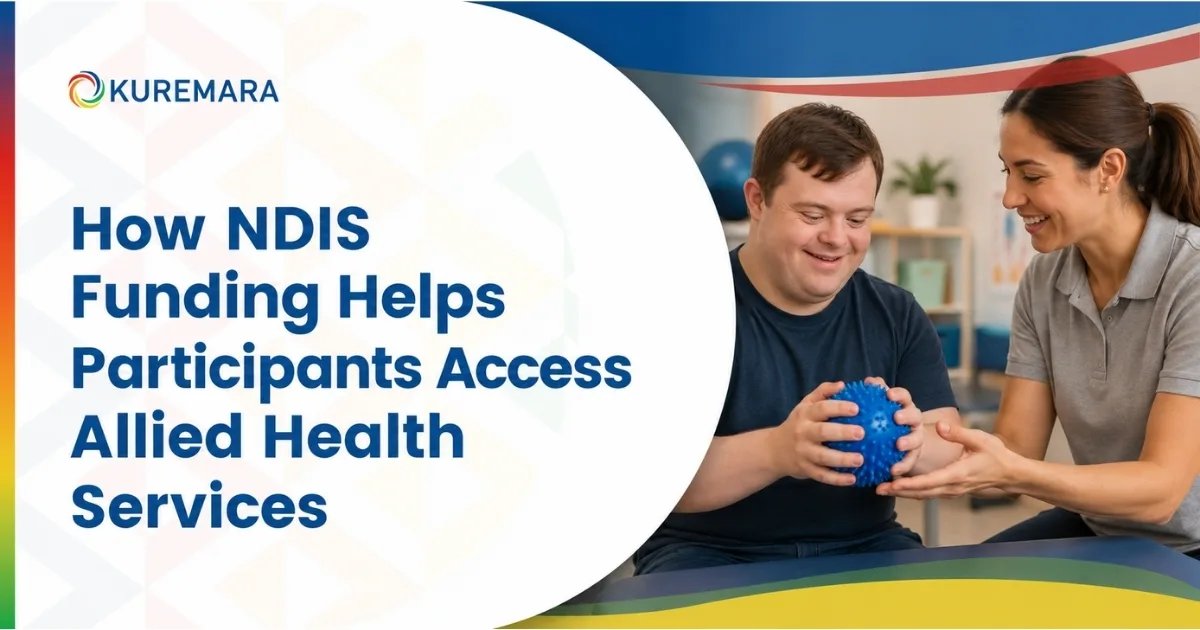
If you’ve ever looked at your NDIS plan and spotted funding for therapy supports, you might have wondered what it actually covers and how you go about using it. You’re definitely not alone. Allied health is one of the most valuable parts of many plans, yet the way it’s funded can feel a little confusing at first.
At Kuremara, we’ve spent more than ten years walking alongside participants and their families across Australia, helping people understand their plans and make confident choices about their support. Our belief is simple: quality support services matter most when choice matters. So in this article, we’ll break down how NDIS funding helps you access allied health services in clear, everyday language, with no jargon left unexplained.
Let’s start with what “allied health” really means.
What do we mean by “allied health services”?
Allied health is the umbrella term for a group of university-trained health professionals who help you build skills, manage your health, and take part in everyday life. They’re not doctors or nurses; instead, they focus on practical, goal-based support that helps you do more of what matters to you.
Some of the allied health professionals you might work with through the NDIS include:
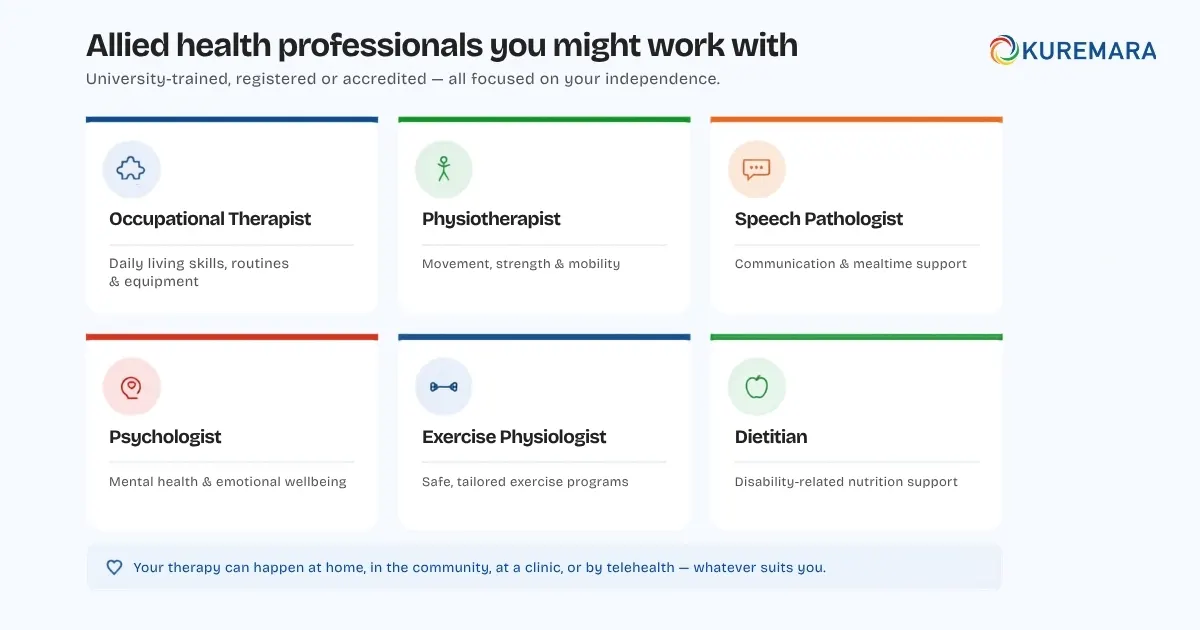
- Occupational therapists (OTs) — who help with daily living skills, routines, and recommend equipment or home adjustments
- Physiotherapists — who support movement, strength, mobility, and physical function
- Speech pathologists — who work on communication, language, and sometimes swallowing and mealtime support
- Psychologists — who support mental health, coping strategies, and emotional well-being
- Exercise physiologists — who design safe, tailored movement and exercise programs
- Dietitians — who provide nutrition support related to your disability
- Podiatrists and other specialised practitioners, depending on your needs
A quick but important point: under the NDIS, allied health is about supporting your function and independence in daily life, not hospital-based or clinical medical care. That focus on everyday living is exactly what makes these supports so meaningful.
Where allied health sits in your NDIS plan
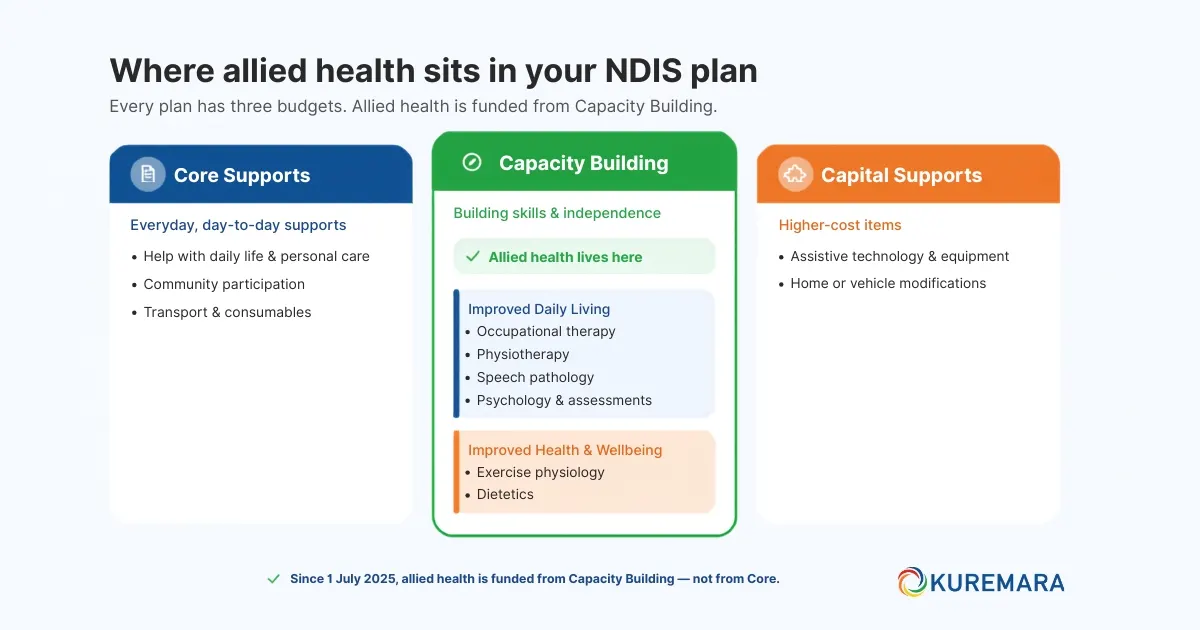
Every NDIS plan is divided into three main budgets: Core Supports, Capacity Building Supports, and Capital Supports. Allied health services live in the Capacity Building budget, because they’re all about helping you grow skills and independence over time.
Within Capacity Building, allied health is usually funded under one of two categories:
- Improved Daily Living — the most common home for therapies like occupational therapy, physiotherapy, speech pathology, psychology, and related assessments.
- Improved Health and Wellbeing — which can cover supports such as exercise physiology and dietetics.
It’s worth knowing about a change that came into effect on 1 July 2025. Before then, some participants could pay for therapy from their flexible Core budget. That’s no longer the case; allied health and general therapy supports now need to be funded specifically from your Capacity Building budget. Capacity Building funding is also less flexible than Core: it’s set aside for its purpose and generally can’t be shifted into other areas. Many plans now also release funding in stages across the year, so it helps to keep an eye on what’s available and when.
The practical takeaway? If allied health matters to you, it’s worth checking that your plan has Capacity Building funding allocated to cover it.
How allied health funding actually gets into your plan
NDIS funding is built around your goals. If improving your independence, communication, mobility, or wellbeing is part of what you want to achieve, allied health supports can be included to help you get there.
To have therapy supports added to a plan, the NDIS looks at whether they’re “reasonable and necessary” for you, meaning they’re genuinely linked to your disability and your goals. Usually, this is backed up by evidence from a relevant therapist: an assessment, a report, or a letter of recommendation that explains what support is needed, how often, and why it will help.
If you’re not sure whether you have enough allied health funding or you feel your needs have changed, that’s a worthwhile conversation to have with your planner or support coordinator, especially as you approach a plan reassessment.
Choosing your providers and how your plan is managed
One of the best things about the NDIS is choice and control. You get a real say in who provides your allied health services and how you work with them. How your plan is managed shapes some of those choices:
- Self-managed — you have the most flexibility and can choose registered or unregistered providers.
- Plan-managed — a plan manager handles the invoices, and you can still use registered or unregistered providers.
- NDIA-managed — you work with NDIS-registered providers.
You also have flexibility in where therapy happens. Many people see their allied health professionals at home, out in the community, at a clinic, or through telehealth video sessions, whatever suits their life, comfort, and access needs best.
Making your allied health funding go further
Allied health funding is valuable, so it makes sense to use it thoughtfully. A few things can help you get more from your budget:
- Therapy assistants: With your therapist’s recommendation, an allied health assistant can deliver some sessions under supervision, often at a lower rate a great way to keep practising skills between appointments.
- Telehealth: Video sessions can save travel time and costs while keeping your support consistent.
- Clear, shared goals: Working with your therapist to set specific goals helps every session count and makes progress easier to show at reassessment time.
- A team approach: When it suits your needs, several allied health professionals can work together as a coordinated team, though the NDIS won’t fund two therapists working on the exact same goal.
Keeping copies of your therapy reports and progress notes is also handy. They tell the story of how your support is helping, which is really useful when your plan comes up for review.
A quick note on what allied health funding doesn’t cover
It’s just as helpful to know where the boundaries sit. The NDIS generally won’t fund everyday costs that aren’t specific disability supports, for example, gym or pool memberships, or a personal trainer. General relaxation or remedial massage usually isn’t covered either, because massage therapists aren’t classified as allied health professionals even if a therapist suggests it.
It’s also good to remember the line between the NDIS and the health system. Clinical or hospital-based care, like recovery after surgery or acute medical treatment, is the responsibility of the health system (think Medicare and public hospitals), not the NDIS. Your NDIS allied health supports are there for disability-related function, skills, and independence in daily life.
How Kuremara can help you
Understanding all of this is one thing, putting it into action is another, and that’s where a bit of support can make a real difference. At Kuremara, we help participants and their families connect the dots between their plan and the services they actually need.
Through our support coordination, we can help you understand your Capacity Building funding, find allied health professionals who genuinely suit your goals, and keep everything running smoothly so you can focus on what matters. We’re a registered NDIS provider delivering tailored, person-centred support across Australia, and we’re always guided by your choices, your goals, and your pace. Whether you’re just getting started or rethinking your current supports, our team is here to walk alongside you.
Final thoughts
Allied health can be one of the most life-changing parts of an NDIS plan, supporting your independence, your wellbeing, and your ability to do the everyday things that matter to you. The funding behind it doesn’t have to be a mystery. Once you understand where it sits, how it gets into your plan, and how to use it well, you can approach your supports with a lot more confidence.
If you’d like a hand making sense of your plan or connecting with the right allied health supports, the Kuremara team would love to help. Reach out any time on 1300 000 799, email care@kuremara.com.au, or visit kuremara.com.au because quality support services matter most when choice matters.