care@kuremara.com.au
 1300 000 799
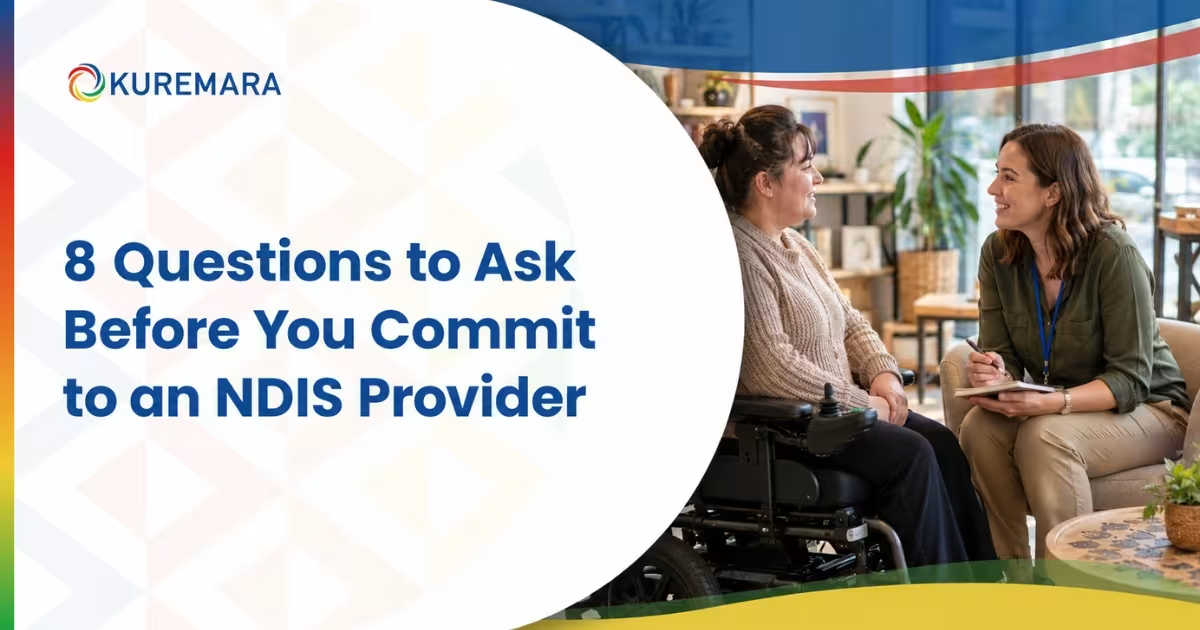
Choosing an NDIS provider is one of the most important decisions you’ll make on your support journey, and it’s a decision that deserves more than a quick phone call and a signature. The right provider becomes part of your daily life. They shape your independence, your wellbeing, and your ability to reach the goals in your plan. The wrong fit can cost you time, funding, and confidence.
The good news is that you don’t have to make this choice in the dark. At the heart of the NDIS is a simple, powerful principle: choice and control. You have the right to ask questions, compare options, and only commit when you’re genuinely comfortable. In fact, the National Disability Insurance Scheme now supports over 700,000 Australians, and the number of providers has grown into the hundreds of thousands, which means you have real choice, but also a real need to choose well.
This guide walks you through eight questions worth asking before you sign a service agreement. Ask them of every provider you’re considering, including us. A provider worth trusting will welcome every one of them.
Quick answer: the 8 questions at a glance
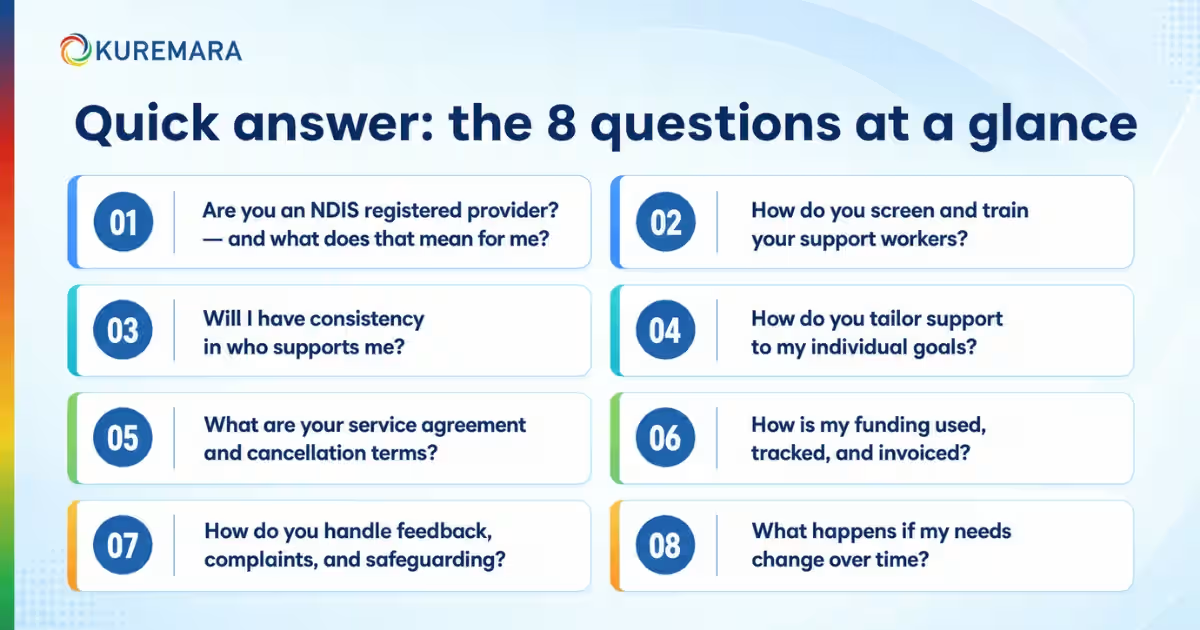
If you only take one thing from this article, take this checklist:
1. Are you an NDIS registered provider? — and what does that mean for me?
2. How do you screen and train your support workers?
3. Will I have consistency in who supports me?
4. How do you tailor support to my individual goals?
5. What are your service agreement and cancellation terms?
6. How is my funding used, tracked, and invoiced?
7. How do you handle feedback, complaints, and safeguarding?
8. What happens if my needs change over time?
The rest of this article explains why each question matters and what a strong answer sounds like, so you can compare providers with confidence.
1. Are you an NDIS registered provider — and what does that mean for me?
This is the first question for a reason. Not every provider is registered, and the difference matters.
A registered NDIS provider has been approved by the NDIS Quality and Safeguards Commission after meeting strict quality and safety standards, and is held accountable through regular independent audits against the NDIS Practice Standards. An unregistered provider has not gone through that process, and while many deliver good support, they are not subject to the same consistent regulatory oversight.
Why this affects you directly:
- Who can use them. If your plan is NDIA-managed (agency-managed), you can generally only use registered providers. If you’re plan-managed or self-managed, you can choose either. So registration can determine whether a provider is even available to you.
- Certain supports require registration. Some higher-need supports, including Specialist Disability Accommodation (SDA), behaviour support involving regulated restrictive practices, and plan management, can only be delivered by registered providers.
- Accountability. With a registered provider, you have a clear path of recourse through the NDIS Commission if something goes wrong.
What a strong answer sounds like: “Yes, we’re registered, here’s our registration, and here’s what we’re audited against.” Kuremara is a fully NDIS registered provider, which means our supports are independently audited against the NDIS Practice Standards.
Sources: NDIS Quality and Safeguards Commission; NDIS — plan management and provider choice.
2. How do you screen and train your support workers?
The person who walks through your door matters more than any brochure. You are entitled to know exactly who is being sent to support you, and how they’ve been vetted.
Registered providers are legally required to ensure that workers in risk-assessed roles hold a current NDIS Worker Screening Check, a check carried out by a state or territory screening unit that assesses whether a worker is cleared or excluded from working with people with disability. These clearances are valid for five years and can be reviewed or revoked if new risk information arises. All providers, registered or not, are also bound by the NDIS Code of Conduct.
Questions worth pressing on:
- Do all support workers hold a current NDIS Worker Screening clearance?
- What ongoing training do staff receive (first aid, manual handling, medication, complex care, cultural safety)?
- How are workers matched to participants by skill, by need, by personality?
What a strong answer sounds like: clear, specific, and proud of it, not vague. A quality provider treats screening and training as a foundation, not a formality.
Source: NDIS Commission — Worker Screening.
3. Will I have consistency in who supports me?
Trust is built through familiarity. For many participants, a rotating cast of unfamiliar faces is exhausting and unsettling, especially for people with complex or high support needs, where continuity directly affects safety and wellbeing.
Ask a prospective provider:
- Will I have a consistent support team, or different workers each visit?
- What happens when my regular worker is sick or on leave?
- How much say do I have in who supports me, and can I request a change if it isn’t working?
Consistency isn’t a luxury; it’s central to dignity and good support. A provider’s honest answer here tells you a great deal about how they actually operate day to day.
4. How do you tailor support to my individual goals?
The NDIS is built around person-centred supports designed around your goals, not a one-size-fits-all template. Your plan is unique, and your support should be too.
Good questions to ask:
- How do you get to know a new participant before support begins?
- Who writes my support plan, and how involved am I in shaping it?
- How do you make sure my supports connect to the goals in my NDIS plan?
- Can support flex around my routine, culture, and preferences, not the other way around?
What a strong answer sounds like: the provider talks about your goals, your routine, your independence rather than only their services. Kuremara’s approach centres on tailored, person-centred support, because we believe quality support means choice matters.
5. What are your service agreement and cancellation terms?
A service agreement is the written understanding between you and your provider. It should be clear, plain-language, and fair never something you feel pressured to sign on the spot.
Before you commit, read it carefully and ask:
- What exactly is included, and at what price? (Providers should charge in line with the current NDIS Pricing Arrangements and Price Limits.)
- What are the notice periods and cancellation terms?
- How much notice do I need to give to change or end services?
- Are there any exit fees or lock-in periods?
Take the agreement home. Read it slowly. Ask someone you trust a family member, a support coordinator, or an advocate to read it with you. A reputable provider will give you the time and space to do exactly that.
Reference: NDIS Pricing Arrangements and Price Limits.
6. How is my funding used, tracked, and invoiced?
Your NDIS funding is precious, and you have every right to understand how it’s being spent. Transparency around money is a strong signal of a trustworthy provider.
Ask:
- How and when will I receive invoices, and how detailed are they?
- How do you make sure claims match the supports I actually received?
- Who do I contact if I have a question about a charge?
- How do you help me get value from my plan without unnecessary spending?
Clear, itemised, timely invoicing means you can always see where your funding goes. If a provider is hesitant or vague about this, treat it as a warning sign.
7. How do you handle feedback, complaints, and safeguarding?
Even great providers get things wrong sometimes. What separates the best is how they respond and whether they’ve built genuine safeguards around your wellbeing.
The paramount consideration under the NDIS is the right of people with disability to live free from abuse, violence, neglect, and exploitation. Every provider should be able to explain, plainly:
- How do I raise a concern or make a complaint, and what happens next?
- How do you protect participants from harm, and how do you handle incidents?
- Do you welcome feedback, or treat it as a nuisance?
You should also know that you can always take a concern directly to the NDIS Quality and Safeguards Commission independently of your provider. A confident, caring provider will actively tell you this, not hide it.
What a strong answer sounds like: an open feedback process, a clear complaints pathway, and no defensiveness. Kuremara maintains a dedicated feedback and complaints pathway because listening is part of good care.
Source: NDIS Commission — making a complaint.
8. What happens if my needs change over time?
Life doesn’t stand still and neither should your support. Your needs may grow, shift, or become more complex. The provider you choose today should be able to walk alongside you tomorrow.
Ask:
- Can you scale support up or down as my needs change?
- What range of services do you offer if I need something new later?
- How do you support me through plan reviews and changes?
- If my needs become more complex, can you still support me or will I have to start over with someone new?
A provider with a broad range of services and experience across different support levels means you can grow with them, rather than searching for a new provider every time your circumstances change.
Bringing it all together
Committing to an NDIS provider isn’t just an administrative step; it’s choosing who will help you live the life you want. These eight questions are your tool for cutting through marketing and getting to what matters: safety, quality, consistency, transparency, and genuine, person-centred care.
Here’s the encouraging part: a provider truly worth your trust won’t just tolerate these questions; they’ll welcome them. Openness is the clearest sign of a provider who puts you first.
Why families across Australia choose Kuremara
At Kuremara, we’ve spent more than a decade delivering tailored disability support across Australia from Southeast and Central Queensland to Sydney and Greater Melbourne. As a fully NDIS registered provider, everything we do is grounded in the standards this article describes: rigorous worker screening, person-centred planning, transparent agreements, and a genuine commitment to your independence and dignity.
Our services span Supported Independent Living (SIL), Individualised Living Options (ILO), Short-Term Respite, Complex Care, Mental Health Support, Support Coordination, In-Home Support, Community Access, Community Nursing, and Disability Transport, so as your needs evolve, your support can evolve with you.
Because when it comes to your support, choice matters.
Ready to ask us these eight questions?
We’d love to answer every one of them.
- 🔎 Explore our services: kuremara.com.au
- 💬 Have a no-pressure chat: Get in touch with our team
- 📞 Call us today: 1300 000 799
- ✉️ Email: care@kuremara.com.au
Kuremara — Quality support services when choice matters.
This article is general information only and does not constitute individual advice. For details specific to your situation, please contact us or speak with your support coordinator. Regulatory information is drawn from the NDIS Quality and Safeguards Commission and the National Disability Insurance Scheme; figures and requirements referenced are current as of 2026 and may be updated over time.