care@kuremara.com.au
 1300 000 799

Work is more than a pay cheque. It is a source of purpose, identity, social connection, and financial independence. Yet for the 4.4 million Australians living with disability, roughly 17.7% of the national population, barriers to employment have historically been substantial, persistent, and, too often, underestimated.
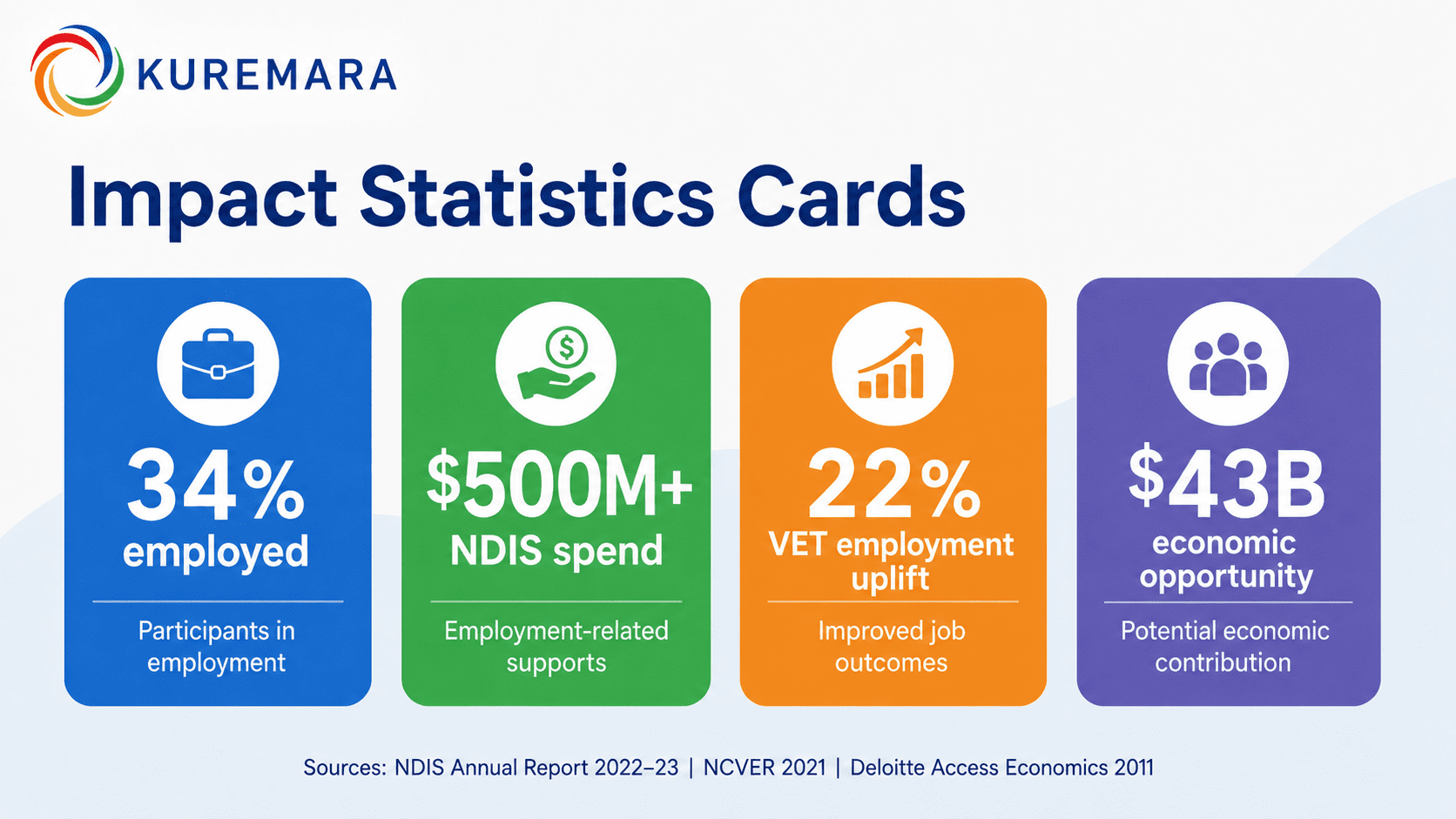
The National Disability Insurance Scheme (NDIS) was designed, in part, to change that reality. By funding individualised supports and partnering with registered providers, the NDIS is creating genuine pathways into the workforce for people whose potential had long been overlooked. According to the NDIS Annual Report 2022–23, approximately 34% of NDIS participants of working age (15–64 years) reported having paid employment, a figure that rises meaningfully among participants who access employment-related supports.
This article explores the full spectrum of ways that NDIS providers are helping participants build sustainable careers: from early skill development and vocational training, through to supported employment, workplace accommodations, mentoring and the confidence-building that underpins long-term success.
Understanding the NDIS and Employment
The NDIS is Australia’s national scheme for people with permanent and significant disability. Managed by the National Disability Insurance Agency (NDIA), it provides eligible participants with individually tailored plans that fund the reasonable and necessary supports they need to live an ordinary life, including, critically, the supports that help them find and keep work.
Employment supports under the NDIS sit primarily within the Capacity Building Employment budget category. These funds can pay for activities that directly improve a participant’s ability to find, prepare for, and maintain employment. Importantly, NDIS employment supports are complementary to and not in competition with mainstream employment services like Disability Employment Services (DES), which are funded separately by the Australian Government through the Department of Social Services.
Data from the NDIS Quarterly Report (September 2023) shows that of the 580,000-plus active participants, more than 100,000 are of working age and have employment-related goals included in their plans. This scale underscores why the quality and variety of provider support matters so enormously.
How NDIS Providers Help Participants Build Careers
Registered NDIS providers deliver a broad range of employment-oriented supports. What follows is a comprehensive look at every major avenue through which providers are turning employment aspirations into lived reality.
1. Developing Foundational Employment Skills
Before a participant can enter the open labour market, they often need to build the fundamental competencies that employers expect. Providers deliver structured programs covering:
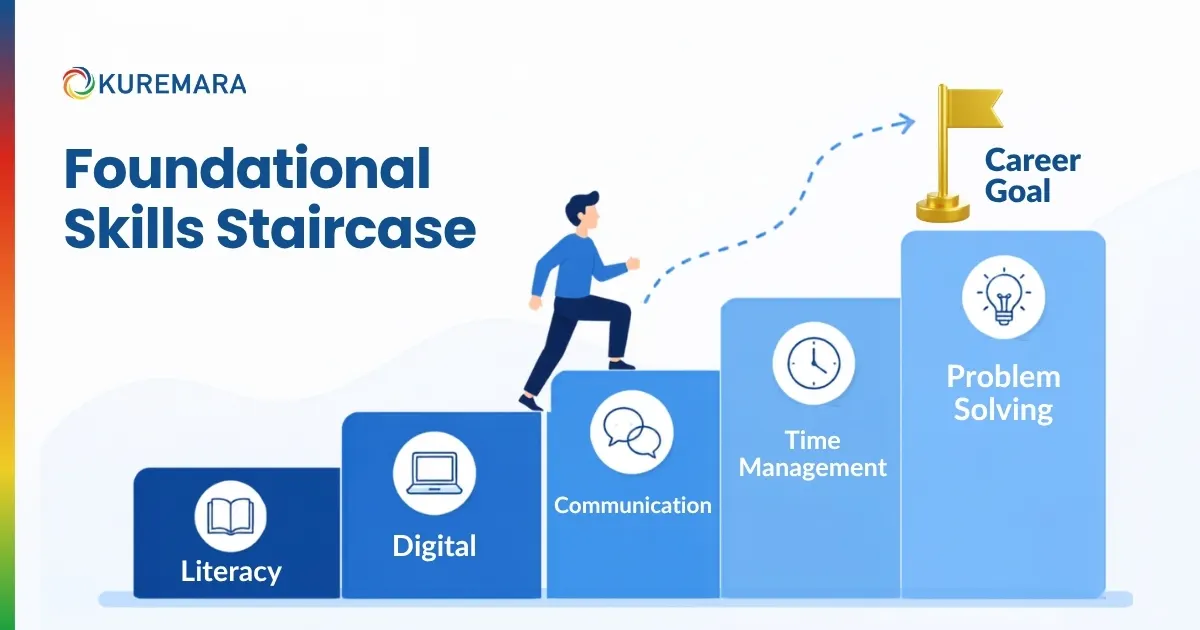
a. Literacy and numeracy — targeted sessions aligned to the Australian Core Skills Framework (ACSF), giving participants the reading, writing, and calculation skills needed for workplace documents and tasks.
b. Digital literacy — basic computing, email etiquette, online job portals, and collaboration tools such as Microsoft Teams, which are now standard in most workplaces.
c. Communication and self-advocacy — helping participants articulate their strengths, communicate access needs clearly, and interact confidently with managers and colleagues.
d. Time management and workplace routines — practising punctuality, shift structures, break schedules, and the daily rhythms of employment through simulated or supported work settings.
e. Problem-solving and conflict resolution — equipping participants with the soft skills that research consistently identifies as decisive for long-term job retention.
2. Vocational Training and Qualifications
For many participants, a formal qualification is the most direct route to a viable career. NDIS providers can fund or facilitate access to vocational training in several ways:
a. Co-ordinating enrolment in Registered Training Organisation (RTO) courses — covering everything from Certificate II in Hospitality to Certificate IV in Disability Support Work.
b. Funding specialist study supports — note-takers, Auslan interpreters, assistive technology for the classroom, or a support worker who accompanies the participant to TAFE.
c. Arranging micro-credentialing and short courses — industry-specific certifications (food safety, first aid, forklift licence) that boost employability in targeted sectors.
d. Bridging to university — some providers offer pre-tertiary skill development for participants who have academic ambitions but need additional preparation.
A 2021 report by the National Centre for Vocational Education Research (NCVER) found that Australians with disability who completed a VET qualification were 22 per cent more likely to be employed within 12 months of finishing their course than those who did not access formal training.
3. Job Readiness Programs and Work Experience
Knowing what you want to do is different from knowing how to get there. NDIS providers bridge this gap through structured job readiness programs that include:
a. Resume writing workshops — creating professional, strengths-based CVs that disclose disability on the participant’s own terms.
b. Mock interviews — rehearsing common interview questions, practising STAR-format answers, and managing interview anxiety through repeated exposure.
c. Work experience placements — negotiating short-term, unpaid or trial placements with local businesses so participants can demonstrate their capabilities in a real environment.
d. Job sampling — structured opportunities to try a range of roles across different industries before committing to a specific career direction.
e. Industry visits and workplace tours — demystifying the physical and cultural environment of potential employers, reducing first-day anxiety.
4. Supported Employment
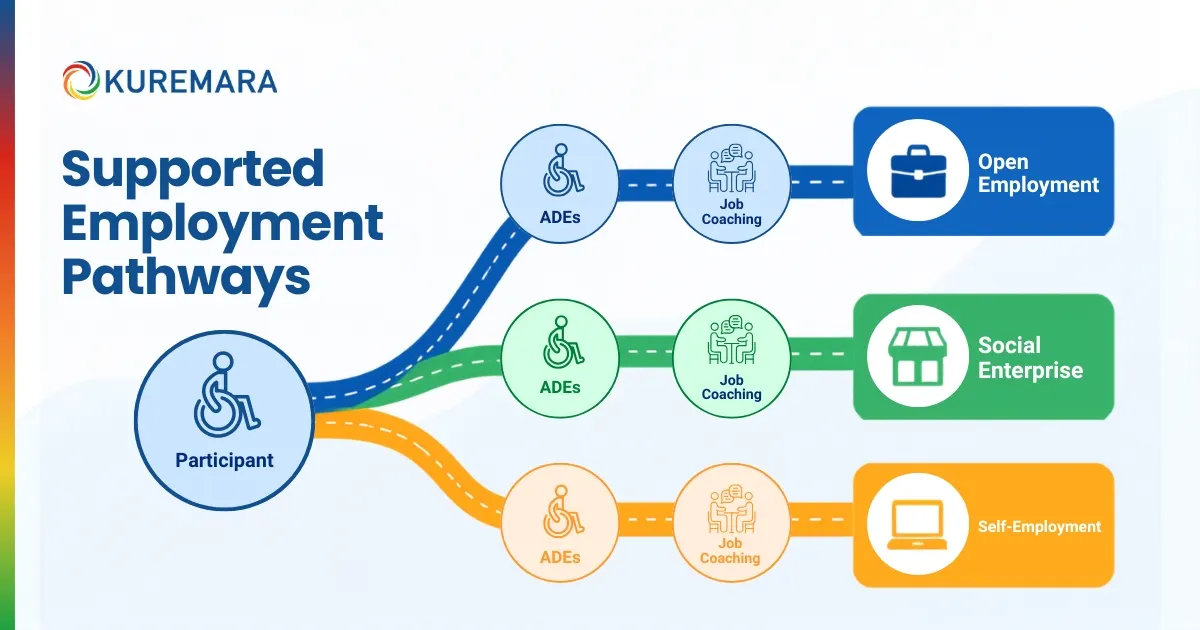
For participants who require ongoing workplace assistance, supported employment is a core service model. Under this model, an NDIS-funded job coach or employment support worker works alongside the participant at their actual worksite to assist with task completion, workplace communication, and navigating day-to-day challenges.
The intensity of support is tailored to each individual and can be faded over time as the participant grows in confidence and competence. According to the NDIA, supported employment is one of the most consistently requested employment supports within NDIS plans, with expenditure in this category exceeding $500 million in the 2022–23 financial year.
Supported employment settings range across open employment (mainstream businesses), social enterprises (businesses that deliberately employ people with disability), and Australian Disability Enterprises (ADEs) organisations that provide medium to long-term employment specifically tailored to participants with higher support needs.
5. Customised and Self-Employment Pathways
Not every participant flourishes in a conventional employment structure. Customised employment is an evidence-based practice where a provider analyses an individual’s unique strengths, interests, and support needs, then works with an employer to design a role that fits rather than squeezing the participant into an existing vacancy.
Similarly, supported self-employment is a growing pathway. Some NDIS participants have the drive, skills, and ideas to run their own micro-business as photographers, gardeners, artists, bakers, online sellers, or creative consultants. Providers can support this by:
-
-
- Funding business planning support and financial literacy coaching.
- Connecting participants with mentors who have relevant industry experience.
- Assisting with access to government small business grants and programmes.
- Providing ongoing administrative or operational support to sustain the business.
-
6. Assistive Technology for the Workplace
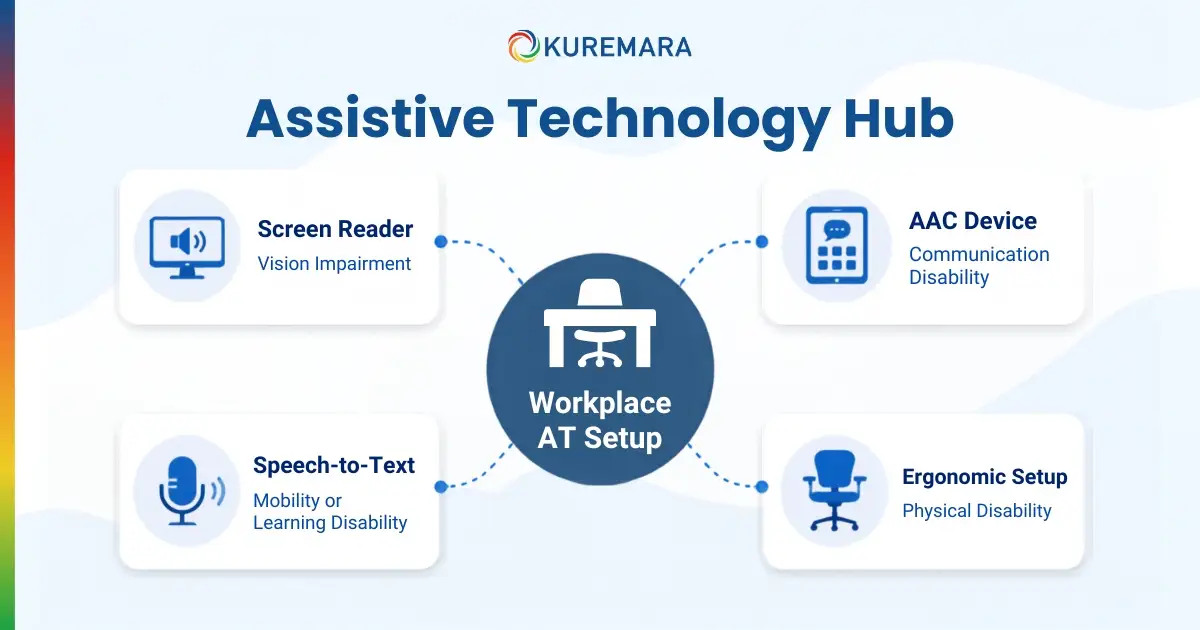
Technology is often the difference between a participant being able to perform a role independently and needing constant human support. NDIS providers can coordinate assessment and supply of workplace-specific assistive technology (AT), including:
-
-
- Screen readers and magnification software for participants with vision impairment.
- Speech-to-text and text-to-speech tools for participants with motor or learning disabilities.
- Communication devices (AAC — Augmentative and Alternative Communication) for participants who are non-verbal or have limited speech.
- Ergonomic workstation equipment — specialised chairs, adjustable desks, keyboard adaptations for participants with physical disability.
- Noise-cancelling headsets and sensory tools for participants with autism or sensory processing differences.
-
Providers coordinate AT assessments, liaise with employers about reasonable adjustments under the Disability Discrimination Act 1992 (Cth), and ensure that equipment is both suitable and properly set up before the participant starts work.
7. Transport Support to and from Work
One of the least visible but most practical barriers to employment for NDIS participants is transport. Many participants cannot drive, find public transport overwhelming, or live in areas with limited transit options. NDIS plans can fund:
-
-
- Travel training — a structured program in which a support worker accompanies the participant on their commute repeatedly until they can manage the journey independently.
- Transport support workers — a provider employee who travels with the participant to and from work on an ongoing basis.
- Vehicle modifications funding — for participants who have a driver’s licence but require hand controls or other adaptations.
-
8. Mental Health and Psychosocial Support
Entering the workforce or returning after a period out of work can be anxiety-provoking for anyone. For participants with psychosocial disabilities or mental health conditions, the emotional dimensions of employment may require specific support. NDIS providers address this through:
-
-
- Counselling and psychology services — helping participants manage workplace anxiety, build resilience, and process any experiences of discrimination.
- Peer support programs — connecting participants with others who have successfully navigated the employment journey, providing lived-experience mentoring.
- Gradual exposure strategies — working with participants to incrementally increase hours, tasks and workplace complexity in a manageable, low-stress way.
- Crisis and early intervention planning — establishing clear protocols for what to do if workplace stress escalates, ensuring continuity of employment rather than resignation.
-
Research published in the Australian & New Zealand Journal of Psychiatry found that supported employment, when integrated with mental health treatment, significantly improved both employment outcomes and mental health recovery among people with severe mental illness.
9. Support Co-ordination and Plan Management
A sophisticated employment support ecosystem is only useful if participants can navigate it effectively. Support coordinators play a pivotal role by:
-
-
- Identifying and connecting participants with the most suitable employment services within their community and beyond.
- Bridging NDIS employment supports with DES providers, Centrelink requirements, and employer expectations.
- Reviewing and adjusting NDIS plans as employment goals evolve, securing additional funding for new training, equipment, or ongoing support.
- Advocating on behalf of participants with employers, landlords, and government agencies.
- Resolving service breakdowns quickly so that employment support is never interrupted.
-
10. Employer Engagement and Awareness Training
Some of the most impactful work that providers do happens before a participant even steps into a workplace. Proactive employer engagement activities include:
-
-
- Educating local businesses about the tangible benefits of employing people with disabilities, including access to the Job Access Employment Assistance Fund (EAF) for workplace modifications.
- Running disability confidence workshops for HR teams, line managers, and co-workers.
- Negotiating flexible working arrangements altered start times, remote work options, and modified duties on behalf of participants.
- Establishing employer partnerships and preferential hiring agreements that give participants a reliable pipeline of opportunities.
- Following up post-placement to resolve any employer concerns early, reducing the risk of premature termination.
-
Barriers NDIS Providers Help Overcome
Understanding what NDIS providers do is most meaningful when viewed against the barriers they are helping to dismantle. The following table summarises key employment barriers and the provider supports that address them:
| Barrier | NDIS Provider Support |
| Low skills or qualifications | Vocational training co-ordination and foundational skills programs |
| Interview anxiety/lack of experience | Job readiness programs, mock interviews, and work experience placements |
| Inaccessible workplace or technology | Assistive technology assessment and employer reasonable adjustments advocacy |
| Transport limitations | Travel training, ongoing transport support workers, and vehicle modifications |
| Mental health and psychosocial barriers | Counselling, peer support, and gradual exposure strategies |
| Employer bias or low awareness | Employer engagement, disability confidence training, and workplace liaison |
| Inadequate plan funding | Support co-ordination to review and optimise NDIS plans |
Real-World Impact: What the Data Says
Evidence on the employment outcomes of NDIS participants who access supported employment services is increasingly robust:
- The NDIS Annual Report 2022–23 found that participants who accessed employment supports through their plan were significantly more likely to report paid employment than those who did not.
- The Australian Institute of Health and Welfare (AIHW) reports that people with disabilities who are employed have substantially better wellbeing, mental health, and community participation outcomes than those who are unemployed.
- Deloitte Access Economics estimated that increasing the workforce participation rate of people with disabilities to match the broader Australian population would add approximately $43 billion annually to the national economy.
- The NDIA’s own participant outcome data shows that employment supports correlate with improvements not just in work participation, but in daily living skills, social participation, and overall quality of life.
The NDIS and Disability Employment Services: Working Together
A common source of confusion for participants is understanding how NDIS employment supports relate to Disability Employment Services (DES) the Federal Government program administered by registered employment services providers that helps people with disability find and keep a job.
The two systems are designed to complement each other, not duplicate. As a general guide:
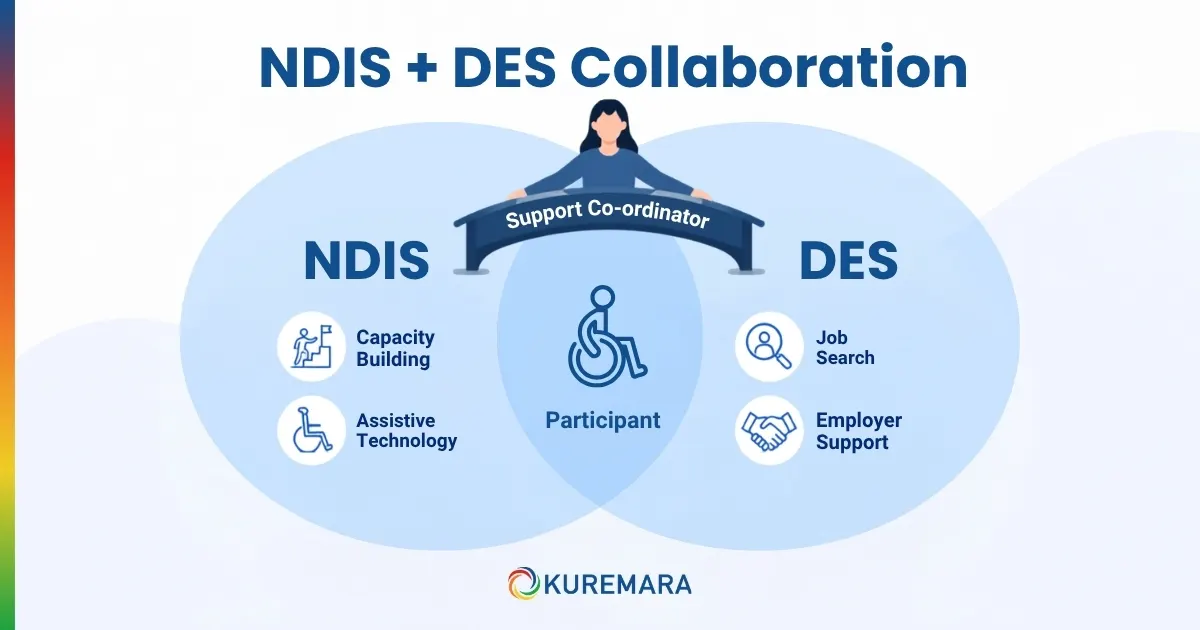
- DES focuses on job placement, employer liaison, and post-placement follow-up in the open labour market. These services are free to eligible participants and paid for by the Federal Government.
- NDIS employment supports focus on building the underlying capacity skills, confidence, assistive technology, transport, mental health that enable a participant to benefit from DES services.
- A participant can, and often should, be enrolled with both a DES provider and receive NDIS capacity building supports simultaneously.
- Support co-ordinators play a critical role in ensuring the two service streams are properly aligned and that there is no duplication of funding.
Choosing the Right NDIS Provider for Employment Support
Not all NDIS providers offer the same breadth or quality of employment support. When selecting a provider, participants and their families should consider:
1. Registration with the NDIS Quality and Safeguards Commission — all NDIS providers delivering employment supports must be registered and meet strict practice standards.
2. Track record and specialisation — ask for outcome data, testimonials, and evidence of employment placements, particularly in sectors that interest the participant.
3. Person-centred approach — a quality provider will invest time in understanding the participant’s goals, strengths, and preferences before recommending supports.
4. Collaborative networks — the best providers maintain strong relationships with local employers, DES providers, RTOs, and allied health professionals.
5. Cultural competency — providers should demonstrate cultural safety for Aboriginal and Torres Strait Islander participants and those from CALD (Culturally and Linguistically Diverse) backgrounds.
6. Flexibility and responsiveness — employment journeys are rarely linear; providers must be able to adapt plans quickly as circumstances change.
How Kuremara Supports NDIS Participants in Building Their Careers
At Kuremara, we believe that every person, regardless of the nature or severity of their disability, deserves the opportunity to build a working life that reflects their ambitions. As a Registered NDIS Provider, we deliver a holistic, participant-first approach to employment support that spans every stage of the career journey.
Our employment support services include foundational skills development, vocational training coordination, job readiness coaching, workplace assistive technology assessment, supported employment in partnership with local businesses, and comprehensive support coordination to ensure every aspect of a participant’s NDIS plan is working together toward their career goals.
We work closely with DES providers, RTOs, employers, and allied health professionals across Australia to ensure our participants receive seamless, well-coordinated support, not a fragmented patchwork of services. Our team brings lived experience, clinical expertise, and a genuine commitment to outcomes that extend well beyond a first day of work.
Whether you are an NDIS participant exploring employment for the first time, a parent or carer seeking opportunities for a family member, or an employer wanting to build a more inclusive workforce, Kuremara is here to help. Reach out to our team to discuss how we can tailor a support plan that moves your career goals from aspiration to achievement.
Conclusion
Disability does not define what a person can contribute to the workforce, and the NDIS, when properly leveraged, is a powerful vehicle for ensuring that contribution is made possible. From foundational skills training and vocational qualifications to customised employment, assistive technology, mental health support, and employer engagement, registered NDIS providers are working every day to dismantle the barriers that have kept so many talented Australians on the sidelines of the economy.
The evidence is clear: employment improves wellbeing, independence, and quality of life for people with disabilities. And the right NDIS provider, one that listens, adapts, and advocates, can make all the difference between a plan on paper and a career in practice.
For participants, families, and carers seeking to unlock the full employment potential of the NDIS, the message is simple: you do not have to navigate this alone, and you do not have to settle for anything less than a career that is meaningful, sustainable, and yours.