care@kuremara.com.au
 1300 000 799
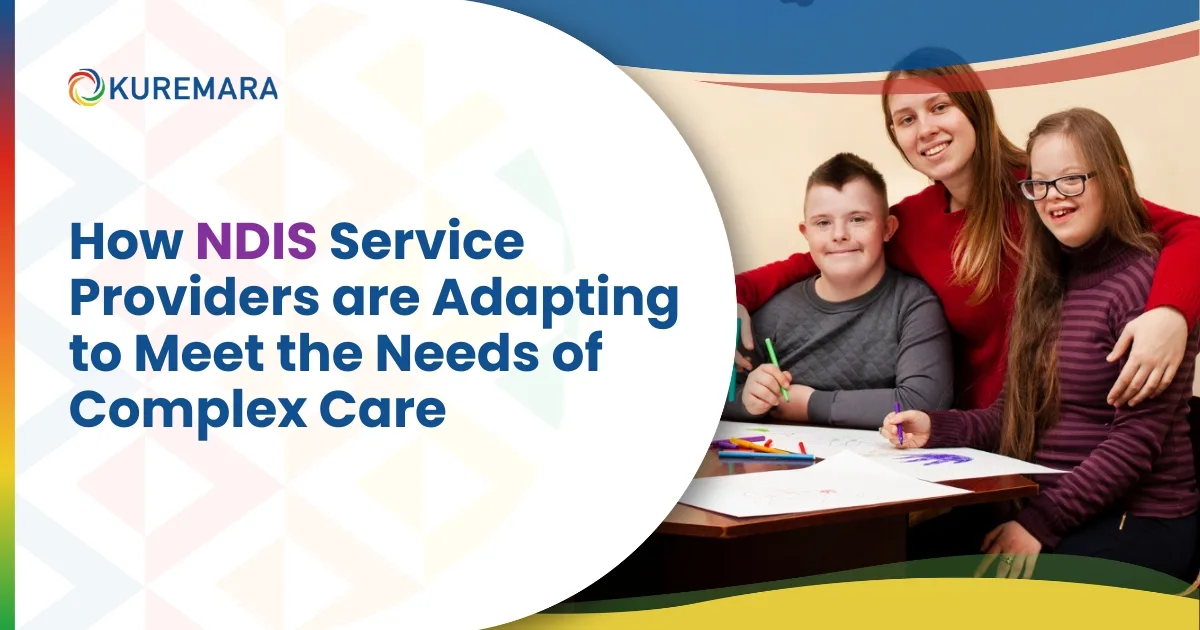
Behind every NDIS plan is a person, and behind every person is a story that rarely fits neatly into a single category. For participants living with complex care needs, support isn’t about ticking boxes on a service agreement. It’s about feeling genuinely seen, safe, and understood, often across many areas of life at once.
Complex care can mean a lot of things. It might involve multiple co-occurring disabilities, significant medical needs, mental health considerations, behavioural support requirements, or a combination of all of these. What these situations share is that they demand more than a standard, one-size-fits-all approach. They require flexibility, deep coordination, clinical confidence, and above all, a human touch.
As the needs of participants grow more nuanced, NDIS service providers across Australia are rethinking how they deliver support. The providers leading this shift are the ones treating complexity not as a problem to be managed, but as a person to be supported. Here’s how that adaptation is taking shape and what it means for participants, families, and carers.
Understanding What “Complex Care” Really Means
The phrase “complex care” can sound clinical, even intimidating. But at its heart, it simply describes situations where a person’s support needs are layered and interconnected.
A participant might require high-intensity daily personal care alongside support for a psychosocial disability. Another might be navigating life with a degenerative condition while also managing communication barriers and a need for specialised equipment. Some participants move between hospital, home, and community settings, requiring seamless continuity at every transition.
What makes care “complex” is rarely the diagnosis alone. It’s the way different needs intersect, the coordination required between health professionals and support workers, and the importance of getting the small details right, every single day. Recognising this is the first step. Responding to it well is where thoughtful providers are now focusing their energy.
Building Skilled, Specialised Support Teams
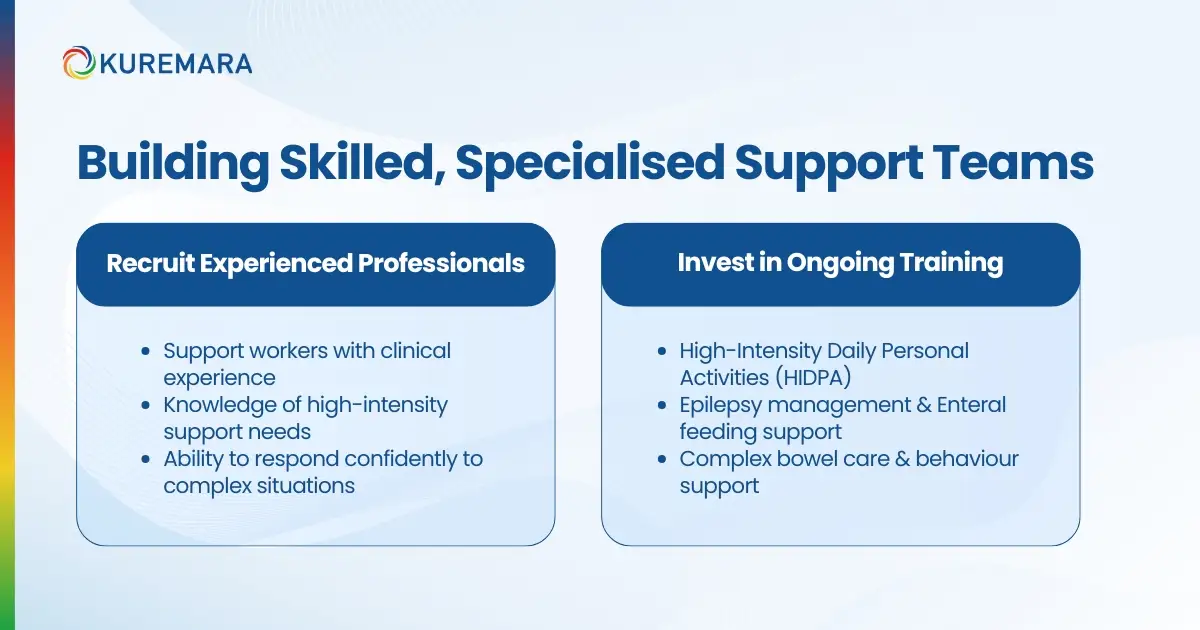
You cannot deliver complex care with a generalist mindset. One of the most significant shifts among NDIS providers has been investing in the capability of their workforce.
This means recruiting support workers with clinical experience, providing ongoing training in areas like high-intensity daily personal activities, epilepsy management, enteral feeding, bowel care, and complex behaviour support. It means having registered nurses and allied health professionals available to guide care, supervise tasks, and step in when situations escalate.
Just as importantly, it means matching the right worker to the right participant. A skilled team isn’t only about qualifications; it’s about consistency, trust, and the kind of relationship where a participant feels comfortable and a family feels reassured. Providers are increasingly recognising that continuity of carer is not a luxury; for someone with complex needs, it can be the difference between feeling safe and feeling vulnerable.
Coordinating Care Across Multiple Services
Complex care almost never sits with one provider or one professional. A single participant might be supported by a GP, a specialist, a physiotherapist, an occupational therapist, a behaviour support practitioner, a support coordinator, and a team of support workers, all at the same time.
When these pieces don’t communicate, participants and families end up carrying the burden of repeating their story, chasing updates, and holding everything together themselves. That is exhausting, and it’s avoidable.
Forward-thinking providers are placing real emphasis on integrated, coordinated support. This looks like shared care plans, clear communication channels between everyone involved, and a commitment to keeping the participant, not the paperwork, at the centre. The goal is simple: the person should never feel like the only thread holding their support together.
Embracing Person-Centred and Trauma-Informed Approaches
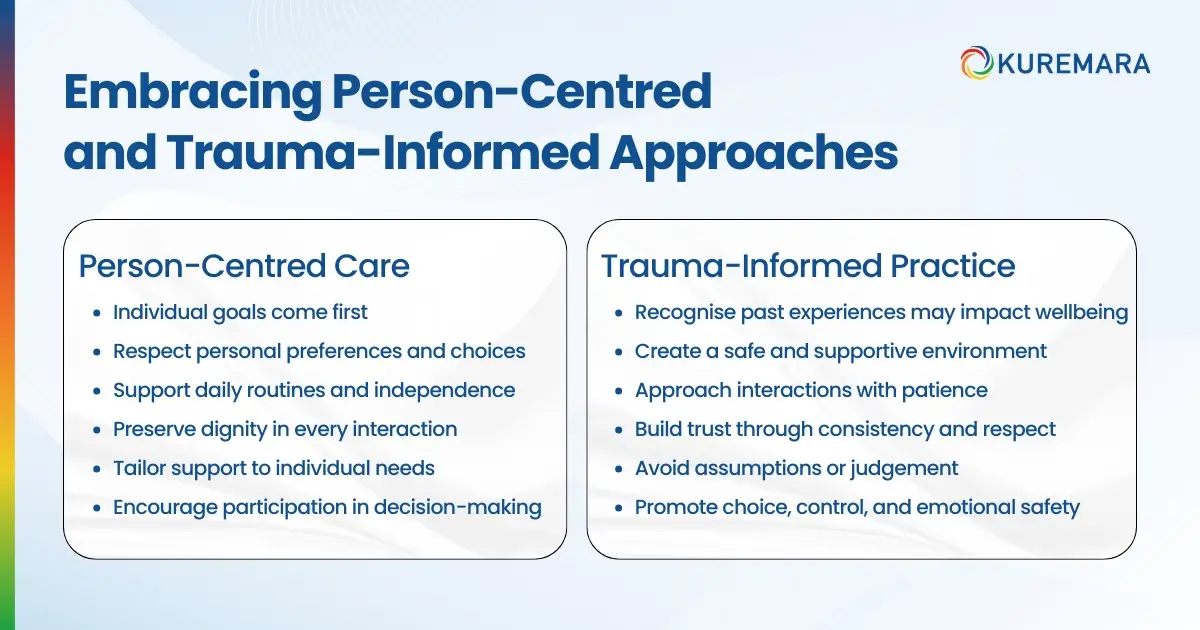
Perhaps the most meaningful shift in complex care has been philosophical rather than technical. Providers are moving away from doing things to participants and towards doing things with them.
Person-centred care means starting with the individual’s own goals, preferences, routines, and dignity; then building support around them. Trauma-informed practice means understanding that many participants have lived through difficult experiences, and approaching every interaction with patience, safety, and respect rather than assumption or judgment.
For someone with complex needs, this approach can be transformative. It honours autonomy. It reduces distress. And it sends a clear message: your voice matters here, and your support belongs to you.
Using Technology to Strengthen, Not Replace, Human Care
Technology is playing a growing role in complex care, and the best providers are using it carefully. Digital care records help teams stay aligned. Medication and incident tracking improve safety. Telehealth makes it easier to bring in clinical expertise without forcing a participant to travel or disrupt their routine. Assistive technology opens up independence in ways that weren’t possible a decade ago.
The key principle, though, is balance. Technology should reduce administrative friction and improve safety so that support workers can spend more meaningful time with the people they support, not less. The human relationship remains the heart of good care, and no app or system will ever replace a worker who genuinely understands the person in front of them.
How Kuremara Approaches Complex Care
At Kuremara, we believe complex needs deserve uncomplicated compassion. As a registered NDIS provider, we’ve built our approach around the understanding that no two participants are the same and that the people with the most layered needs deserve our deepest care, patience, and skill.
Our teams are trained to support high-intensity and specialised needs, and we work hard to ensure continuity, so participants are supported by people who truly know them. We coordinate closely with families, carers, and the wider network of health and allied professionals, because we know that good care is never delivered in isolation. Whether you’re seeking Complex Care Brisbane, Complex Care Melbourne, or Complex Care Sydney, our focus stays the same: building support around the person, honouring their goals, and creating a sense of safety in every interaction.
Most of all, we lead with empathy. We see the person before the plan, the story before the support category, and the human being at the centre of it all.
Conclusion
Complex care is, ultimately, an invitation to do better, to be more flexible, more coordinated, more skilled, and more compassionate. Across Australia, NDIS service providers
are rising to that invitation by reshaping their workforces, strengthening collaboration, embracing person-centred values, and using technology with intention.
For participants and their families, this evolution offers something genuinely hopeful: support that adapts to you, rather than asking you to adapt to it. And that is exactly how it should be.
If you or someone you love is navigating complex care needs, you don’t have to carry it alone. Kuremara is here to walk alongside you, with skill, with consistency, and with heart.
Kuremara is a registered NDIS provider supporting participants across Brisbane, Melbourne, Sydney, and beyond. Reach out today to learn how we can support your journey.