care@kuremara.com.au
 1300 000 799
For many people with disabilities, the idea of joining community events or social gatherings can stir feelings of anxiety, fear, or overwhelm. Past negative experiences, worries about acceptance, logistical challenges, or simply uncertainty about how to begin often make community participation feel like a hurdle rather than an opportunity. Yet community participation, being part of clubs, events or social activities, can play a crucial role in fostering social connections, improving mental well‑being, and building a sense of belonging.
If you’re living with a disability and struggling with “community anxiety,” this article is for you. Here, you’ll discover how support frameworks like the National Disability Insurance Scheme (NDIS) enable community access, and learn about gentle, easy‑start activities and practical tips to help you ease into community life, at your own pace and comfort.
Understanding Community Anxiety for People with Disability
What “Community Anxiety” Means
Community anxiety in the context of disability can manifest as fear, worry, or hesitation about engaging in social or community events. Common triggers include fear of misunderstanding or rejection, lack of accessibility support, sensory overload, or simply not knowing what to expect. For many, past negative experiences or a lack of confidence can make the idea of community engagement feel daunting.
Why People with Disability Often Face Barriers to Participation
-
- Social and emotional barriers: Feelings of low self‑esteem, fear of judgment, uncertainty about how others will react, or the stress of being in unfamiliar social settings.
-
- Practical obstacles: Limited transport, venues that are not accessibility‑friendly, a lack of support staff or understanding companions, and logistic challenges.
-
- Lack of inclusive, supportive programs: Many community activities are not designed with disability in mind, which can result in exclusion, discomfort, or unintentional neglect of accessibility needs.
All these combines to create a situation where many people with disabilities may avoid community activities, even though those same activities could significantly improve their social connection, confidence, and overall happiness.
How NDIS Supports Community Access & Participation
What is NDIS Community Access / Social and Community Participation
The NDIS defines “community participation” (or “social and community participation”) as supports designed to help participants with disability engage in community, social, recreational, and skill‑building activities.
Under your NDIS plan, if community access is deemed “reasonable and necessary,” you may receive funding/support for activities like attending social groups, going out to events, participating in classes or hobbies, or joining clubs.
Why NDIS‑Supported Community Participation Matters
-
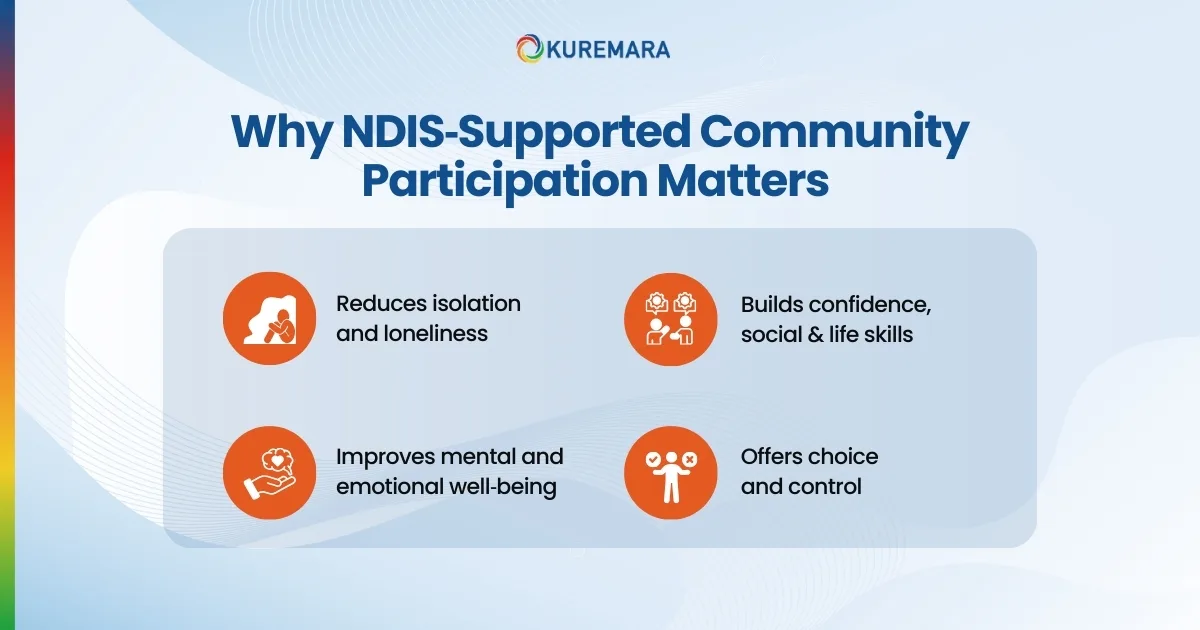
- Reduces isolation and loneliness: Engaging in community activities helps people with disabilities feel connected, less isolated, and more included.
-
- Builds confidence, social & life skills: Through group activities, social outings or classes, participants can improve communication, independence, and adaptive skills.
-
- Improves mental and emotional well‑being: Regular community involvement often translates to reduced anxiety, improved self‑esteem, a stronger sense of belonging all contributing to better quality of life.
-
- Offers choice and control: NDIS community participation programs emphasise personalised support tailored to individual interests, needs, and comfort levels.
In short: community access under NDIS isn’t just about attending events; it’s about enabling meaningful inclusion, social growth, and improved well‑being.
Must Read: Staying Active, Staying Happy: Motivational Tips for Physical and Mental Health
Gentle, Easy‑Start Community Activities to Try First
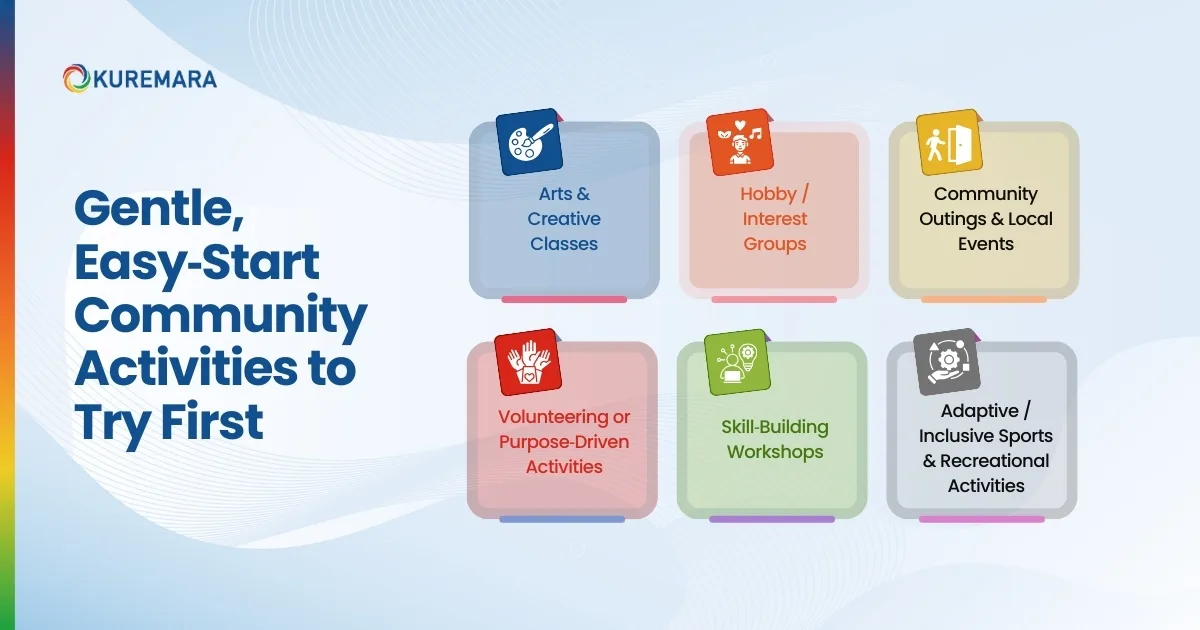
If social anxiety or other concerns are holding you back, here are some gentle, low-pressure community activities that can help you ease, ideally supported by NDIS community participation funding or a trusted support provider.
1. Arts & Creative Classes (Painting, Crafts, Music, Drama)
Creative classes offer a structured, interest-based environment where social pressure is lower, and individuals can express themselves. Art, music, or drama classes help build confidence, encourage self-expression, and foster connections with others who share similar interests.
2. Hobby / Interest Groups (Book Clubs, Gardening Clubs, Craft Groups, Gaming Circles)
Participating in hobby-based groups centers your focus around a shared activity, making conversations and connections more natural. Regular meetups, shared interests, and a sense of routine can gently build friendships and confidence without overwhelming social pressure.
Must Read: The Role of Group and Centre Activities in Social Growth
3. Community Outings & Local Events (Markets, Cafés, Library Visits, Mild Outings)
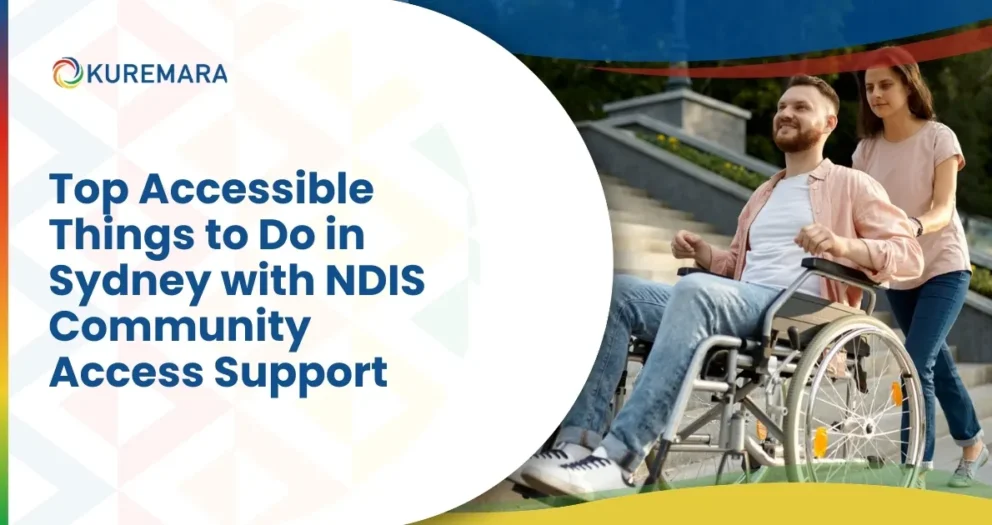
Simple, quiet outings like visiting a library, attending a community event, or exploring a café can help you gradually acclimate to public spaces and community settings. Going at your own pace, possibly with support, can make these outings manageable and rewarding.
Must Read: Spring into Community: Accessible Outings to Enjoy Around Brisbane
4. Volunteering or Purpose‑Driven Activities (Shelters, Community Gardens, Fundraisers, Local Clubs)
Volunteering gives a sense of purpose and accomplishment, which can shift focus away from “social anxiety” and toward meaningful contribution. Such activities can improve self‑esteem, foster connections, and gradually build comfort in community roles.
5. Skill‑Building Workshops (Cooking, Life Skills, Digital Literacy, Hobby Skills)
Workshops provide structure, goal‑oriented learning, and an opportunity to develop new skills in a supportive group setting, helping increase independence and social confidence.
6. Adaptive / Inclusive Sports & Recreational Activities (Inclusive Sports, Swimming, Group Walks, Light Fitness)
Physical and recreational activities, especially those designed to be inclusive, not only improve physical health but also help reduce anxiety, build group identity, and foster camaraderie with peers.
How Kuremara is Making Community Access Easier for People with Disability
Who is Kuremara?
Kuremara is a registered NDIS provider based in Brisbane, Queensland, dedicated to offering community access services for people with disabilities. Their mission is to support participants in achieving their NDIS goals related to social and community participation, while providing inclusive, respectful, and person‑centred support.
Kuremara’s Community Access Services
Through NDIS-funded support, Kuremara assists participants with planning and accessing community activities. This may include support workers, transport, personalised assistance, and help navigating venues or social settings. Their services aim to reduce anxiety, increase confidence, and foster independence and inclusion.
The Kuremara Club – An Inclusive Activity Centre
One of the key offerings of Kuremara is their activity centre, the Kuremara Club, located in Brisbane. The Club offers:
-
- A pre‑scheduled monthly activity calendar — art, music, games, social get‑togethers, workshops — giving participants predictable, low-pressure opportunities to engage.
-
- On-demand activities — tailored to individual or small-group preferences if participants need flexibility or a more customised pace.
-
- A supportive and inclusive environment: staff familiar with varied needs, attention to accessibility and comfort, and a welcoming atmosphere that values participants’ dignity and preferences.
Why Kuremara is Ideal for People Struggling with Community Anxiety
For individuals who find community settings overwhelming, the Kuremara Club can be a gentle stepping stone. Because activities are scheduled and supported, with staff trained to accommodate needs, participants get the chance to experience social engagement in a safe, predictable environment. Over time, this can build their confidence, making broader community participation less intimidating.
Kuremara serves as a bridge between isolation and active community inclusion, offering a personalised, supportive path to reconnecting with community life.
Practical Steps & Tips to Ease into Community Participation
-
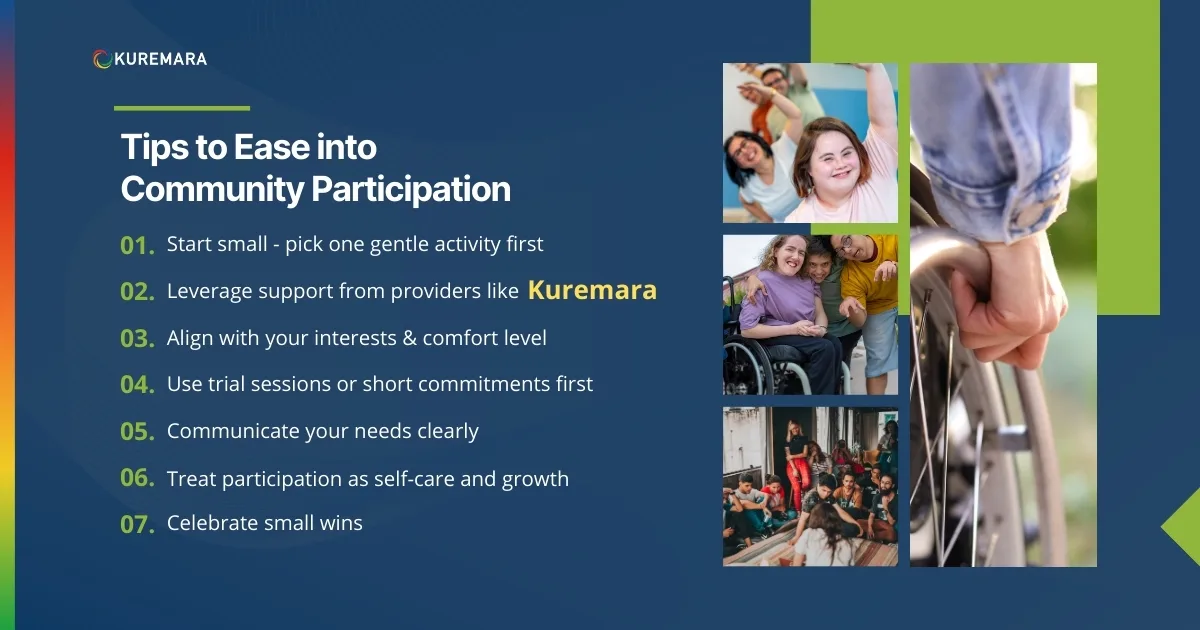
- Start small – pick one gentle activity first: Choose a class, hobby group or workshop that genuinely interests you; avoid jumping into large events immediately.
-
- Leverage support from providers like Kuremara (or other NDIS‑accredited providers): A support worker or companion can ease logistics, accompany you, and make you feel safe.
-
- Align with your interests & comfort level: Choose activities that feel meaningful or enjoyable; this increases motivation and reduces anxiety.
-
- Use trial sessions or short commitments first: Try a single session or a short activity before committing regularly; this helps you test comfort and compatibility.
-
- Communicate your needs clearly: If you have sensory sensitivities or require accommodation, let support staff or organisers know. A good provider will listen and adapt.
-
- Treat participation as self‑care and growth: View joining a community as an investment in your well‑being, confidence, and social connection, not a chore.
-
- Celebrate small wins: Even attending one session, meeting one person, or trying out a new activity is progress. Recognise and appreciate every step.
Encouragement & Recognising Progress
Remember: every person’s journey is unique. What feels easy for one person may feel overwhelming for another, and that’s perfectly valid.
Community anxiety does not equal inability or disinterest. With the right support, a compassionate approach, and small, manageable steps, meaningful participation is absolutely possible.
Celebrate your progress, be kind to yourself, and give yourself time. With gentle steps and support, community life can become less intimidating and more rewarding.
Conclusion
Community anxiety, especially for people with disabilities, is real, valid, and can be a substantial barrier. But with gentle, accessible, and supportive options, a pathway to community connection, social participation, and personal growth is very much possible.
Through frameworks like NDIS and supportive providers such as Kuremara, community access and participation can become less daunting and more empowering. By starting small, choosing activities aligned with your interests, seeking support when needed, and celebrating every small step, you can gradually rebuild confidence, connect with others, and enjoy the benefits of community life.
If you’re ready, consider exploring a gentle activity or support service today; the first small step may lead to meaningful and lasting community connections.
FAQs
1. Who is eligible for community participation under NDIS?
A: Community participation supports are generally available to NDIS participants whose disability significantly affects their ability to engage in everyday social, recreational, or community activities. If community access is deemed “reasonable and necessary,” funding and support may be provided. Kindess — NDIS Provider Adelaide+1
2. Does NDIS funding cover all kinds of community activities?
A: NDIS can support a wide range of activities from art classes, social groups, sports, outings, volunteering, to skill‑building workshops or hobby groups, provided they align with your support needs and NDIS plan goals. Alisthub+2Maple Services+2
3. What if I have anxiety or sensory issues? Can I still participate?
A: Yes. Many providers and inclusive activity centres design programs with sensitivity to accessibility, sensory needs, or social anxiety. Starting with small, supported, predictable activities like those offered at centres such as Kuremara Club can make participation manageable and less stressful.
4. What if I don’t know where to find disability‑friendly community events or providers?
A: You can start by searching for registered NDIS providers in your area who offer “social and community participation” or “community access” services. Local disability organisations, support networks, or online directories may also help you find inclusive programs.
5. Do I need a support worker every time I attend a community activity?
A: Not necessarily. It depends on your comfort level, support needs, and the activity. For some outings, a support worker or companion may help with transport, accessibility, or social comfort; for others, small-group or solo-friendly activities may suffice.