care@kuremara.com.au
 1300 000 799
A comprehensive guide to building a healthy sleep routine, integrating Occupational Therapy (OT) techniques and actionable sleep‑support strategies with an emphasis on therapy for sleeping problems, sleep support, and practical advice for those accessing support through the NDIS. This article also highlights how Kuremara, a registered NDIS provider in Australia, can help you improve your sleep and wellbeing.
Why a Consistent Sleep Routine Matters
a. What is a Sleep Routine?
A sleep routine (often referred to as sleep hygiene) is a set of behavioural and environmental practices designed to promote consistent, uninterrupted sleep. It is the framework that supports your body’s circadian rhythm—the internal 24-hour clock that cycles between sleepiness and alertness.
A bedtime routine trains your body clock (or circadian rhythm) to know when it’s time to wind down and rest. Sleep hygiene practices like consistent bed and wake times, reducing light exposure before bed, and creating a calming environment all contribute to better sleep quality.
b. The Impact of Poor Sleep Habits
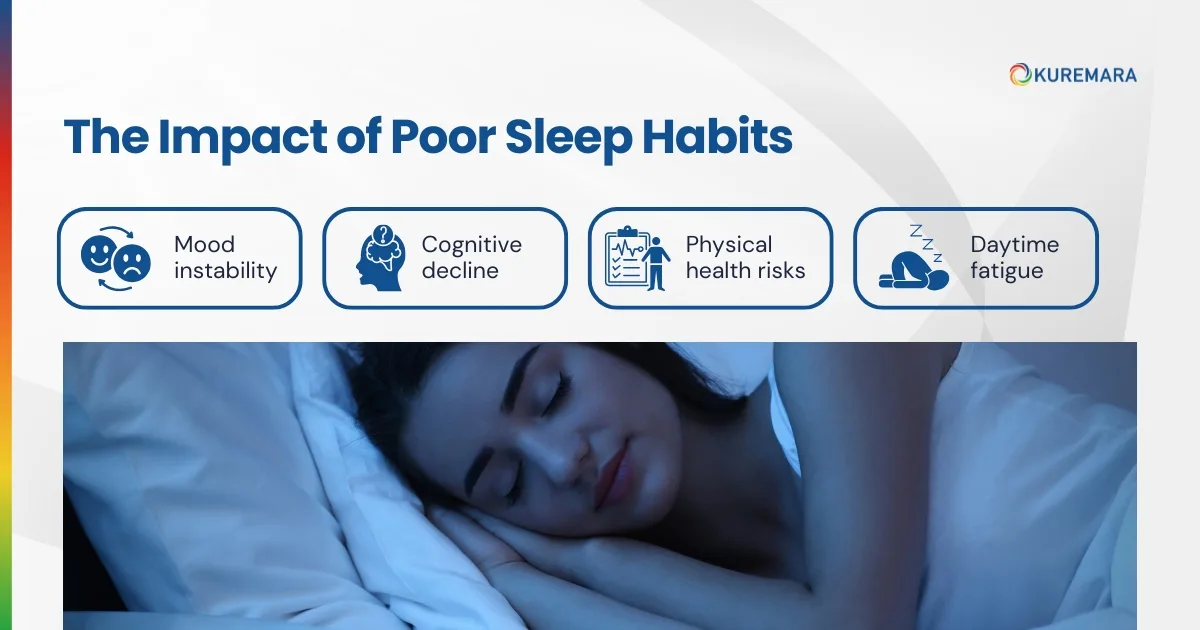
When your routine is erratic—due to shift work, stress, or “bedtime procrastination”—your body loses its ability to predict when to shut down. This irregularity can lead to:
- Mood instability: Increased irritability and anxiety.
- Cognitive decline: Difficulty focusing or remembering tasks.
- Physical health risks: Weakened immune system and metabolic issues.
- Daytime fatigue
c. Benefits of a Structured Sleeping Routine
Predictability is powerful. A structured routine acts as a cueing system for your brain. As highlighted by the Sleep Foundation, consistent habits help the brain anticipate sleep, significantly reducing the time it takes to fall asleep (sleep onset) and improving the overall quality of rest.
Occupational Therapy (OT) for Sleep: What It Is and How It Helps
1. OT in Sleep Health
Many people associate Occupational Therapy with fine motor skills or rehabilitation, but OT is about enabling people to participate in the activities of everyday life—and sleep is one of the most important activities we do.
OTs focus on the “P-E-O” model: the Person, the Environment, and the Occupation. By analysing your bedroom setup, your sensory needs, and your daily habits, an OT can identify the root cause of sleep disturbances.
2. NDIS & OT Sleep Support
For Australians living with a disability, sleep challenges are often complex. The good news is that NDIS funding can often be utilised for sleep support under Capacity Building (Improved Daily Living).
- Kuremara’s Role: We provide personalised OT plans tailored to individual sleep needs. We don’t just offer generic advice; we create clinically backed strategies that align with your NDIS goals.
3. Sleep-Related Goals in OT
An OT can help you set and achieve specific goals, such as:
- Establishing a visual bedtime schedule.
- Introducing sensory regulation tools (e.g., weighted blankets).
- Developing functional skills to manage anxiety before bed.
Core Techniques to Build a Calm Bedtime Routine
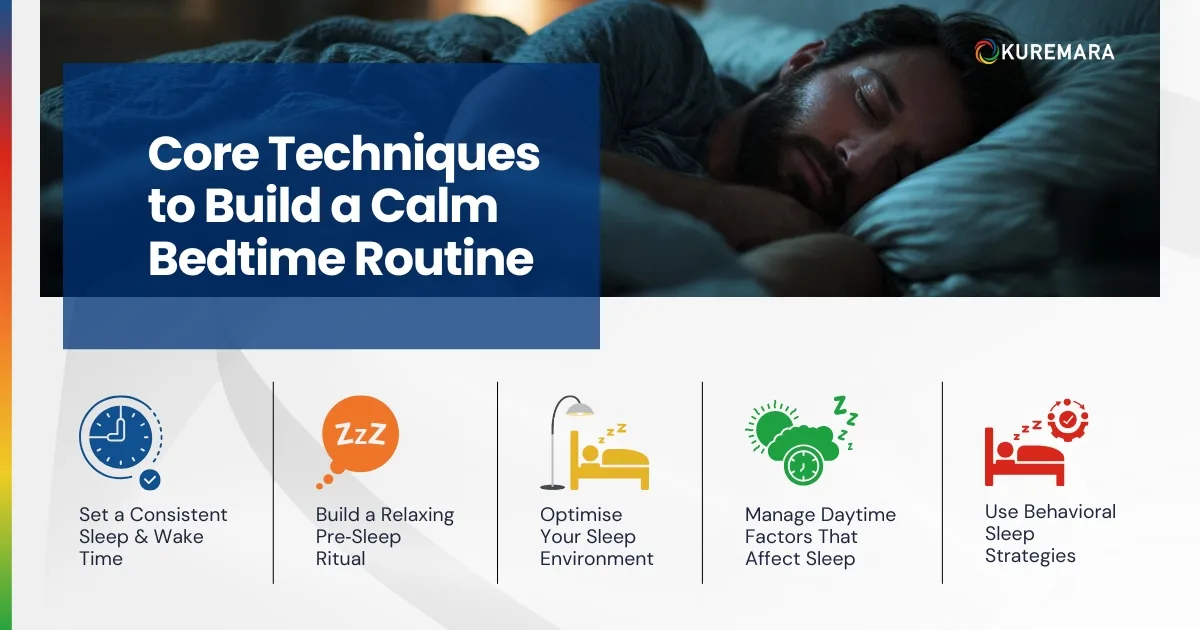
Here are practical, evidence‑based strategies you can start using tonight:
1. Set a Consistent Sleep & Wake Time
The “Golden Rule” of sleep hygiene is consistency. Try to go to bed and wake up at the same time every day, even on weekends.
- Why it works: This reinforces your body’s sleep-wake cycle, making it easier to fall asleep at night and wake up naturally in the morning.
2. Build a Relaxing Pre‑Sleep Ritual
Spend 30–60 minutes engaging in calming activities before bed:
- Put away electronics and blue‑light screens; they suppress melatonin production.
- Light stretching or breathing exercises help reduce tension.
- Warm baths or herbal tea (non‑caffeinated) can signal it’s time to sleep.
- Journaling or writing a to‑do list can clear your mind.
These habits act as cues to tell your brain it’s time to relax and prepare for sleep.
3. Optimise Your Sleep Environment
Your bedroom should be a sanctuary.
- Temperature: Keep the room cool (around 18–20°C is often ideal).
- Darkness: Use blackout curtains.
- Sensory Tools: OTs often recommend organising the space to reduce clutter, which can subconsciously cause anxiety.
4. Manage Daytime Factors That Affect Sleep
Good sleep isn’t only about night‑time habits; what you do during the day matters too:
- Avoid caffeine and nicotine in the afternoon/evening.
- Regular physical activity supports better sleep, but try to avoid vigorous workouts close to bedtime.
- Ensure your evening meal isn’t too heavy or too close to sleep time.
5. Use Behavioral Sleep Strategies
Some people benefit from structured techniques like stimulus control (associating the bed only with sleep) and reducing time spent in bed awake, similar to principles used in Cognitive Behavioral Therapy for Insomnia (CBT‑I).
Customised OT Strategies for Individuals with Disabilities
Generic sleep advice doesn’t always work for neurodivergent individuals or those with physical disabilities. Kuremara takes a tailored approach.
* Tailored Sensory Approaches
For individuals with Autism Spectrum Disorder (ASD) or Sensory Processing Disorder (SPD), the sensory environment is critical.
- Hyper-sensitive: We may look at seamless pyjamas, softer bedding, or white noise machines to mask sudden sounds.
- Hypo-sensitive: Some individuals need more input to settle, such as compression sheets or weighted blankets.
* Assistive Tools & Aids
We assess the need for assistive technology, such as:
- Adjustable beds for physical comfort.
- Night-light systems that do not disrupt melatonin.
- Sleep cues (e.g., specific music playlists).
* Routine Visual Supports
For clients who struggle with executive function or anxiety, uncertainty is the enemy of sleep.
- Visual Schedules: We create laminated visual checklists detailing every step of the bedtime routine (e.g., Brush Teeth -> Pyjamas -> Book -> Sleep). This provides structure and security.
Combining Sleep Therapy with Occupational Therapy
1. What is Sleep Therapy?
While sleep hygiene covers the basics, professional sleep therapy digs deeper. It involves therapeutic strategies and clinical guidance to address persistent behavioural patterns or anxieties surrounding sleep.
2. When to Seek Professional Support?
You should consider consulting a professional if:
- Your sleep issues have persisted for more than a month.
- Sleep deprivation is impacting your work, school, or relationships.
- Standard “tips and tricks” have failed to produce results.
3. NDIS Therapy Supports
Navigating the NDIS can be tricky. Kuremara helps participants understand how their plan can include therapy for sleeping problems. This often falls under Allied Health or Psycho-social supports, aimed at building independence and functional capacity.
How Kuremara Can Help You Improve Your Sleep Routine
Kuremara is more than just a service provider; we are partners in your health journey. As a registered NDIS provider serving Australia, we are committed to evidence-based care.
Our Services
- Sleep Assessments: Comprehensive analysis of your current routine and environment.
- Personalised OT Sessions: One-on-one coaching to implement changes.
- Bedtime Habit Coaching: Practical support to make new habits stick.
Why Choose Kuremara?
- NDIS Funded Support: We understand the funding categories and reporting requirements.
- Evidence-Backed: Our clinicians use techniques grounded in medical research.
- Supportive Clinicians: We approach every case with empathy, understanding that sleep struggles are deeply personal.
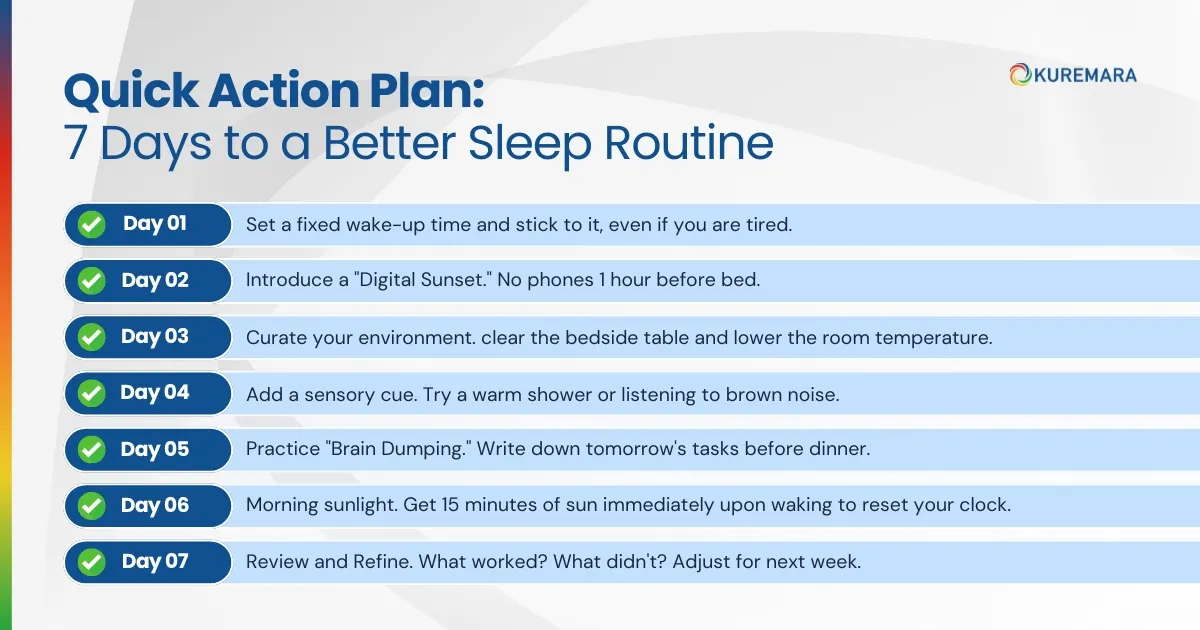
Quick Action Plan: 7 Days to a Better Sleep Routine
Ready to start? Try this simple reset plan.
Day 1: Set a fixed wake-up time and stick to it, even if you are tired.
Day 2: Introduce a “Digital Sunset.” No phones 1 hour before bed.
Day 3: Curate your environment. clear the bedside table and lower the room temperature.
Day 4: Add a sensory cue. Try a warm shower or listening to brown noise.
Day 5: Practice “Brain Dumping.” Write down tomorrow’s tasks before dinner.
Day 6: Morning sunlight. Get 15 minutes of sun immediately upon waking to reset your clock.
Day 7: Review and Refine. What worked? What didn’t? Adjust for next week.
Habits take time, but consistency is key.
Final Thoughts
Sleep is the foundation of a happy, healthy life. It is not a luxury; it is a necessity. If you are struggling with a poor sleep routine, remember that you don’t have to face it alone. Occupational Therapy offers practical, science-backed techniques to create the calm, restorative bedtime habits you deserve.
Are you ready to reclaim your nights? Contact Kuremara today to discuss how our NDIS-approved Occupational Therapy services can support your journey to better sleep.
FAQs About Sleep Routines & Therapy
1: What is the difference between sleep hygiene and OT therapy?
A: Sleep hygiene refers to general healthy habits. OT therapy is a clinical, personalised intervention that addresses the functional, sensory, and environmental barriers specific to the individual.
2: Can NDIS fund support for sleeping problems?
A: Yes, if the sleep issue is related to your disability and impacts your daily functioning. It is typically funded under Improved Daily Living.
3: How long does it take to see improvements?
A: Consistency is key. While some environmental changes work immediately, behavioural changes typically take 2 to 4 weeks to become a habit.
4: When should I consult a sleep professional?
A: If you suspect a medical condition like sleep apnoea, or if insomnia is severe, consult a GP or sleep specialist alongside your OT.