care@kuremara.com.au
 1300 000 799

Starting out with the National Disability Insurance Scheme (NDIS) can feel like learning a new language. Access requests, planning meetings, support categories, plan management, it’s a lot to take in, especially when all you really want to know is: what do I do first?
You’re not alone in asking. As at 31 March 2026, more than 774,000 Australians had an approved NDIS plan, according to the National Disability Insurance Agency’s (NDIA) latest Quarterly Report, and every one of them started exactly where you are now.
At Kuremara, we’ve spent more than a decade walking alongside participants and families across Queensland, New South Wales, and Victoria. In this guide, we’ve distilled that experience into the five steps that matter most when you’re new to the Scheme in plain language, with no jargon left unexplained.
Step 1: Check whether you’re eligible
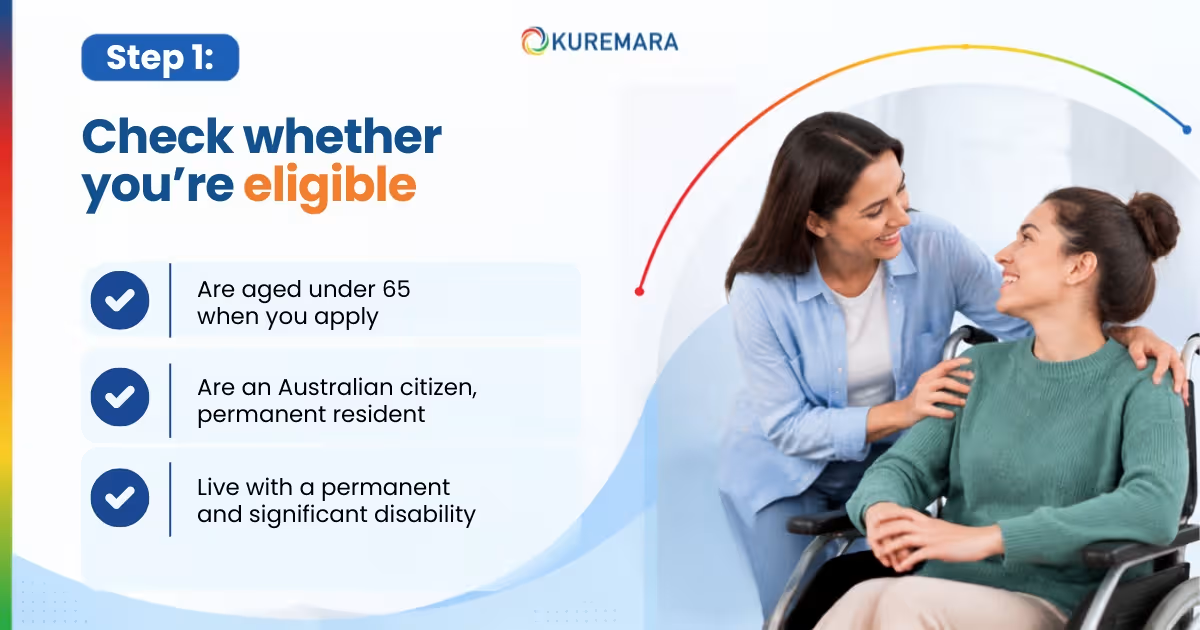
Before anything else, it helps to know whether the NDIS is designed for your situation. In general, you may be eligible if you:
- Are you aged under 65 when you apply
- Are an Australian citizen, permanent resident, or a Protected Special Category Visa holder
- Live with a permanent and significant disability that affects your ability to take part in everyday activities, or would benefit from early intervention supports
“Permanent and significant” simply means your disability is likely to be lifelong and has a substantial impact on how you manage daily life — it doesn’t mean you need to be in crisis, and it doesn’t put a label on who you are.
The quickest way to check is the official eligibility checklist on the NDIS website or a phone call to the NDIA on 1800 800 110. If English isn’t your first language, you can ask for a free interpreter, and information is available in accessible formats including Easy Read and Auslan.
One thing to know: the NDIS isn’t the only door. If you’re not eligible, supports may still be available through your state or territory, your local community, or the health system, and the NDIA can point you towards them.
Step 2: Make an access request
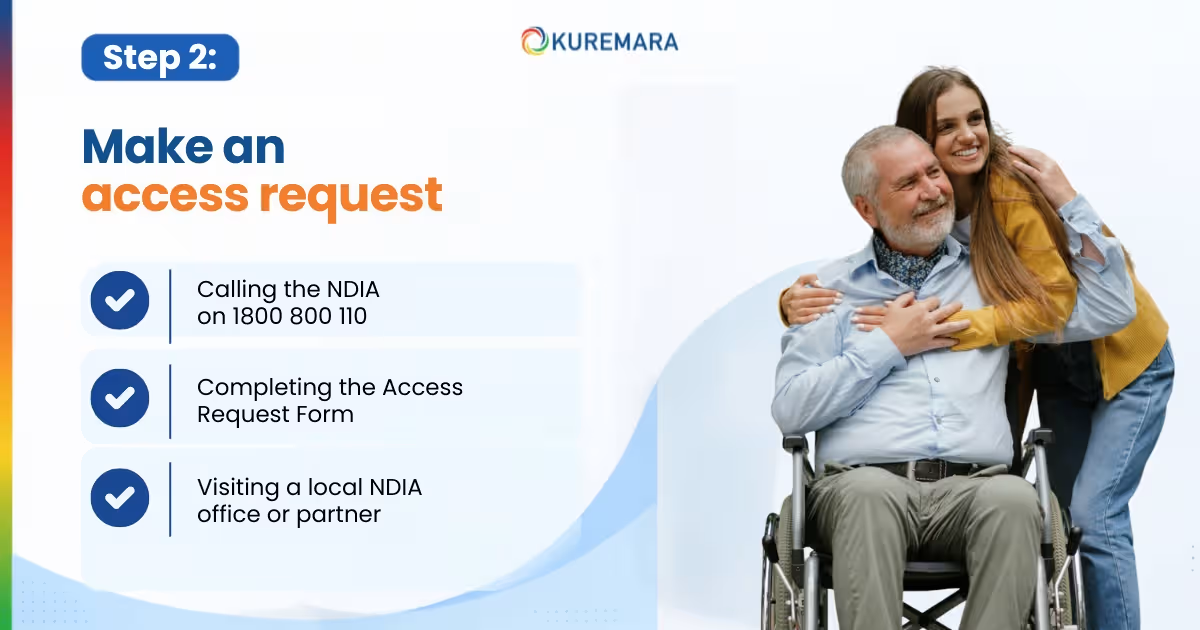
If you meet the criteria, the next step is a formal application, called an access request. You can do this by:
- Calling the NDIA on 1800 800 110 and making a verbal request
- Completing the Access Request Form (available on ndis.gov.au) and submitting it by email
- Visit a local NDIA office or partner in the community who can help you complete it
You’ll be asked for proof of age and residency, plus evidence of your disability, usually reports or letters from your GP, specialist, or allied health professionals describing your condition, how long it will last, and how it affects your day-to-day life.
A tip from our team: good evidence focuses on functional impact. Rather than only naming a diagnosis, ask your treating professionals to describe what you find hard on an ordinary day, moving around your home, communicating, managing routines, connecting with your community. That’s the picture the NDIA needs to see.
Once your request is received, the NDIA will assess it and let you know the outcome. If you’re found eligible, congratulations, you’re officially an NDIS participant, and the real planning begins.
Step 3: Prepare for your planning meeting

Your planning meeting is where your first NDIS plan takes shape. You’ll meet with an NDIA planner or a Local Area Coordinator (LAC) to talk about your life, your goals, and the supports you need.
This conversation shapes your funding, so a little preparation goes a long way. Before the meeting, think about:
- Your daily life — what supports you currently rely on, including help from family and friends
- Your goals — short-term (like building confidence with cooking or public transport) and long-term (like moving into your own home, finding work, or making new friends)
- What’s not working — the moments in your week where more support would genuinely change things
You’re welcome to bring a family member, friend, carer or advocate with you. The meeting can happen face-to-face, by phone, or by video, whatever works best for you. There’s no “wrong” way to describe your life. Your experiences are the expertise in that room.
You’ll also be asked how you’d like your funding managed: agency-managed (the NDIA pays providers directly), plan-managed (a plan manager handles the paperwork), or self-managed (you control payments yourself). Many participants use a mix. If you’re weighing this up, our guide to NDIS self-management breaks down the pros and cons.
Step 4: Understand your plan when it arrives
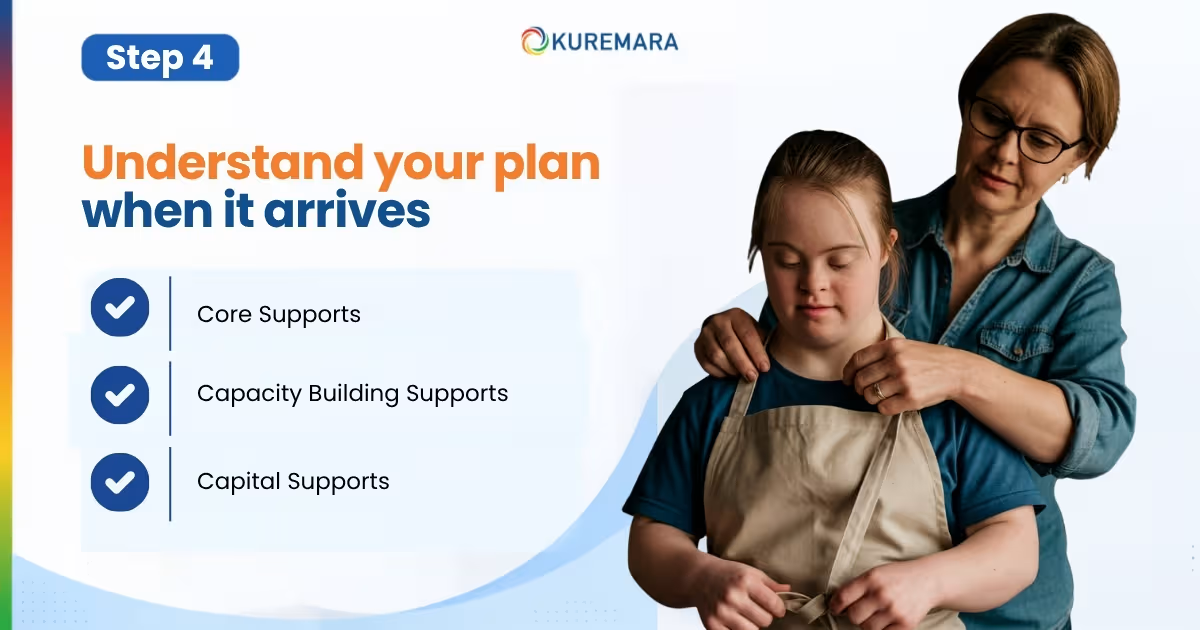
When your plan is approved, take time to sit with it, ideally with someone you trust. Most plans organise funding into three budget types:
- Core Supports — help with everyday activities, community access, transport and consumables. This is usually the most flexible budget.
- Capacity Building Supports — funding to build skills and independence over time, such as support coordination, therapy, or employment support.
- Capital Supports — assistive technology, equipment, or home and vehicle modifications, where these are included in your plan.
Two things trip up many new participants. First, NDIS funds can only be spent on approved NDIS supports. Since October 2024, the NDIA has published clear lists of what can and can’t be claimed, so it’s worth checking before you buy. Second, your plan is not set-and-forget: if your circumstances change, or the plan isn’t working, you can ask for a reassessment.
If your plan includes Support Coordination, use it a support coordinator’s whole job is to help you understand your plan, connect with services, and get the most from your funding. Kuremara offers support coordination for participants who have this funding in their plans, and we’re always happy to explain the fine print in plain words.
Step 5: Choose your providers — carefully, and on your terms
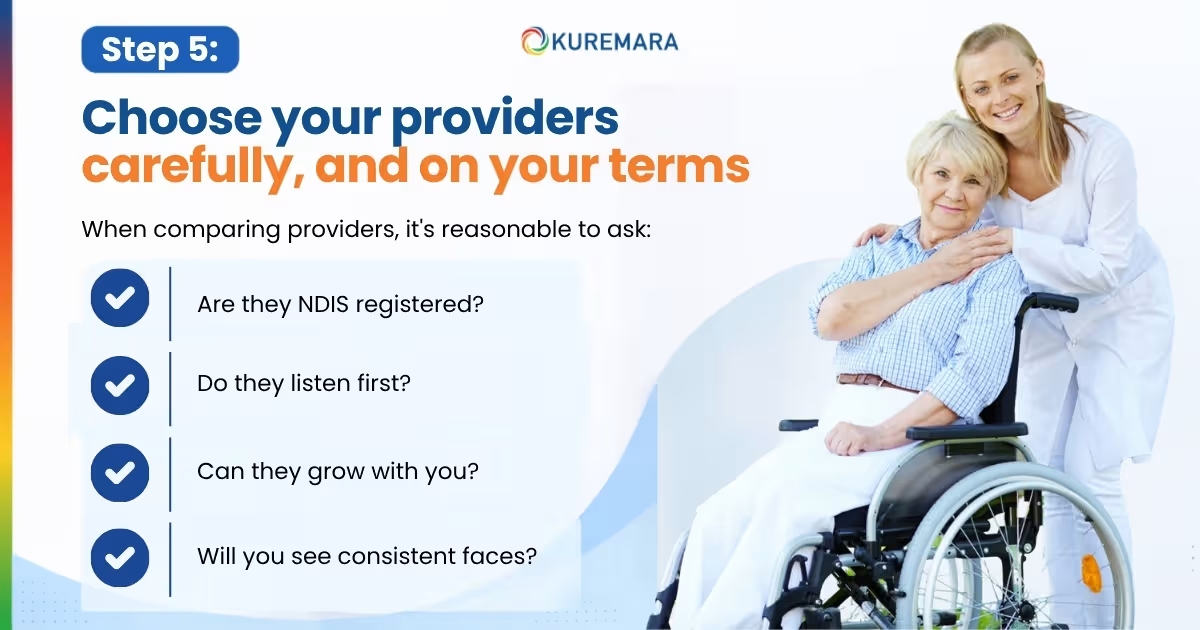
This is where your plan becomes real life. Providers are the organisations and people who deliver your supports, and under the NDIS, the choice is yours. That principle, “choice and control,” is written into the Scheme itself.
When comparing providers, it’s reasonable to ask:
- Are they NDIS registered? Registered providers are regulated by the NDIS Quality and Safeguards Commission and must meet the NDIS Practice Standards and Code of Conduct.
- Do they listen first? Good providers design support around your goals, not around their roster.
- Can they grow with you? Needs change. Look for a provider whose services range from everyday help to more complex support, so you’re not starting from scratch later.
- Will you see consistent faces? Trust is built through familiarity. Ask how they handle staffing and communication.
As a registered NDIS provider, Kuremara delivers tailored supports across Southeast Queensland, Central Queensland, Sydney and Greater Melbourne, including Supported Independent Living (SIL), in-home support, community access, short-term accommodation & respite, complex care and mental health support. Whether you choose us or another provider, choose someone who treats your goals as the starting point.
You don’t have to do this alone
The first steps into the NDIS are the steepest; after that, the path gets clearer, especially with the right people beside you. If you’d like help understanding your options, preparing for a planning meeting, or finding supports that genuinely fit your life, our team is here for a no-pressure conversation.
Call us on 1300 000 799, email care@kuremara.com.au, or get in touch online. Quality support services, when choice matters.
Frequently asked questions
1. How long does the NDIS access process take?
Timeframes vary, but the NDIA aims to decide access requests within 21 days of receiving all required information. If more evidence is needed, they’ll ask for complete, functional-focused reports from your health professionals, which can save weeks.
2. Does the NDIS cover everything disability-related?
No, it funds supports that are “reasonable and necessary” and directly related to your disability. Mainstream services like Medicare-funded healthcare and public education continue alongside your plan.
3. What if my application is declined?
You have the right to ask for an internal review of the decision and to seek support from a disability advocate at no cost. Being declined once doesn’t mean the door is closed forever; circumstances and evidence can change.
4. Can I change providers if I’m not happy?
Yes. Choice and control mean you can change providers at any time, in line with your service agreement’s notice period. A good provider will never make you feel locked in.
References
- National Disability Insurance Agency, Quarterly Report to Disability Ministers — Q3 2025–26 (participant numbers as at 31 March 2026): https://www.ndis.gov.au/publications/quarterly-reports
- NDIS — Am I eligible: https://www.ndis.gov.au/applying-access-ndis/am-i-eligible
- NDIS — How to apply (access request process): https://www.ndis.gov.au/applying-access-ndis/how-apply
- NDIS — Creating your plan and budget types: https://www.ndis.gov.au/participants/creating-your-plan
- NDIS Quality and Safeguards Commission — NDIS Code of Conduct and Practice Standards: https://www.ndiscommission.gov.au/
- NDIS — What supports can be funded (NDIS supports lists): https://www.ndis.gov.au/participants/using-your-plan/ndis-supports
Kuremara is a registered NDIS provider (ABN 82 653 599 761) with 10+ years of experience supporting participants across Brisbane, Melbourne, Sydney, Mackay and Emerald. This article is general information, not personal advice for guidance on your individual circumstances. Contact the NDIA on 1800 800 110 or speak with our team.