care@kuremara.com.au
 1300 000 799
Finding the right NDIS physiotherapist isn’t just about convenience; it’s about ensuring the person you’re working with can truly help you reach your health and mobility goals. Whether you’re managing a long-term condition, recovering from an injury, or aiming for greater independence, your physio needs to understand not only your body but also your NDIS plan.
That’s why asking the right questions upfront is critical.
In this guide, we’ll walk you through the top questions you should ask before choosing your NDIS physiotherapist; questions that can help you avoid mismatches and make the most of your funding.
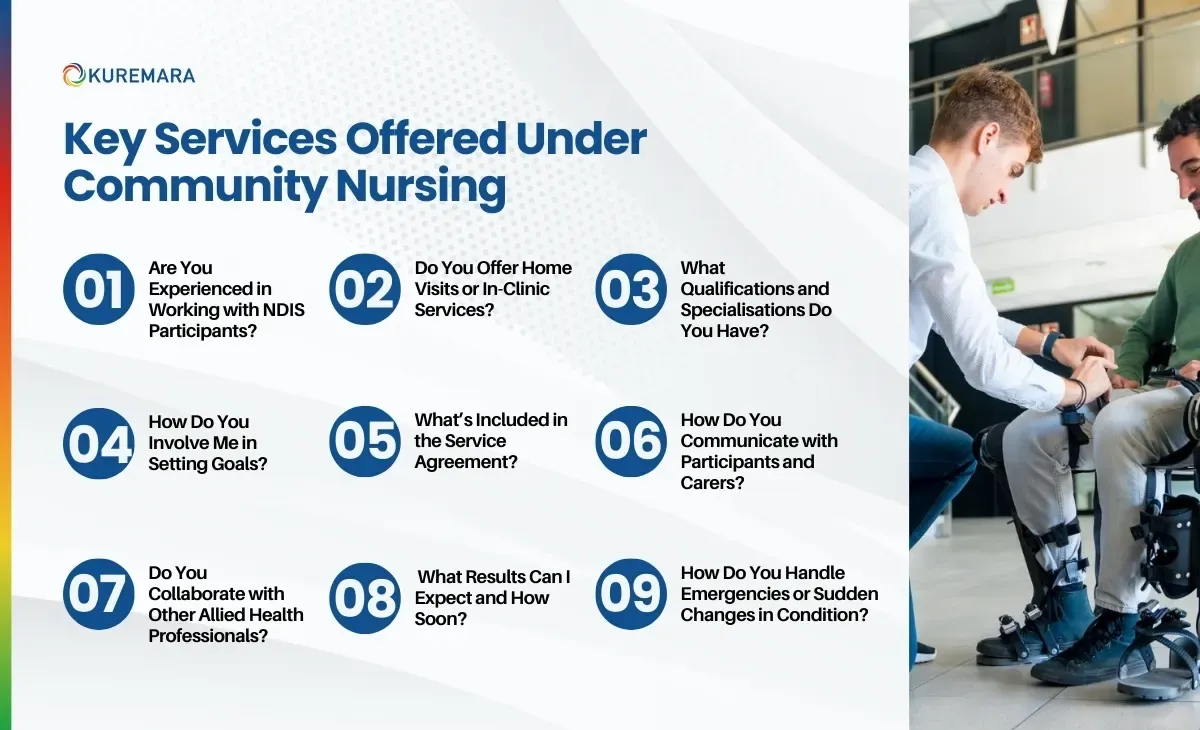 1. Are You Experienced in working with NDIS participants?
Let’s face it, NDIS physiotherapy is a bit different from traditional physio services.
NDIS participants often have unique goals and support plans, so it’s essential to work with someone who understands how the system works. An experienced NDIS physio will be familiar with:
- Goal setting aligned with NDIS outcomes
- Navigating service agreements
- Providing the right documentation for plan reviews
When speaking to potential physiotherapists, ask about their past experience with NDIS participants. Have they supported clients with similar needs to yours?
Pro tip: You want someone who sees beyond the condition and supports your overall life goals.
2. Do You Offer Home Visits or In-Clinic Services?
Flexibility is key. Depending on your situation, you might prefer:
- Home-based physio (ideal for mobility limitations)
- Community-based services
- Telehealth sessions
- In-clinic visits
Not all providers offer the same service delivery options, so it’s worth clarifying early on. A provider like Kuremara, for instance, offers flexible delivery models to suit each participant’s individual lifestyle and needs.
Ask:
“Can I switch between home visits and in-clinic sessions if my needs change?”
This helps ensure your plan can adapt as your condition evolves.
3. What Qualifications and Specialisations Do You Have?
It’s not rude to ask about credentials; it’s smart!
Check if your physio is fully registered with AHPRA (Australian Health Practitioner Regulation Agency) and has relevant post-graduate training or certifications, especially if you have:
- Neurological conditions (e.g., MS, stroke)
- Developmental delays
- Musculoskeletal issues
Also, ask about their hands-on experience with your specific condition. Some physiotherapists specialise in areas like:
- Neuro rehab
- Paediatrics
- Elderly care
- Chronic pain management
This level of specialisation can drastically affect the quality and relevance of care.
4. How Do You Involve Me in Setting Goals?
NDIS isn’t a one-size-fits-all approach; it’s personal. So, your physiotherapist should work with you to set meaningful, measurable goals.
Ask:
“How will you help me set and track progress toward my goals?”
A great NDIS physio won’t just create a generic exercise plan. They’ll ask questions like:
- What do you want to achieve?
- What activities matter most in your daily life?
- How can therapy support greater independence?
The physiotherapist should regularly revisit your goals and update your plan as needed, keeping you engaged and informed every step of the way.
5. What’s Included in the Service Agreement?
Clarity = confidence. Before signing anything, request a breakdown of:
- Hourly rates
- Cancellation policies
- Report writing or travel costs
- Expected duration of services
A solid service agreement should outline everything in plain English.
Bonus tip: Ensure your physio understands how to align services with your NDIS plan budget and category, whether it’s Capacity Building or Core Support.
As a registered NDIS provider, Kuremara is committed to transparency and participant-first care, something every physio should prioritise.
6. How Do You Communicate with Participants and Carers?
Smooth communication is non-negotiable. Whether you’re a participant or a carer, you’ll want to feel heard and respected.
Ask:
- Will I receive progress updates regularly?
- Can carers or family be involved in sessions?
- How do you handle feedback or concerns?
A good physiotherapist explains things in plain language, responds to concerns quickly, and works collaboratively with your entire support network.
7. Do You Collaborate with Other Allied Health Professionals?
NDIS plans often involve a mix of support, occupational therapists, speech pathologists, support coordinators, and more.
You’ll want a physio who knows how to collaborate across the board to ensure all parts of your plan are working in harmony.
Ask:
“Are you open to working alongside my other providers?”
Integration leads to better outcomes and less stress for everyone involved.
8. What Results Can I Expectand How Soon?
Of course, every case is unique, but it’s fair to ask what outcomes are realistic, and what timeframes you might expect.
Be wary of vague answers or overpromises. A trustworthy NDIS physiotherapist will say something like:
“Based on your condition and goals, here’s what we’ll focus on in the first 4-6 sessions, and we’ll review together from there.”
That kind of structured plan sets the stage for progress and accountability.
9. How Do You Handle Emergencies or Sudden Changes in Condition?
Life is unpredictable. Whether it’s a fall, flare-up, or sudden regression, knowing how your physio responds are essential.
Ask:
“Do you offer urgent care appointments or flexible session changes if my condition worsens?”
A reliable NDIS physiotherapist should have a plan for rapid response or redirection to other medical care if necessary.
Key Takeaways: What to Look For in an NDIS Physio

Here’s a quick recap of the most important things to ask:
✅ NDIS experience and participant-centred mindset
✅ Flexible delivery: home, telehealth, or clinic
✅ Qualified, specialised, and AHPRA-registered
✅ Transparent and clear service agreement
✅ Strong communication with you and your support team
✅ Collaboration with other providers
✅ Measurable goals and outcome tracking
✅ Inclusive, responsive, and culturally sensitive
Choosing the right NDIS physiotherapist can feel overwhelming, but it doesn’t have to be. By asking smart questions upfront, you’re setting yourself up for the support and success you deserve.
Looking for the Right Fit? Let Kuremara Help You Find the Right Physiotherapist
At Kuremara, a trusted Registered NDIS Provider, we understand how overwhelming it can be to find the right physiotherapist who truly aligns with your goals and needs. While we don’t provide physiotherapy services directly, we specialise in bridging the gap connecting NDIS participants with experienced, qualified physiotherapists who are best suited to their individual plans.
Whether you’re after home-based sessions, clinic appointments, or culturally appropriate support, our team works closely with you to identify and recommend the right providers to fulfill your physiotherapy needs.
Reach out to Kuremara today, and let’s take the stress out of the search, so you can focus on your goals with the right support by your side.
FAQs About Choosing an NDIS Physiotherapist
Q1: Can I change my NDIS physiotherapist if I’m not happy?
Yes, NDIS gives you the freedom to choose and change providers. Just make sure to follow the notice period in your service agreement.
Q2: Does NDIS cover physiotherapy for all participants?
If it’s deemed “reasonable and necessary,” physio services can be funded under Capacity Building or Core Supports.
Q3: Can I use multiple NDIS physios for different needs?
Absolutely. As long as your plan allows it, you can work with more than one provider.
Q4: How often should I see my NDIS physiotherapist?
It depends on your goals, condition, and funding. Some participants benefit from weekly sessions, while others do monthly check-ins. Your physio will recommend a plan that fits your progress.
Q5: Can I access physiotherapy if I have a plan-managed or self-managed NDIS plan?
Absolutely. Whether your plan is NDIA-managed, plan-managed, or self-managed, you can choose a provider like Kuremara and set up services that suit your funding type.