care@kuremara.com.au
 1300 000 799
If you’re an NDIS participant (or supporting someone who is), you’ve probably noticed the NDIS planning conversation is changing. One of the biggest updates is the introduction of the I-CAN assessment, a new way to understand a person’s support needs and help inform NDIS planning decisions.
This guide is written for NDIS participants, families, carers, and support networks in Australia. We’ll explain what the NDIS I-CAN assessment is, why it’s being introduced, what the process may feel like on the day, and how to prepare in a calm, practical way.
As a Registered NDIS Provider, Kuremara is here to help you feel informed and supported before, during, and after your assessment.
What is the NDIS I-CAN Assessment?
The I-CAN assessment (short for Instrument for the Classification and Assessment of Support Needs) is a structured support needs assessment tool used to understand the level and type of support a person may need across everyday life.
A key point is that I-CAN is designed to focus on support needs, not just diagnosis, and not only “what’s hard.” It aims to look at:
- What a person can do independently
- What they can do with the right supports
- Where support is needed, how often, and how intensive it needs to be
In the NDIS context, this type of assessment is part of a broader move toward a clearer and more consistent planning pathway.
Why is the NDIS Introducing the I-CAN Tool?
Many participants and families have experienced how stressful and confusing the “evidence gathering” stage can be, especially when multiple reports, assessments, and letters are needed to explain a person’s needs.
The updated approach is intended to make planning:
- More consistent (similar needs assessed in a similar way)
- Clearer (a simpler pathway to understanding support needs)
- Less burdensome (reducing the reliance on collecting lots of separate documents)
In everyday terms: the goal is to help the NDIS better understand a participant’s support needs through a structured conversation, so budgets and supports can be built more transparently. (Source: NDIS Assessment Tool)
It’s also okay to feel cautious about change. Any new system can create questions, and participants deserve clarity about how decisions are made and what support is considered reasonable and necessary.
Who is the I-CAN Assessment For?
The I-CAN assessment is intended for NDIS participants aged 16 and over who need a support needs assessment as part of NDIS planning under the newer planning approach.
You may be asked to complete an I-CAN assessment if you are:
- Entering the NDIS planning process
- Completing certain types of plan reassessments or changes
- Moving into planning processes where a structured support needs assessment is required
If you’re unsure whether you (or your family member) will need an I-CAN assessment, it’s worth speaking with your supports (like your Support Coordinator or provider team) so you can plan ahead.
How Does the I-CAN Assessment Work?
Most participants want the same thing: “Just tell me what happens and how to prepare.” Here’s what the process generally involves.
1. A structured interview (a guided conversation)
The I-CAN is typically done as a semi-structured interview with a trained, accredited assessor. It’s a guided conversation that explores different areas of day-to-day living.
2. Your voice matters
You should be supported to share your experience in a way that feels safe and respectful. You can also ask the assessor to clarify questions if anything is confusing.
3. You can bring support
Many people feel more comfortable with someone they trust present, such as a:
-
-
- family member
-
-
-
- carer
-
-
-
- trusted support worker
-
-
-
- Support Coordinator
-
Their role can be to help you remember examples, reduce anxiety, and make sure your needs are communicated clearly.
What Does the I-CAN Assessment Measure?
The I-CAN tool maps support needs across 12 life domains. These domains help paint a full picture of the practical support a person may need.
Commonly referenced domains include:
- Mobility
- Domestic life (tasks around the home)
- Self-care (personal care and daily routines)
- Community, social, and civic life (getting out and participating)
- Communication
- Learning and applying knowledge
- General tasks and demands (planning, organising, coping with tasks)
- Lifelong learning
- Interpersonal relationships
- Behaviours of concern (where relevant, and discussed respectfully)
- Mental and emotional health
- Physical health
This approach is designed to capture support needs in a way that connects to real-life home, community, routines, safety, and wellbeing.
How are Support Needs Scored in I-CAN?
While you don’t need to memorise scoring details, it helps to understand the general idea.
I-CAN commonly looks at two things for each area of life:
- How often support is needed (frequency)
- How much support is needed (intensity/level of assistance)
This matters because needing help once a week can be very different from needing support many times a day, continuous prompting, supervision, or hands-on help.
A simple way to think about it: the assessment aims to identify both the pattern of support and the effort required so, the plan can match what life actually looks like.
How the I-CAN Assessment May Affect Your NDIS Plan
 The I-CAN assessment is used to help inform NDIS planning decisions, especially around the types of supports, and the level of funding that may be considered reasonable and necessary.
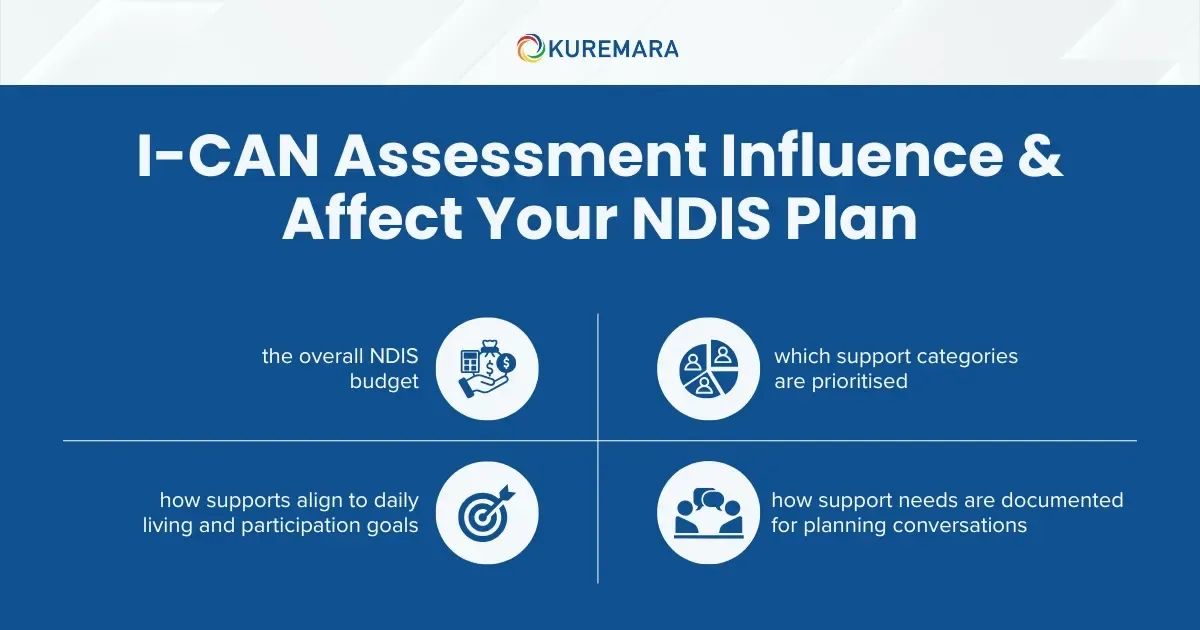
It may influence:
- the overall NDIS budget
- which support categories are prioritised
- how supports align to daily living and participation goals
- how support needs are documented for planning conversations
Important note: your plan should still reflect your individual circumstances, your goals, and what supports help you live safely and meaningfully not just what’s easiest to measure.
How to Prepare for an NDIS I-CAN Assessment (Practical Checklist)
 Preparation doesn’t mean “performing.” It means giving yourself the best chance to describe your day-to-day reality clearly.
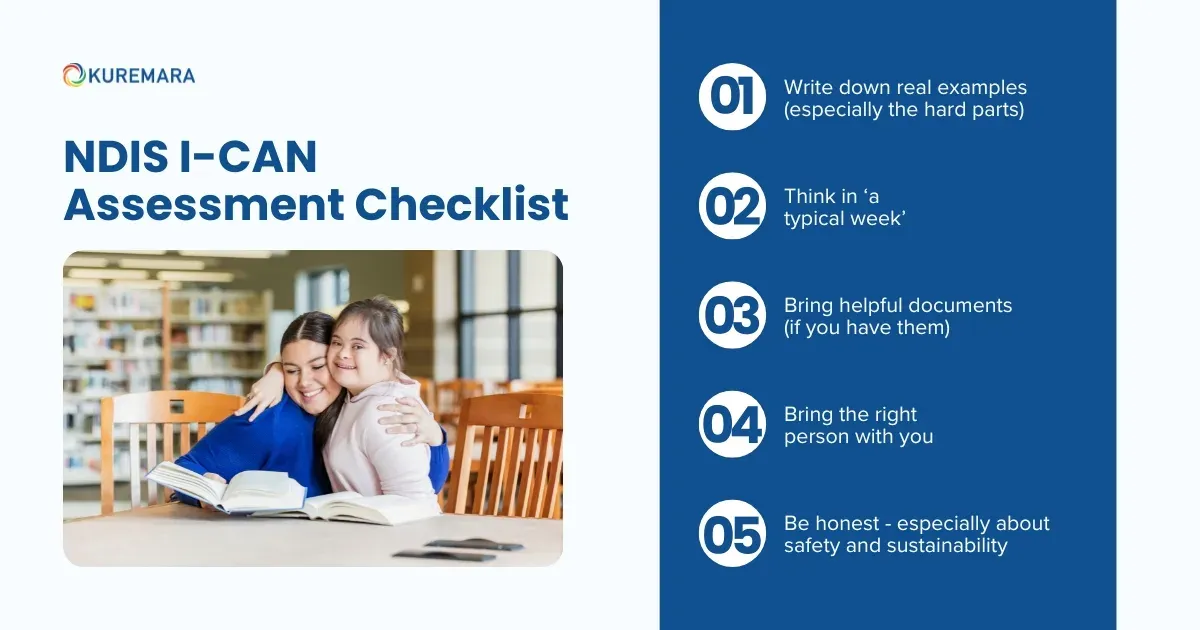
1) Write down real examples (especially the hard parts)
Try noting a few examples for each area, such as:
-
-
- “I can shower if someone sets it up and stays nearby for safety.”
-
-
-
- “I can cook simple meals, but I can’t manage planning, shopping, and cleaning without help.”
-
-
-
- “I need reminders to take medication and support to attend appointments.”
-
2) Think in ‘a typical week’
Some needs are not daily but still essential (appointments, community access, fatigue cycles, mental health impacts, recovery time).
3) Bring helpful documents (if you have them)
While the newer approach aims to reduce the burden of reports, it can still help to have:
-
-
- recent therapy summaries
-
-
-
- functional capacity information (where available)
-
-
-
- Behaviour support information (if relevant)
-
-
-
- lists of current supports and what they do
-
4) Bring the right person with you
If communication, anxiety, memory, or stress can affect your ability to explain needs, bringing a trusted person is not “cheating.” It’s a reasonable adjustment.
5) Be honest – especially about safety and sustainability
A common issue is people describing their “best day” rather than the usual pattern. It’s okay to share the reality of:
-
-
- fatigue and fluctuating capacity
-
-
-
- overwhelm and sensory impacts
-
-
-
- safety risks (falls, wandering, self-neglect, medication risks)
-
-
-
- support needed to prevent burnout for family carers
-
A Note for Families and Carers
If you’re supporting a loved one, you may already be doing a lot behind the scenes prompting, supervising, organising, and helping life run smoothly.
During assessment conversations, it can be helpful to gently share:
- what support you provide that the participant may not notice
- what happens if that support isn’t available
- what is needed to keep everyone safe and well (including carer sustainability)
Carer wellbeing matters. A plan that doesn’t reflect real support needs can place too much pressure on families.
How Kuremara Can Support You Through the I-CAN Process
At Kuremara, we support participants with a person-centred approach that’s respectful, inclusive, and practical. Depending on your needs, we can help with:
- preparing for assessment conversations (without coaching answers)
- organising support information and examples
- ensuring day-to-day support needs are clearly described
- implementing your plan once approved
- ongoing support that aligns with your goals, routines, and community participation
If you’d like support before your assessment, we can help you feel more confident about what to expect and how to communicate your needs clearly.
Conclusion: Clearer Planning Starts with Clear Support Needs
The NDIS I-CAN assessment is a big change, but it’s designed to make the pathway support simpler and more consistent, with a stronger focus on what helps a person need in daily life.
With the right preparation and the right support around you, the assessment can become less intimidating and more like what it’s meant to be: a structured way to explain your needs so your plan can reflect your real life.
If you’d like help preparing for an assessment or putting your supports in place, Kuremara (Registered NDIS Provider) is here for you.
Frequently Asked Questions (FAQ)
1. What is the NDIS I-CAN assessment?
It’s a structured support needs assessment used to understand what support a person may need across everyday life areas such as self-care, mobility, communication, and participation.
2. Is I-CAN the same as a medical assessment?
Not exactly. It’s not focused on diagnosing conditions. It focuses on how your disability affects daily life and what supports help you function safely and well.
3. Who completes the I-CAN assessment?
It’s intended to be completed by trained, accredited assessors using a structured interview process.
4. Can a family member or carer attend?
In many cases, yes—and it can be very helpful, especially if the participant finds it hard to communicate needs under stress.
5. How long does the I-CAN assessment take?
Duration can vary depending on complexity and communication needs. Some structured interviews may take a few hours, especially when needs are broader or more complex.
6. What should I do if I’m worried the assessment won’t capture my needs?
Bring real examples, consider having a trusted support person attend, and make sure fluctuating needs, safety risks, and sustainability are discussed. If you’re unsure how to prepare, your provider or Support Coordinator can support you.