care@kuremara.com.au
 1300 000 799
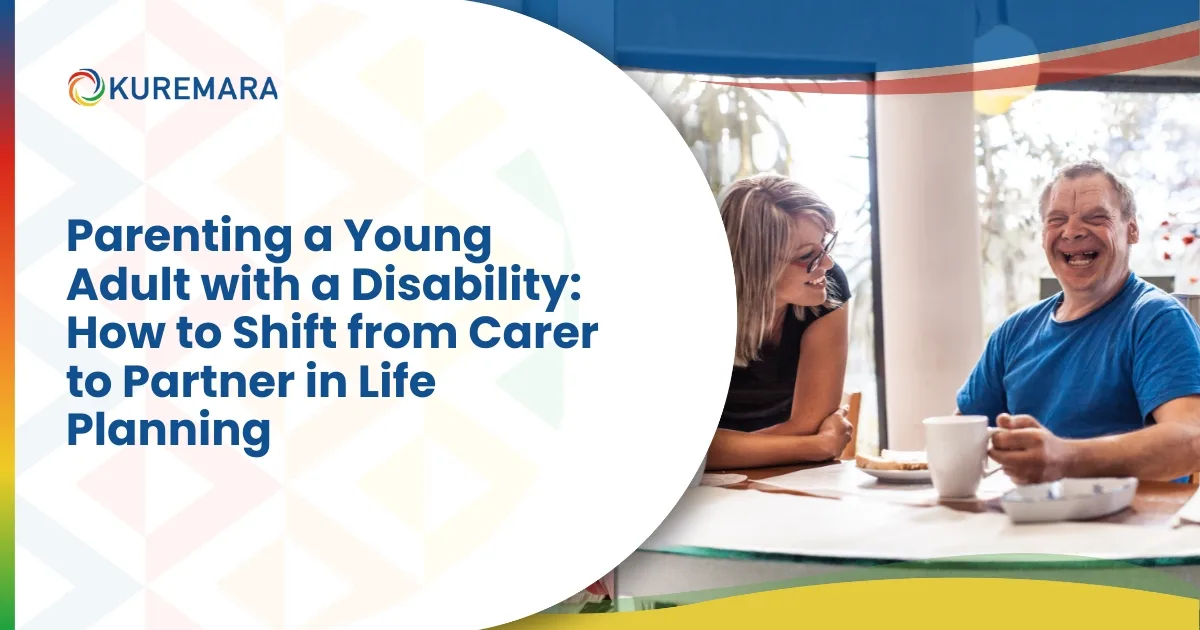
For many parents of children with disabilities, the early years are spent as full-time carers managing daily routines, appointments, therapies, education, and emotional support. But as children grow into young adults, the nature of care shifts. Their needs change, their preferences become clearer, and their right to autonomy becomes increasingly important.
This transition from hands-on carer to supportive partner in life planning is significant. It supports self-determination, dignity, autonomy, and overall long-term well-being for the young adult. It also ensures a more sustainable future for the family, where care is shared, coordinated, and empowered through the right supports.
In this blog, we explore how parents can navigate this change, what it means to step into a “partner” role, and how the National Disability Insurance Scheme (NDIS) can be used to build a meaningful, future-focused life plan.
Understanding the Transition – From Childhood Carer to Adult Partner
Recognising the Changing Needs
As children with disabilities become young adults, their life domains expand significantly. Rather than focusing solely on schooling, therapy, and childhood development, they begin to explore:
-
-
- Education and training pathways
-
-
-
- Employment or supported employment
-
-
-
- Independent or supported living options
-
-
-
- Social participation and community involvement
-
-
-
- Identity, preferences, and personal goals
-
Research from organisations such as Raising Children Network highlights that transition planning often begins during the mid-teen years, when young people start forming views about the future. Recognising this shift early allows families to plan proactively rather than reactively.
Why the Role Shift Matters – Benefits for Young Adults and Family
Moving from carer to partner benefits everyone:
1. Encourages Self-Advocacy and Decision-Making
Adults with disability gain confidence when they are included in choices about their life. It strengthens identity, communication, and resilience.
2. Supports Parent Wellbeing
Sharing responsibility through service providers, community supports, or NDIS-funded assistance reduces burnout and stress. Parents benefit from stepping into a more sustainable role.
3. Promotes Sustainable Life Skills and Independence
Whether the young adult aims for work, friendships, training, or independent living, the shift allows them to integrate into adult life at their own pace.
How NDIS Can Enable the Shift
a. What is NDIS and what does it cover?
The NDIS is Australia’s national support system for people under 65 with significant, permanent disabilities. Beyond childhood, the NDIS can fund:
-
-
- Capacity-building therapies
-
-
-
- Employment supports
-
-
-
- Independent living options
-
-
-
- Community and social participation
-
-
-
- Daily living assistance
-
-
-
- Support coordination
-
-
-
- Life-skills development
-
This makes it a cornerstone for enabling independence and reducing the reliance on parents as sole carers.
b. Transition Planning Through NDIS – The Importance of Early Preparation
Transitioning from school or youth services into adulthood can be overwhelming without preparation. NDIS transition planning helps map:
-
-
- Education or training pathways
-
-
-
- Employment or volunteer opportunities
-
-
-
- Independent or supported living options
-
-
-
- Transport and community access
-
-
-
- Daily living and self-care needs
-
-
-
- Social connection and recreation
-
-
-
- Ongoing therapies and health-related supports
-
-
-
- Skill-building and self-advocacy
-
Starting early prevents gaps in services and ensures the young adult remains connected and supported.
c. Involving the Young Adult in Decision-Making
A key element of NDIS planning is person-centred decision-making. This means giving the young adult a voice in:
-
-
- Setting goals
-
-
-
- Choosing providers
-
-
-
- Reviewing support needs
-
-
-
- Deciding how they want to live, work, or participate socially
-
Support coordinators, allied health professionals and community groups can assist families in facilitating these conversations respectfully and constructively.
Practical Steps for Parents – How to Shift Your Role Effectively
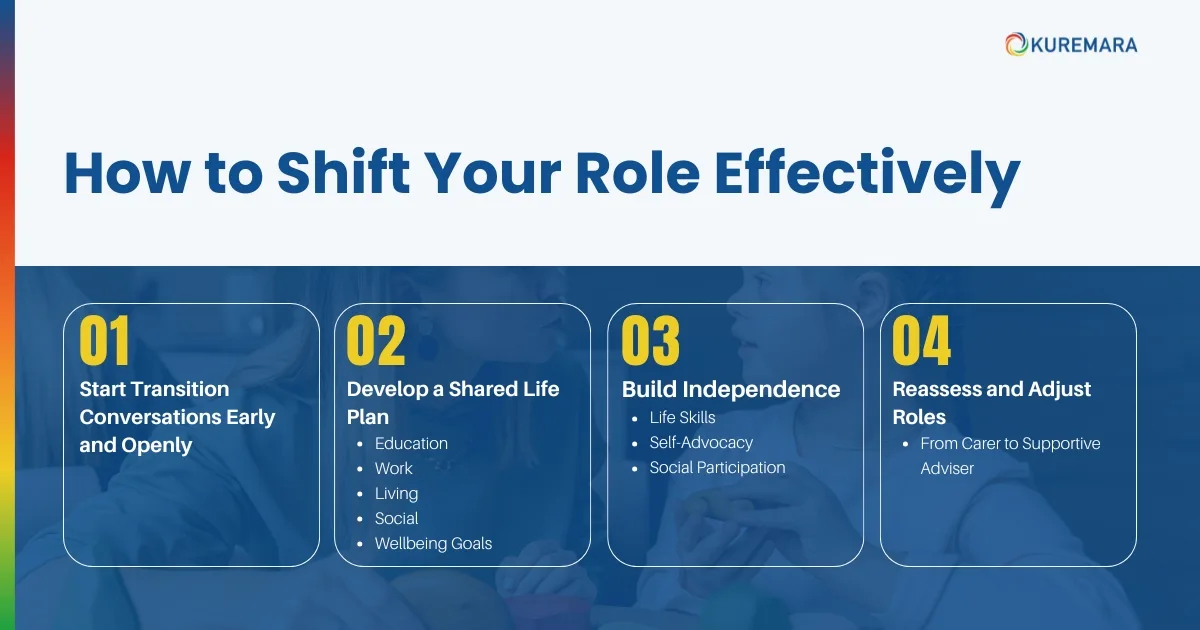
1. Start Transition Conversations Early and Openly
Having conversations early helps normalise planning and reduces pressure. Consider discussing:
-
-
- “What do you want to explore after school?”
-
-
-
- “What skills do you want to learn to be more independent?”
-
-
-
- “What kind of living environment feels right for you?”
-
The goal is to treat the young adult as an active partner in planning, not a passive recipient of decisions.
2. Develop a Shared Life Plan – Education, Work, Living, Social & Wellbeing Goals
A strong life plan looks at multiple areas:
-
-
- Education: TAFE, university, short courses, training
-
-
-
- Employment: supported employment, open employment, volunteering
-
-
-
- Living: independent, supported independent living, group homes, family home
-
-
-
- Community: hobbies, friendships, recreational activities
-
-
-
- Wellbeing: therapies, health management, personal development
-
Break big goals into smaller steps. For example:
Big Goal: Live independently someday
Small Steps:
-
-
- Learn budgeting
-
-
-
- Practice cooking
-
-
-
- Build transport confidence
-
-
-
- Explore SIL or ILO options through NDIS
-
3. Build Independence – Life Skills, Self-Advocacy, Social Participation
Parents can encourage independence by:
-
-
- Allowing choice and control in daily routines
-
-
-
- Supporting skill-building programs
-
-
-
- Encouraging communication and decision-making
-
-
-
- Facilitating meaningful social and community involvement
-
-
-
- Gradually reducing hands-on support (where safe and appropriate)
-
4. Reassess and Adjust Roles – From Carer to Supportive Adviser
Parents remain a vital part of the young adult’s life, but the nature of involvement changes. Instead of doing things for the young adult, the aim is to:
-
-
- Guide
-
-
-
- Advocate
-
-
-
- Support their decision-making
-
-
-
- Help them navigate NDIS reviews
-
-
-
- Problem-solve collaboratively
-
This preserves dignity while ensuring safety and well-being.
Common Challenges & How to Overcome Them
Emotional Challenges – For Parents and Young Adults
The transition can bring feelings like:
-
-
- Fear of letting go
-
-
-
- Worry about safety
-
-
-
- Guilt about stepping back
-
-
-
- Anxiety about the future
-
-
-
- Stress or uncertainty
-
Strategies include:
-
-
- Gradual steps rather than sudden changes
-
-
-
- Honest and open conversations
-
-
-
- Peer support groups
-
-
-
- Counselling or family therapy
-
-
-
- Involving professionals in planning
-
Systemic or Service Challenges – Gaps in Support, Funding, Access
Families often face:
-
- Delays in plan reviews
-
- Sudden changes in providers
-
- Gaps between school and adult services
-
- Confusing documentation or processes
Overcoming these challenges requires:
-
- Starting planning early
-
- Engaging with support coordinators
-
- Keeping documents and reports up to date
-
- Contacting NDIS early if support needs change
Balancing Safety, Autonomy, and Well-Being
This is one of the hardest parts of the transition. Parents must consider:
- How much independence is appropriate
- Where support is still required
- What risks are acceptable
Using external supports such as therapists, social groups, community programs, or SIL providers helps prevent overdependence while ensuring safety.
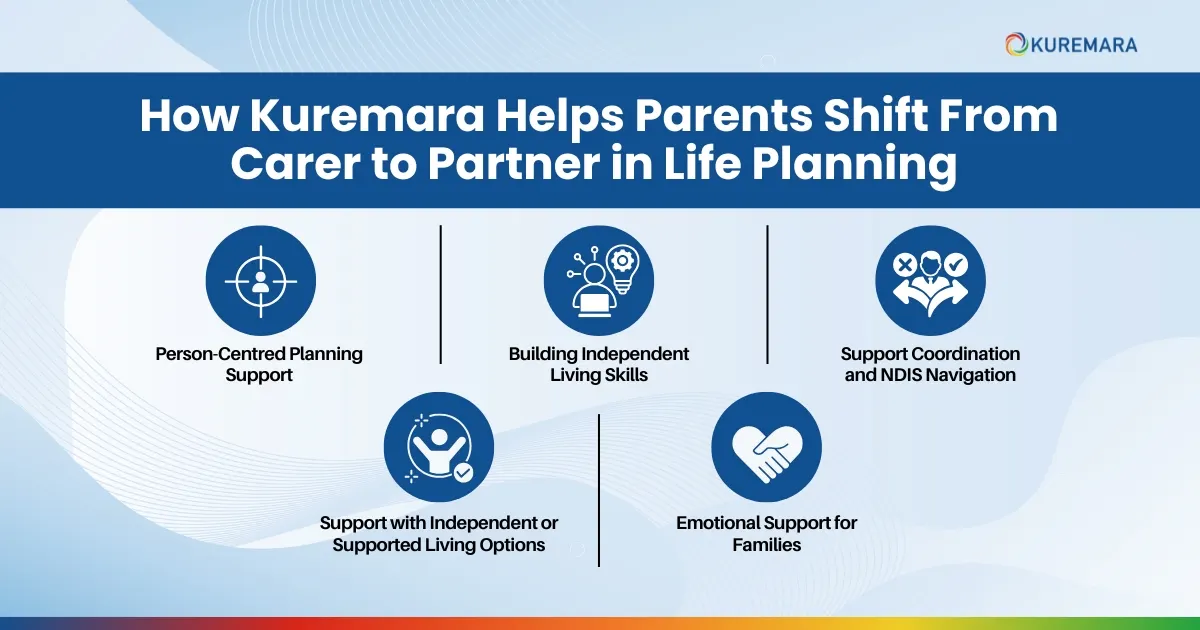
How Kuremara Helps Parents Shift From Carer to Partner in Life Planning
Navigating this transition alone can feel overwhelming. That’s why Kuremara partners closely with parents and young adults to make the process easier, clearer, and more empowering.
1. Person-Centred Planning Support
Kuremara works with families to create future-focused life plans built around the young adult’s voice.
2. Building Independent Living Skills
We help young adults grow daily living and personal development skills through supports that foster independence.
3. Support Coordination and NDIS Navigation
Our team guides parents through the often-complex NDIS landscape by assisting them at each step.
4. Support with Independent or Supported Living Options
For families exploring Supported Independent Living (SIL) or other living arrangements.
5. Emotional Support for Families
Kuremara understands that this is a major emotional shift for parents. Our team offers consistent communication and guidance throughout each phase
With Kuremara, parents no longer navigate the transition alone; they gain a dedicated team committed to the young adult’s independence and well-being.
Conclusion
Transitioning from carer to partner in life planning is not about stepping back; it’s about stepping forward in a new, empowering way. Young adults with disabilities thrive when their autonomy and identity are respected, when their goals are prioritised, and when parents shift into a role that supports independence rather than controls it.
Early planning, meaningful conversations, and effective use of NDIS supports lay the foundation for a strong, meaningful adult future. As a parent, stepping into a partner role helps you nurture independence, dignity, and long-term well-being for your young adult.
At Kuremara, we walk this journey with you. Whether you need guidance in planning, connecting with supports, building independent living skills, or navigating NDIS pathways, our team is here to make the transition smoother, safer, and more empowering.
If you’re ready to explore personalised support for your family, connect with Kuremara today, and let’s build the next chapter – together.
FAQs
1. When should we start planning the transition under NDIS?
Ideally, during the mid-teens, though earlier is beneficial. The earlier the planning, the smoother the transition.
2. How can I include life-planning supports in an NDIS plan?
Include goals related to employment, education, community participation, living arrangements, and skill-building during your NDIS planning meeting. Supporting evidence can strengthen requests.
3. What if my young adult doesn’t want to participate in planning?
Start small. Ask simple preferences, offer choices, involve trusted support workers, or use visual supports. Avoid pressure—gradual involvement often leads to greater confidence.
4. How do we balance independence and safety?
Encourage independence in low-risk areas, use structured skill-building programs, and engage external supports to reduce overreliance while maintaining safety.
5. What happens if our NDIS plan needs to change after transition?
You can request a plan reassessment anytime if support needs change. Keep documentation and reports ready to support your request.