care@kuremara.com.au
 1300 000 799
Living with dyslexia (or supporting someone who does) can affect far more than reading and spelling. It can impact confidence, daily routines, participation in school or work, and how accessible everyday information feels. That’s why many people search for answers like “is dyslexia covered by NDIS?” and “does NDIS cover dyslexia?”
This guide explains how NDIS dyslexia support may work in Australia, what eligibility commonly depends on, what NDIS dyslexia support options can look like, and what to expect from the process using clear, inclusive language for people of all ages and backgrounds.
What Is Dyslexia (In Plain Language) and Why “Functional Impact” Matters
Dyslexia is a difference in how the brain processes language, especially written language. It often shows up as challenges with reading accuracy, reading fluency, spelling, and written expression. Dyslexia is not a reflection of intelligence or effort.
What matters most in a dyslexia NDIS conversation is often functional impact—how day-to-day life is affected and what supports help with participation and independence.
Functional impacts can look different for different people
Dyslexia may affect:
- Understanding written instructions, emails, forms, or notices
- Managing study or training materials and assessments
- Keeping up with time-based reading tasks (tests, workplace documents, compliance reading)
- Writing tasks (reports, notes, planning, spelling-heavy communication)
- Confidence, wellbeing, and willingness to participate when reading/writing is required
- Executive-function load (planning, sequencing, organising) when tasks are text-heavy
Because dyslexia can be “invisible,” it’s helpful to describe the real-world barriers clearly—at home, in the community, at work, or in education settings.
Is Dyslexia Covered by NDIS? The Clear Answer (and the Practical Reality)
People often ask: is dyslexia covered by NDIS? Or does NDIS cover dyslexia?
The most accurate way to think about it is this:
- The NDIS is designed to fund supports that are reasonable and necessary to help a person live an ordinary life building functional capacity, independence, participation, and wellbeing.
- Dyslexia-related supports may be possible when there is a disability-related functional impact that meets access requirements and support needs align with NDIS rules.
- The NDIS typically does not fund things that are primarily the responsibility of other systems (for example, standard classroom teaching and curriculum delivery).
So, NDIS dyslexia funding is less about the word “dyslexia” on its own and more about the person’s functional needs, the evidence that describes those needs, and the goals in the plan.
Eligibility Pathways People Explore for Dyslexia NDIS Support
There isn’t one single pathway that fits everyone. When people seek NDIS dyslexia support, they usually explore one of these routes depending on age and circumstances.
1) NDIS access based on disability and functional impact
Eligibility generally hinges on whether a person meets NDIS access requirements (including a permanent impairment and significant functional impact). If supports are needed ongoing and relate to disability impacts on everyday life, this is where evidence becomes essential.
2) Early childhood approach (for children younger than 9)
For children under 9, the early childhood approach focuses on supports that can reduce impact on development and participation, and help families/carers support the child in everyday routines.
A simple self-check (not a diagnosis test)
People often find it useful to reflect on:
- What daily activities are consistently harder because of reading/writing demands?
- What participation is limited (learning, work, community access, confidence to engage)?
- What supports or tools have helped, and what’s still missing?
- Is ongoing support needed to build functional skills or access?
Evidence That Strengthens an NDIS Dyslexia Request
Whether someone is applying, planning, or seeking a plan review, evidence usually works best when it answers three questions clearly:
- What is the person’s disability-related impairment?
- How does it impact daily functioning and participation?
- What supports are recommended, and what outcomes do they build?
Helpful evidence can include
- Diagnostic or assessment reports (where relevant)
- Functional reports that describe participation barriers and daily impacts
- Support letters from treating professionals outlining needs and recommended supports
- Clear examples across settings (home, community, work/study)
Translate “learning difficulty” into functional language
Instead of only stating “needs help with reading,” describe the real-life barrier, for example:
- “Needs accessible formats to understand essential information independently.”
- “Needs strategies and tools to manage written communication demands at work/study.”
- “Needs support to build routines and planning skills when tasks are text-heavy.”
How to Write NDIS Goals for Dyslexia (That Align With Funding Rules)
Goals are one of the biggest levers in unlocking relevant supports. Strong goals are specific, functional, and tied to participation outcomes.
Multi-age goal examples you can adapt
- “Build strategies and tools to access written information independently in daily life (e.g., forms, instructions, emails).”
- “Improve participation in education, training, or work by using accessible technology and learning strategies.”
- “Develop routines and planning strategies to manage text-heavy tasks and deadlines.”
- “Increase confidence and wellbeing in community participation where reading/writing is required.”
- “Use assistive technology to support reading comprehension and written communication.”
- “Strengthen self-management skills for study/work demands and reduce overwhelm linked to written tasks.”
These can be used whether someone is an adult participant, a young person, or a child supported by family/carers.
NDIS Dyslexia Support Options (What Funding Can Be Used For)
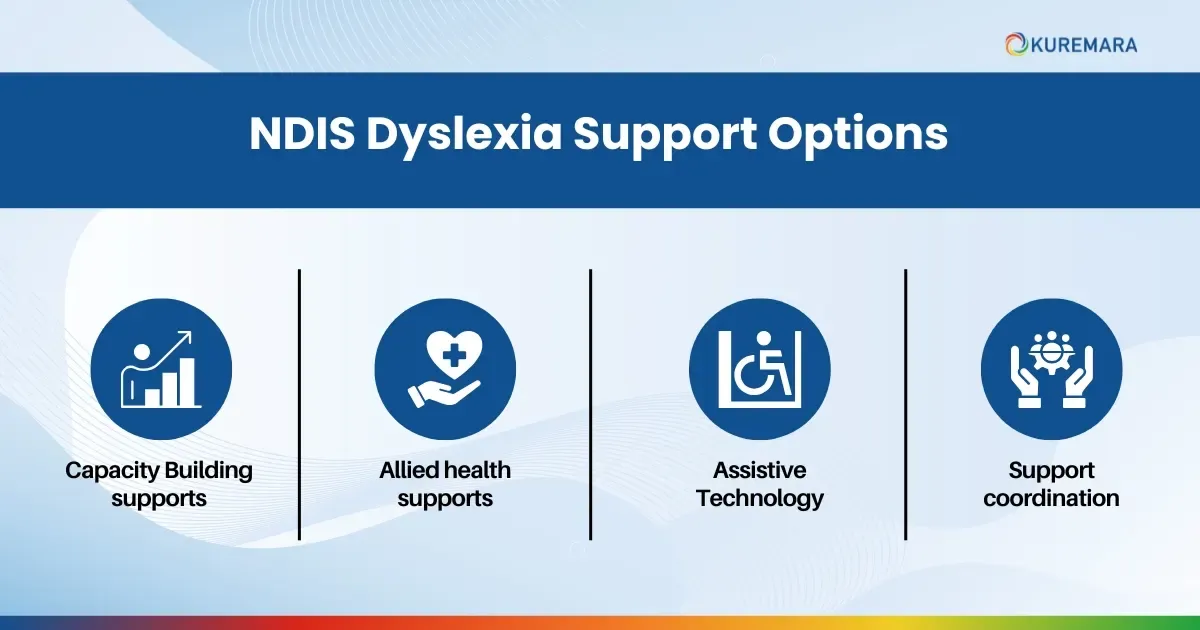 When people search NDIS dyslexia support, they are often looking for practical supports that build capacity or improve access—not just “more help,” but help that sticks.
Below are common ndis funding for dyslexia support categories people explore (always dependent on individual circumstances, goals, and plan budgets).
1. Capacity Building supports
These supports may focus on:
- Building functional skills and strategies (planning, routines, participation skills)
- Developing systems that reduce the daily burden of reading/writing demands
- Skill-building that improves independence across settings (home/community/work/study)
2. Allied health supports (depending on goals and needs)
Some plans may include supports aligned to functional goals such as:
- Occupational therapy supports for routines, executive functioning strategies, and participation planning
- Speech pathology supports where language processing, comprehension, or functional communication goals are relevant
- Psychology supports to build coping strategies, confidence, participation, and emotional wellbeing (when aligned to functional impact)
3. Assistive Technology (AT) for literacy access and communication
AT can be a powerful part of ndis dyslexia support when it increases independence and access, such as:
- Text-to-speech tools (reading aloud)
- Speech-to-text tools (dictation)
- Digital organisation and planning supports
- Accessibility features and apps that reduce reading fatigue and increase comprehension
AT is commonly grouped by cost thresholds:
- Low cost AT: under $1,500 per item
- Mid cost AT: $1,500 to $15,000 per item
- High cost AT: over $15,000 per item
The higher the cost, the more evidence and process steps are typically involved.
4. Support coordination (when included)
Support coordination can help connect plan goals to the right services, organise providers, and keep supports aligned to outcomes, especially helpful when there are multiple supports to manage.
What NDIS Typically Doesn’t Fund
A common point of confusion behind does NDIS cover dyslexia is tutoring.
In many cases, the NDIS does not fund:
- Standard classroom teaching or curriculum delivery
- School fees or learning that sits clearly within the education system’s responsibilities
- “Tutoring” framed primarily as improving grades rather than building disability-related functional capacity and participation
What to ask for instead
If someone needs support because written demands limit daily functioning, it may help to focus on:
- Assistive technology for access
- Capacity-building supports that develop functional strategies
- Supports that improve participation and independence (not curriculum teaching)
This approach can reduce frustration and keep requests aligned with how NDIS decisions are typically made.
What to Expect Step-by-Step (From First Questions to Ongoing Support)
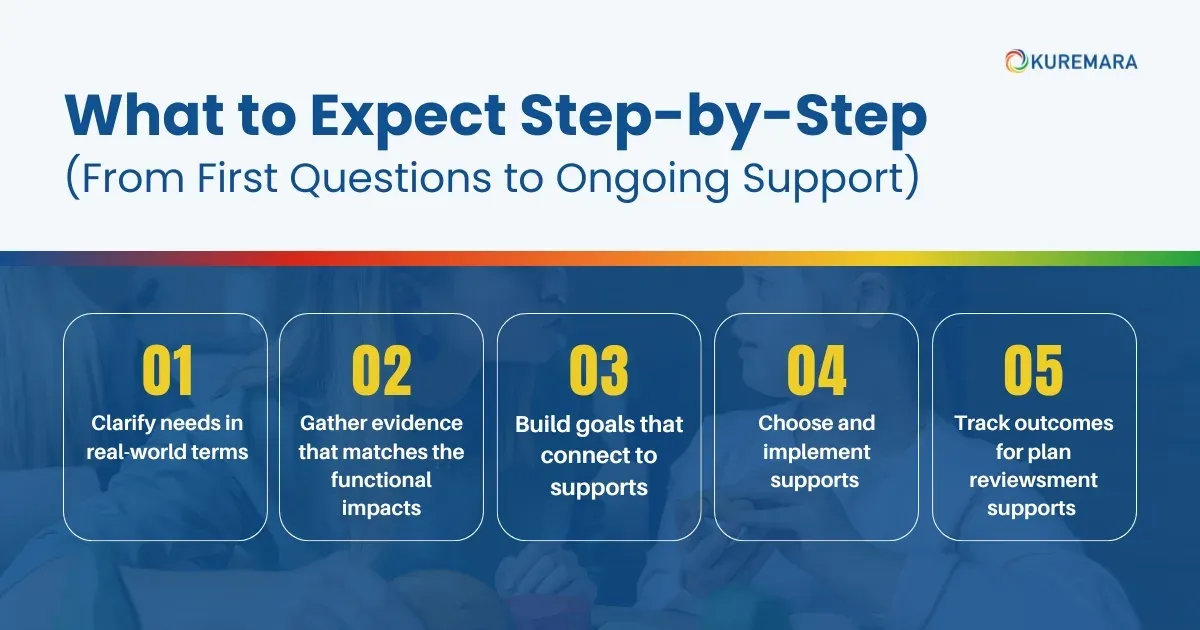
Step 1 — Clarify needs in real-world terms
List everyday barriers and where they show up most (home, community, work/study, education).
Step 2 — Gather evidence that matches the functional impacts
Aim for evidence that clearly describes the ongoing nature of needs and how supports will improve independence and participation.
Step 3 — Build goals that connect to supports
Align goals to functional outcomes (access, participation, independence, self-management).
Step 4 — Choose and implement supports
Start with supports that create the biggest everyday difference—often strategies + routines + tools + coaching for consistency.
Step 5 — Track outcomes for plan reviews
Keep simple notes: what changed, what became easier, what participation increased, and what still needs support. This helps when reviewing plans or adjusting supports.
Kuremara (Registered NDIS Provider in Australia): How We Can Support Dyslexia-Related Goals
Kuremara is a registered NDIS provider in Australia. Our approach is person-centred, inclusive, and focused on practical outcomes—support that makes everyday life more accessible, manageable, and empowering.
How Kuremara can help with NDIS dyslexia support
Depending on individual goals and plan supports, Kuremara can help by:
- Translating dyslexia-related needs into clear, functional goal language
- Mapping supports to plan categories (capacity building, AT considerations, coordination needs)
- Supporting consistent routines and strategies across real-life settings
- Tracking progress and outcomes so supports remain aligned and meaningful over time
What a first step with Kuremara can look like
- A respectful intake conversation focused on strengths, priorities, and daily barriers
- A clear support plan aligned to NDIS goals (and what “success” looks like to the person)
- Practical next steps that build independence and participation
What to prepare before contacting Kuremara
If available, bring:
- Plan details (or what stage someone is at applying, planning, or reviewing)
- Any relevant reports or letters
- A short list of day-to-day barriers and what outcomes would make life easier
- Preferences for communication style and scheduling
Conclusion
When it comes to ndis dyslexia, the most helpful mindset is: focus on functional impact, clear evidence, and goals that describe the outcomes a person wants in everyday life. If you’re asking “is dyslexia covered by NDIS” or “does NDIS cover dyslexia”, the pathway often becomes clearer once needs are framed as accessibility, participation, and independence not simply literacy performance.
If you’d like support navigating NDIS dyslexia support options or making sense of ndis funding for dyslexia in a practical way, Kuremara can help map next steps that feel respectful, realistic, and tailored.
FAQs
1. Is dyslexia covered by NDIS?
It can be, when there is disability-related functional impact that meets NDIS access requirements and supports are reasonable and necessary and linked to goals.
2. Does NDIS cover dyslexia support like therapy or assistive technology?
Some supports may be funded when they build functional capacity or improve access and independence, and they align with plan goals and budgets.
3. Does NDIS cover tutoring for dyslexia?
Tutoring is often considered an education responsibility. Requests usually work better when focused on functional capacity, participation outcomes, and accessibility tools rather than curriculum teaching.
4. What evidence helps for dyslexia NDIS discussions?
Evidence that clearly explains functional impacts in everyday life and recommends supports linked to outcomes typically helps most.
5. What is NDIS funding for dyslexia usually used for?
Common uses include capacity-building supports, functional strategies, and assistive technology that improves independence and participation, depending on the person’s plan and goals.