care@kuremara.com.au
 1300 000 799
Hey there, if you’re navigating life with bipolar disorder in Australia, you’re not alone, and the NDIS might just be the game-changer you’ve been looking for. At Kuremara, we specialise in demystifying NDIS for everyday Aussies, helping you unlock psychosocial disability supports that fit your unique needs. Did you know that over 300,000 Australians live with bipolar disorder? Many wonder: Is bipolar disorder a disability? Can I get disability for bipolar disorder? Spoiler: Yes, and we’re here to walk you through it step by step.
In this guide, we’ll cover bipolar disorder NDIS eligibility, key support services for bipolar disorder in Australia, and how to build a plan that actually works. Whether you’re applying for the first time or refreshing your current one, let’s make sense of it together.
What Is Bipolar Disorder and Why Is It Considered a Psychosocial Disability?
Picture this: the highs of mania, where everything feels electric, crashing into deep depressive lows that make simple tasks feel impossible. That’s bipolar disorder, a mental health condition affecting mood, energy, and daily functioning for about 1 in 100 Aussies.
Under the NDIS, bipolar often qualifies as a psychosocial disability. This isn’t just a label; it’s about how your condition creates permanent barriers in social interactions, work, or self-care. Think disrupted relationships, job instability, or needing help with routines; that’s the psychosocial impact.
So, directly answering the big question: Yes, bipolar disorder is a disability if it substantially reduces your capacity and meets NDIS criteria (like lasting at least six months with medical evidence). At Kuremara, we’ve seen countless clients turn this recognition into real funding for living with bipolar in Australia. It’s not about the diagnosis alone; it’s the evidence of how it affects your life.
The NDIS and Its Role in Supporting People with Bipolar Disorder
The National Disability Insurance Scheme (NDIS) is an Australian government initiative that provides support to people living with disabilities, including mental health conditions like bipolar disorder. While NDIS is often associated with physical disabilities, it also covers psychosocial disabilities, helping individuals with bipolar disorder access the supports they need.
To qualify for NDIS support as a person with bipolar disorder, you must demonstrate that the condition significantly impacts your life. This includes challenges in functioning socially, managing your emotions, maintaining stable employment, or carrying out daily tasks independently.
NDIS Supports for People with Bipolar Disorder
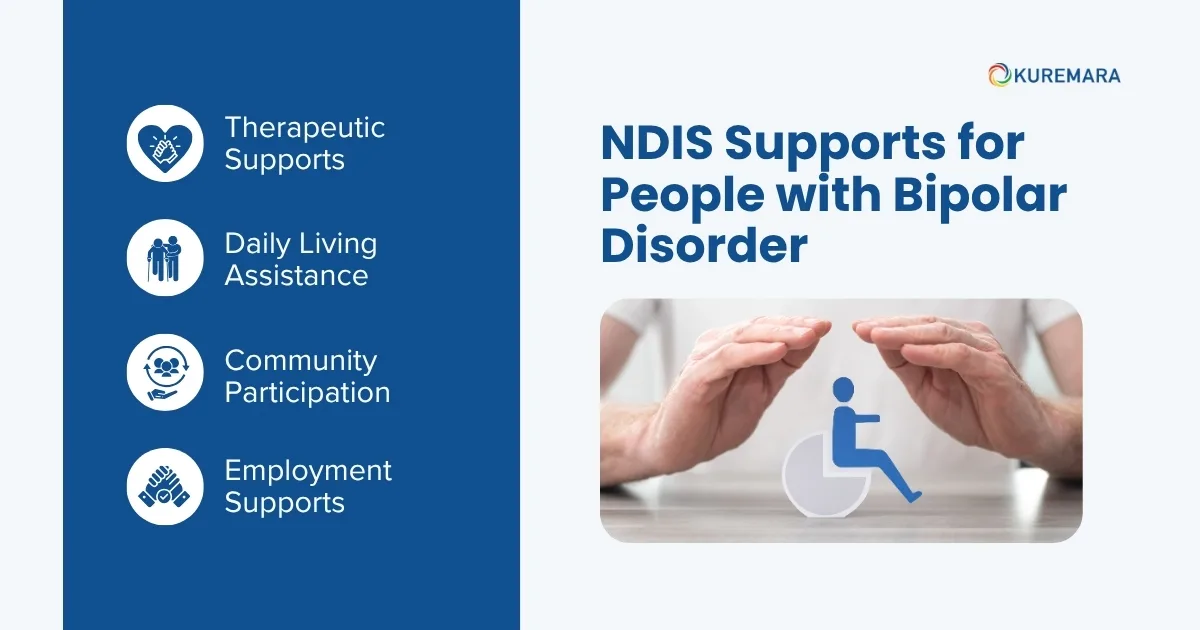
The NDIS offers a wide range of supports specifically designed to meet the needs of individuals living with bipolar disorder. These supports are individualised and can be used to create a tailored plan that helps individuals live more independently and with dignity. Here’s a breakdown of the support services available:
- Therapeutic Supports: These include access to mental health professionals, therapy, and counseling that help individuals manage symptoms of bipolar disorder. These supports are crucial in stabilising mood swings and providing strategies to cope with emotional challenges.
- Daily Living Assistance: For those who require help with everyday tasks, the NDIS can provide funding for support workers to assist with cooking, cleaning, and personal care. This helps reduce the strain on individuals and their families, enabling them to focus on managing their mental health.
- Community Participation: The NDIS promotes social inclusion by providing funding for activities that help individuals engage in their community, whether it’s joining social groups, participating in sports, or volunteering. These activities can have a positive impact on mental health by reducing isolation and boosting self-esteem.
- Employment Supports: The NDIS also helps individuals with bipolar disorder access employment-related services. This might include workplace modifications, job training, and support to ensure that people can thrive in a work environment.
The ultimate goal of NDIS supports is to ensure that people with bipolar disorder can lead more independent, fulfilling lives and participate fully in society.
NDIS Eligibility for Bipolar Disorder: Can You Get Disability Support?
How to Apply for NDIS with Bipolar Disorder
If you’re wondering, “Can I get disability for bipolar disorder?” the answer is yes! People with bipolar disorder can access the NDIS if their condition significantly impacts their daily life. Here’s a step-by-step guide to applying for NDIS support:
1. Check Eligibility: First, you need to determine if you meet the eligibility criteria for NDIS. This includes being under 65 years old and being an Australian citizen or permanent resident. The main requirement is that your bipolar disorder impacts your ability to engage in daily activities.
2. Gather Medical Evidence: To make your case for eligibility, you’ll need medical evidence that outlines how bipolar disorder affects your daily life. This might include reports from your GP, psychiatrist, or psychologist.
3. Book a Planning Meeting: Once your eligibility is confirmed, you’ll have a planning meeting with an NDIS planner. During this meeting, you’ll discuss your goals, challenges, and the kind of support you need.
4. Create Your NDIS Plan: Based on your needs and goals, an NDIS plan will be created. This will outline the services and supports you’ll receive, such as therapy, daily assistance, and community participation programs.
5. Review and Adjust: NDIS plans are reviewed regularly to ensure that the supports provided continue to meet your needs. If your situation changes, your plan can be adjusted.
Who Qualifies? Real-World Examples
- Mild bipolar: Someone managing with meds but struggling socially might get therapy funding.
- Severe cases: Full plans for supported employment or 24/7 care.
Pro tip: Early intervention boosts approval odds. Living with bipolar Australia-style? NDIS psychosocial disability criteria are designed for you.
Challenges in Accessing NDIS Support for Bipolar Disorder
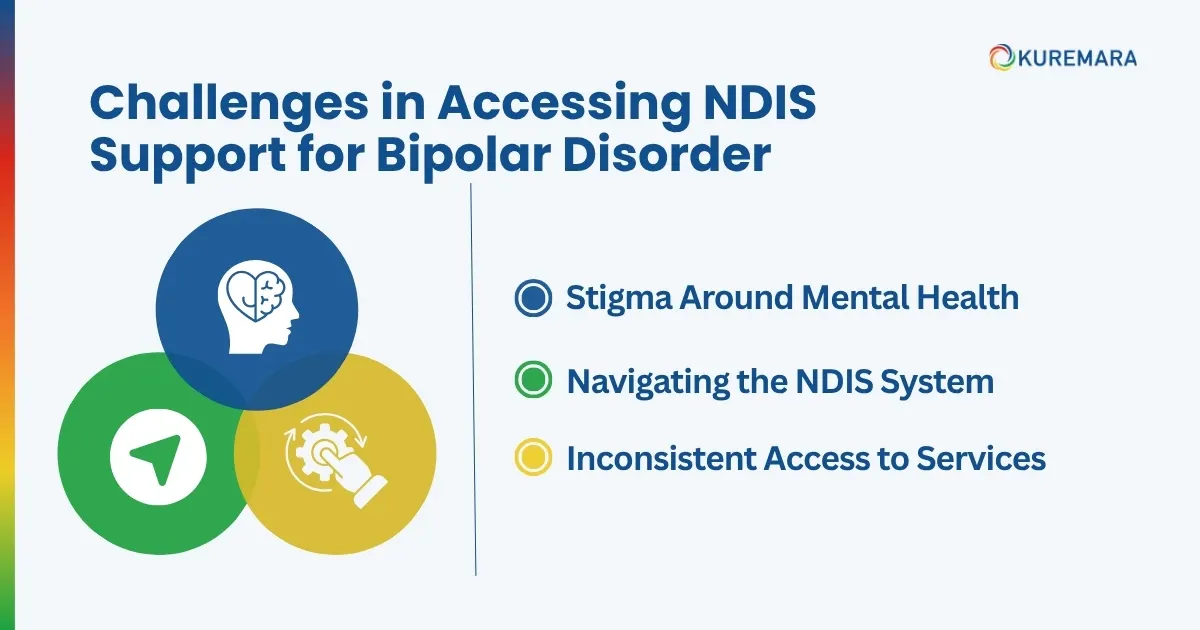
While the NDIS offers valuable supports, accessing the right services can sometimes be challenging. Some common hurdles include:
- Stigma Around Mental Health: Mental health conditions, including bipolar disorder, can still carry stigma, which may make it difficult for some to access support. However, it’s important to remember that NDIS is there to assist everyone, including those with mental health challenges.
- Navigating the NDIS System: The NDIS process can be complex, especially for individuals with bipolar disorder who may find it difficult to advocate for themselves. It’s helpful to seek support from advocacy groups or mental health professionals who can guide you through the process.
- Inconsistent Access to Services: Depending on your location in Australia, there may be variations in the availability of services. However, the NDIS is expanding its reach, and more services are becoming accessible every year.
Additional Support Services Available in Australia
Beyond NDIS, there are many community-based services that support individuals living with bipolar disorder in Australia. These include:
- Mental Health Australia: Provides a range of services and resources to help people living with bipolar disorder, including crisis intervention, peer support, and information about treatment options.
- Private Health Care Providers: Many Australians access private mental health services for more specialised care, including psychotherapy and counseling.
- Peer Support Groups: Many individuals living with bipolar disorder find comfort and strength in connecting with others who understand their experiences. There are numerous peer support groups throughout Australia where you can share your journey with others.
Building Your NDIS Plan for Bipolar Management
Got eligibility? Time to craft a powerhouse plan. NDIS budgets average $10,000-$50,000/year for psychosocial disabilities, depending on needs.
Tips for a Strong Plan Review
- Set SMART goals: “Attend weekly DBT to cut manic episodes by 50%.”
- Choose management: Self-managed for flexibility or agency for ease.
- Review yearly—life changes, so should your bipolar NDIS plan.
Managing bipolar with NDIS plan goals? Focus on stability and independence. Kuremara offers plan optimisation services to stretch every dollar.
How Kuremara Helps Participants with Bipolar Disorder
At Kuremara, our mission is to provide personalised, compassionate support to individuals living with bipolar disorder. We understand that each person’s experience with the condition is unique, and that’s why we offer tailored services that address the specific needs and goals of each individual. Here’s how we can support you on your journey:
- Personalised NDIS Planning and Support
- Mental Health and Therapeutic Support
- Assistance with Daily Living
- Employment and Vocational Support
- Community Engagement and Social Support
At Kuremara, we are dedicated to walking alongside you as you manage bipolar disorder. Through compassionate support, tailored NDIS plans, and a focus on empowering you to live independently, we help individuals thrive, not just survive.
Conclusion
Living with bipolar disorder can present unique challenges, but it doesn’t have to define your life. The NDIS and a range of community services are here to provide essential support and help individuals with bipolar disorder lead more independent, fulfilling lives. If you or someone you know is living with bipolar disorder, it’s time to explore the support available to you.
At Kuremara, we’re here to help you navigate these resources and make informed decisions about the support that’s right for you. Whether you’re looking for NDIS assistance or community-based services, we believe everyone deserves the opportunity to live their best life.