care@kuremara.com.au
 1300 000 799
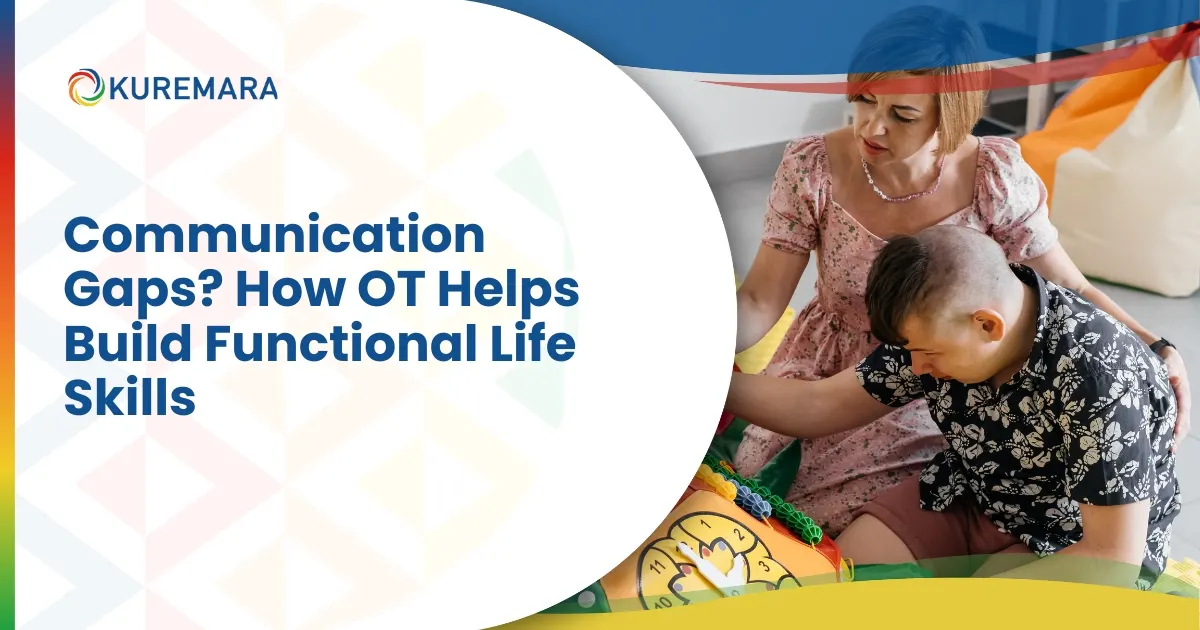
Communication is a vital part of our daily lives. It influences how we express needs, build relationships, and engage in everyday activities. Yet, many individuals, especially those living with disabilities or developmental challenges, face significant communication gaps that limit independence and participation.
At Kuremara, a registered NDIS provider in Australia, we understand how communication challenges impact quality of life. That’s why we support participants through NDIS-funded life skills programs and can assist in coordinating services such as Occupational Therapy (OT) when needed. Our goal is to help individuals develop the functional communication and life skills they need to lead more confident, independent lives.
What Are Communication Gaps?
Communication gaps occur when an individual struggles to effectively express their needs, understand others, or engage in meaningful conversation. These gaps are common in people with autism, intellectual disabilities, acquired brain injuries, and other neurodiverse conditions.
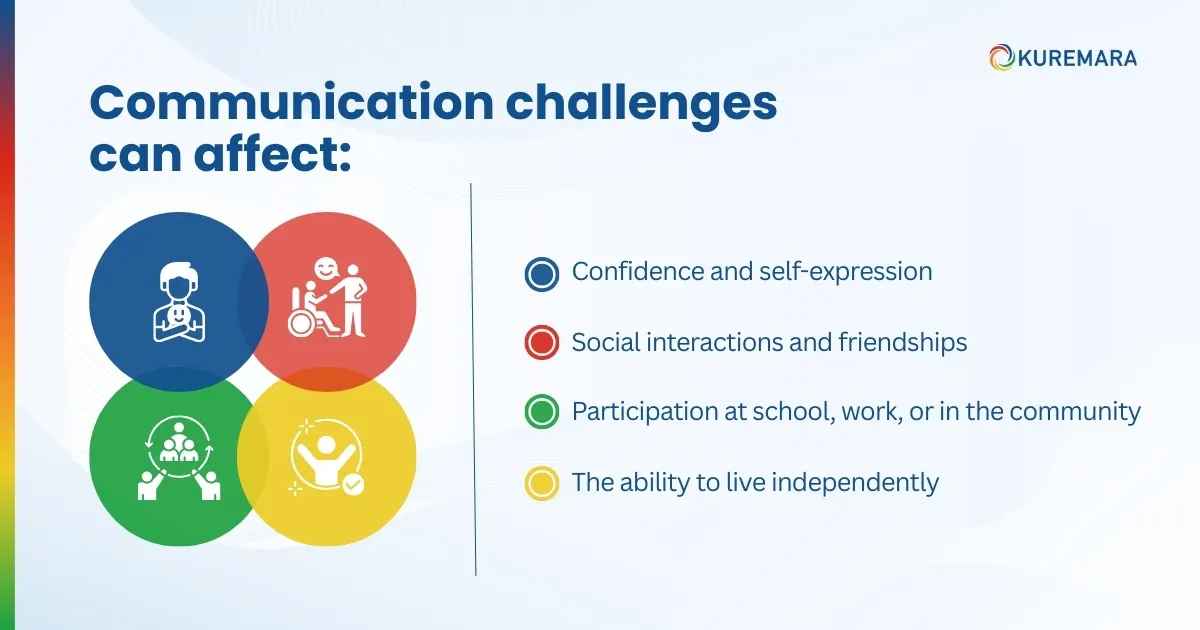
Communication challenges can affect:
-
- Confidence and self-expression
-
- Social interactions and friendships
-
- Participation at school, work, or in the community
-
- The ability to live independently
What Is Functional Communication?
Functional communication is the ability to use everyday communication to meet personal needs, make choices, express feelings, or build connections. It’s not just about speaking, it includes gestures, visuals, devices, and other methods that allow a person to function effectively in daily life.
Examples of functional communication:
-
- Asking for help
-
- Expressing preferences or feelings
-
- Greeting others
-
- Making decisions or refusing something politely
Building this type of communication empowers individuals to become more independent, confident, and connected.
The Role of Occupational Therapy in Building Life Skills
Occupational Therapy (OT) doesn’t just target speech or language; it supports the whole person. OT focuses on enabling individuals to perform meaningful everyday activities, including communication, social participation, self‑care, and community involvement.
How OT Supports Functional Communication
-
- Holistic Assessment: Understanding each individual’s strengths, needs, and environmental barriers.
-
- Skill Building: Supporting adaptive life skills such as turn‑taking, conversation initiation, self‑advocacy, and decision‑making.
-
- Environmental Strategies: Adapting surroundings to reduce sensory overload and support communication success.
-
- Collaboration: Working with speech therapists, teachers, families, and carers to reinforce functional communication strategies across settings.
OT helps participants develop communication strategies that extend beyond therapy sessions so that they can thrive at home, school, work, and in the community.
How OT Helps Bridge Communication Gaps
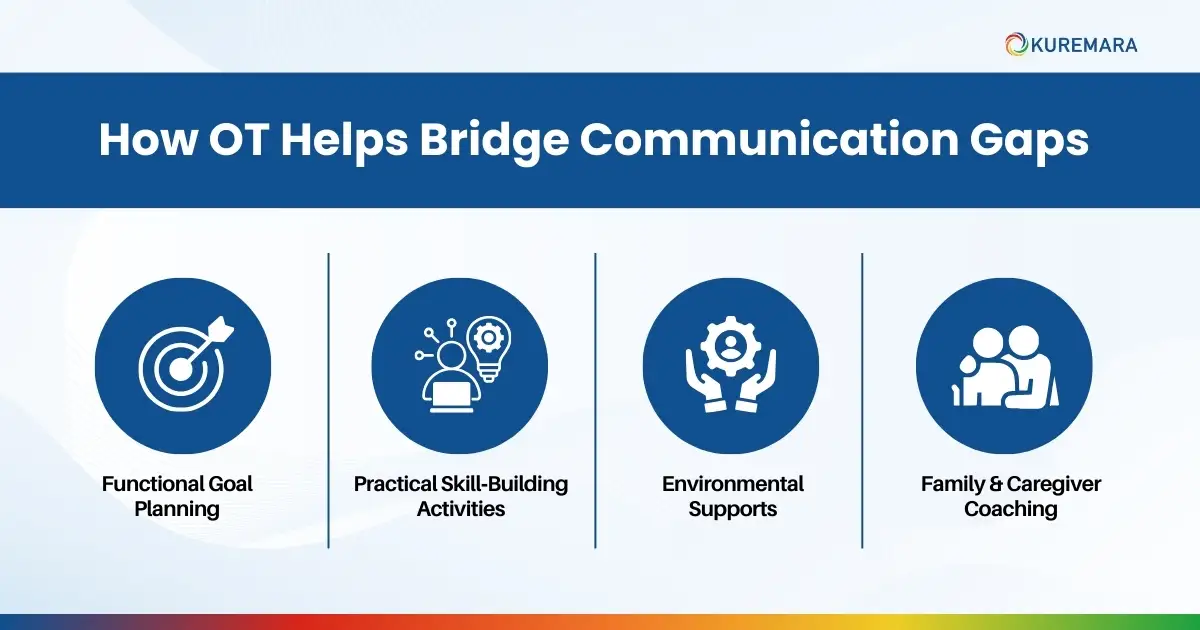
OT helps participants overcome communication barriers through targeted strategies designed for everyday life:
1. Functional Goal Planning
Occupational Therapists work with participants and families to set meaningful communication goals that matter in real life, like ordering food at a café, asking for help in class, or participating in group activities.
2. Practical Skill‑Building Activities
OT uses role play, social stories, visual supports, and task‑based practice to strengthen communication skills in contexts that reflect daily life.
3. Environmental Supports
Adapting environments helps reduce communication barriers. For example, organising a clutter‑free space, using visual schedules, or incorporating communication tools tailored to individual needs.
4. Family & Caregiver Coaching
OT empowers families, carers, and support workers with strategies to reinforce communication opportunities throughout the day, from morning routines to community outings.
How Kuremara Supports Life Skills Development
At Kuremara, we offer support that helps NDIS participants develop key life skills; including communication tailored to their goals and everyday needs.
We Help With:
-
- Life skills coaching to support real-world communication
-
- Community participation to practise functional communication in social settings
-
- Daily living activities that involve verbal and non-verbal interactions
-
- Goal setting aligned with NDIS plans for skill development
-
- Support coordination to help arrange relevant services like Occupational Therapy
We don’t provide Occupational Therapy directly, but we work with participants to connect them with qualified OT professionals where appropriate and assist with implementing their therapy goals through daily routines and activities.
Tracking Progress and Celebrating Success
At Kuremara, progress is measured in meaningful outcomes, not just standardised scores. We track improvements in:
- Confidence in communication
- Use of communication strategies in daily life
- Participation in social and community activities
- Independence in routines and tasks
Because real progress looks like real‑world success.
Tools & Techniques to Build Functional Life Skills Through Communication
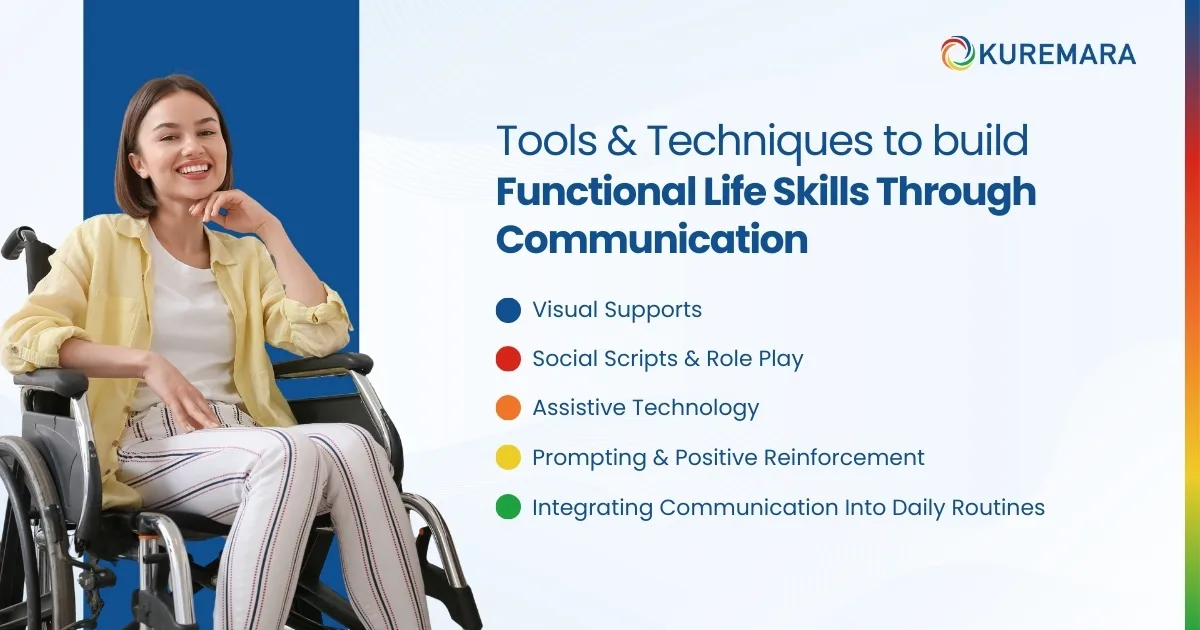
To support participants in developing communication and life skills, Kuremara uses a range of practical tools and strategies. These evidence‑based techniques empower individuals to communicate effectively and confidently across different settings.
1. Visual Supports
Visual aids such as picture schedules, communication cards, and visual timetables help participants:
-
-
- Understand routines
-
-
-
- Make independent choices
-
-
-
- Communicate needs or emotions non‑verbally
-
Visuals are especially powerful for participants with autism, intellectual disabilities, or those who find verbal communication challenging.
2. Social Scripts & Role Play
By simulating real‑life scenarios, participants can practise everyday interactions such as:
-
-
- Greeting others
-
-
-
- Ordering food at a café
-
-
-
- Asking for help or directions
-
Role play helps build confidence, understanding of social cues, and adaptability in community environments.
3. Assistive Technology(AAC Devices)
We support the use of communication tools like:
-
-
- Speech‑generating devices
-
-
-
- iPad apps with symbol or voice output
-
-
-
- Communication boards
-
These tools expand how participants can express themselves, promoting independence and inclusion.
4. Prompting & Positive Reinforcement
Our support workers use structured prompts – visual, gestural, or verbal to encourage communication attempts. Positive reinforcement celebrates success and motivates ongoing learning.
5. Integrating Communication into Daily Routines
We embed communication opportunities into activities such as:
Preparing meals and requesting items
-
-
- Engaging in group activities
-
-
-
- Shopping or community outings
-
-
-
- Managing daily routines
-
This approach ensures skills are learned and reinforced in natural, meaningful contexts.
Let’s Bridge the Communication Gap Together
At Kuremara, we know that communication gaps don’t have to limit a person’s potential. Through our NDIS‑funded support services, we help participants develop practical life skills that build confidence, foster independence, and enhance participation in everyday life.
And when more specialised support is needed, we help you connect with the right professionals, including Occupational Therapists to support your journey.

Frequently Asked Questions
1. What’s the difference between OT and speech therapy?
OT focuses on holistic life skills and participation in everyday activities, while speech therapy primarily targets language and communication tasks. Together, they form a powerful team for functional growth.
2. Can adults benefit from OT for communication?
Absolutely, People of all ages can improve communication and life skills with tailored OT support.
3. How soon can improvements be seen?
Improvements vary by individual and goals, but participants often notice increased confidence and communication within everyday routines as strategies are used consistently.