 care@kuremara.com.au
 1300 000 799
NDIS Community Nursing & Therapeutic Supports on the Gold Coast
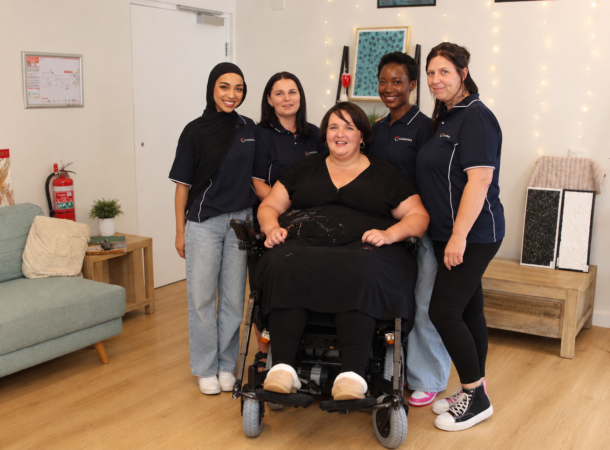
Kuremara’s registered nurses and allied health team deliver NDIS nursing services and therapeutic supports in your own home across the Gold Coast, including wound, catheter, PEG, and medication care, complex health monitoring, and physiotherapy, occupational therapy, and psychology, built around your goals.
NDIS community nursing is clinical care from a registered nurse delivered where you live, for health needs that are a direct result of your disability. Our NDIS registered nurses on the Gold Coast provide wound care, catheter care, PEG feeding, medication management, bowel care, respiratory and epilepsy support. Kuremara provides it across the Gold Coast, alongside therapeutic supports from our own physiotherapists, occupational therapists and psychologists, so nursing and therapy work from one plan.
What is NDIS community nursing?
Community nursing is the NDIS term for clinical care from a registered or enrolled nurse in a community setting: your home, a SIL house, or a respite home rather than a hospital or clinic. The NDIS funds it when the nursing need arises from your disability, for example, managing a stoma, a suprapubic catheter, enteral feeding, complex wounds, or seizure medication.
Nurses also train and supervise support workers to deliver high-intensity daily personal activities safely, write the clinical plans that sit behind that care, and act as the link between you, your GP, specialists and hospital teams.
Health care that the general health system should provide GP visits, hospital treatment, pharmacy scripts is not NDIS-funded. We help you understand where the line sits and coordinate both sides. Alongside nursing, our NDIS therapeutic supports on the Gold Coast can include physiotherapy, occupational therapy and psychology. For routine, non-clinical personal care and household help, see in-home support on the Gold Coast.
Who our Gold Coast nurses support
 Participants with spinal cord injury, MS, MND, cerebral palsy, or acquired brain injury
People with PEG or PEJ feeding, tracheostomy or ventilation
Anyone with complex or slow-healing wounds and pressure injuries
Participants with epilepsy, diabetes or complex medication regimes
People with psychosocial disability needing mental health nursing
Participants stepping down from hospital who need clinical follow-up at home
Disability nursing services we deliver on the Gold Coast
Our NDIS nursing services on the Gold Coast are delivered by registered nurses, with enrolled nurses and trained support workers working under their delegation.
01
Wound & pressure-injury care
Assessment, dressings, negative-pressure therapy support, prevention plans and photo-documented healing reviews.
02
Continence & catheter care
Indwelling and suprapubic catheter changes, intermittent catheterisation training, stoma care and bowel management programs.
03
Enteral feeding (PEG/PEJ)
Feeding regimes, site care, pump management and support-worker competency training under a dietitian-informed plan.
04
Medication management
Medication reviews, Webster-pack oversight, injections including insulin and depot medications, and emergency-medication plans.
05
Diabetes, epilepsy & respiratory care
Blood-glucose management, seizure management plans and midazolam training, tracheostomy and subcutaneous care, oxygen and CPAP support.
06
Health assessment & monitoring
Regular nursing assessments, vital-sign monitoring, deterioration escalation and liaison with your GP and specialists.
07
Mental health nursing
Credentialed mental health nurse support for psychosocial disability medication, relapse-prevention plans, and recovery goals.
08
High-intensity personal care oversight
Nurses write the plans, train and sign off support workers, and audit delivery so that complex personal care at home is safe every day.
NDIS therapeutic supports on the Gold Coast
Therapy that happens where you live and use your skills not just in a clinic. Our in-house allied health team works alongside your nurses and support workers, so one goal runs through every session and every shift.
Physiotherapy
Mobility, strength, falls prevention, pain, respiratory physio, and home exercise programs that your support workers can run with you between visits.
Occupational therapy
Functional assessments, daily living skills, assistive technology and home-modification reports, seating and pressure care, sensory strategies.
Psychology & mental health
Individual and small-group programs from our psychologist and mental health nurse: anxiety, mood, adjustment, emotional regulation, and recovery planning.
Behaviour support
Functional assessments, positive behaviour support plans, and hands-on team training, delivered by a practitioner registered with the NDIS Commission.
Therapeutic supports are funded through Capacity Building Improved Daily Living. Reports for plan reviews, assistive technology, and home modifications are included in your therapy hours.
Community nursing vs personal care vs therapy what funds what?
Three supports that often happen in the same home, funded from different parts of a plan.
Community nursing
Who: registered/enrolled nurse.
For: clinical tasks arising from disability wounds, catheters, PEG, injections, and health monitoring.
Budget: Core – Daily Activities.
Personal care (incl. high-intensity)
Who: support worker, trained and overseen by a nurse.
For: daily showering, dressing, continence, routine PEG feeds, and medication prompts. In-home support
Budget: Core – Daily Activities.
Therapeutic supports
Who: physio, OT, psychologist, behaviour practitioner.
For: building function, skills, and independence; assessments and reports.
Budget: Capacity Building Improved Daily Living.
Not NDIS-funded
What: GP and specialist visits, hospital care, medicines, acute illness treatment.
Handled by: Medicare and Queensland Health; we coordinate with them for you.
How nursing and therapy start with Kuremara
Routine referrals see a nurse within a week; hospital discharge and urgent clinical needs are prioritised.
01
Referral
From you, your family, your support coordinator, GP, or hospital. Send the plan summary and any current clinical documents.
02
Nursing assessment at home
A registered nurse assesses your clinical needs, risks, and equipment, and confirms which budget funds each support.
03
Clinical plan & team training
Care plans, medication, and emergency plans are written; support workers are trained and signed off before delivering high-intensity tasks.
04
Ongoing care & review
Scheduled nurse visits, therapy sessions, and three-monthly clinical reviews, with reports ready for your plan reassessment.
Why Gold Coast participants choose Kuremara for NDIS nursing
Most disability providers subcontract nursing. Kuremara began in primary health care more than a decade ago, so nurses, therapists, and doctors are part of the organisation, not a phone number we call when something goes wrong.
“Quality support services when choice matters.”
– Kuremara
For support coordinators, GPs & discharge planners
Send clinical notes and the plan summary; a registered nurse responds within one business day with a proposed assessment date and quote at NDIS Pricing Arrangement rates. We accept nursing-only, therapy-only, and combined referrals, and provide competency sign-off for external support teams.
NDIS nursing services Gold Coast – FAQs
What does an NDIS registered nurse do on the Gold Coast?
An NDIS registered nurse on the Gold Coast can provide disability-related nursing support in your home or community setting. Depending on your needs and NDIS funding, this may include wound care, catheter care, PEG feeding, medication management, health assessments, respiratory support and clinical monitoring. Nurses can also work with your support team and other health professionals to help ensure your care is delivered safely and consistently.
Does the NDIS pay for a registered nurse to come to my home?
Yes, when the nursing need is a direct result of your disability, for example, catheter, stoma, PEG, complex wound, or seizure-medication care. It is funded as Community Nursing Care in your Core budget. Nursing for general illness remains the responsibility of Medicare and the health system.
What is the difference between community nursing and personal care?
Community nursing is clinical care that must be done by a nurse. Personal care is day-to-day help with showering, dressing, continence, and routine feeds, done by a support worker. For high-intensity tasks, a nurse trains and oversees the support worker so the daily care is safe, and the nurse visits for the clinical parts.
What counts as "therapeutic supports" under the NDIS?
Allied health services that build your functional skills and independence physiotherapy, occupational therapy, psychology, speech pathology, dietetics and exercise physiology, plus the assessments and reports they produce. They are funded through Capacity Building Improved Daily Living. Kuremara delivers physiotherapy, occupational therapy, psychology and behaviour support in-house on the Gold Coast.
Can your nurses train my existing support workers?
Yes. We provide high-intensity competency training and sign-off – PEG feeding, catheter care, subcutaneous injections, seizure management, bowel care – for support workers from any provider, along with the clinical plans they work to.
What disability nursing services are available on the Gold Coast?
Disability nursing services on the Gold Coast can include wound and pressure-injury care, catheter and continence support, PEG/PEJ feeding, medication management, diabetes and epilepsy support, respiratory care, health monitoring, and mental health nursing. Services are tailored to each participant’s disability-related health needs and delivered by appropriately trained and qualified professionals.
How often will a nurse visit?
It depends on the clinical need: daily for an active wound, weekly for medication oversight, and monthly for catheter changes and review. Your nursing assessment sets the schedule, and we adjust it as your condition changes.
Do you provide nursing in SIL homes and respite on the Gold Coast?
Yes. Our nurses support participants in their own homes, in Kuremara SIL homes and during STA and respite stays across the Gold Coast, and can also visit participants living in other providers’ accommodation.
What happens if my health deteriorates after hours?
Your care plan includes an escalation pathway. Support workers and nurses can reach an on-call doctor through Priority Health Group 24 hours a day for telehealth advice, and we call 000 whenever it is an emergency.
How do I get nursing added to my NDIS plan?
Ask us for a nursing assessment. The resulting report sets out the disability-related clinical need, recommended hours, and risks, and provides the evidence your support coordinator or the NDIA needs to fund Community Nursing Care at your next plan review or through a change-of-circumstances request.
Talk to a Gold Coast registered nurse
One conversation to understand your clinical needs, confirm what your plan funds and book an assessment at home.